
A Milestone in Manufacturing
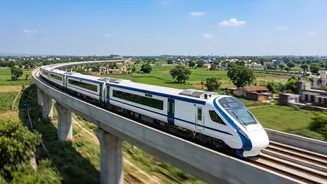
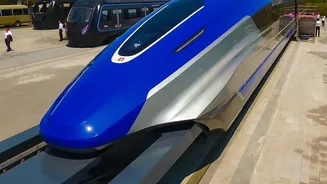
The completion of the first coach for testing marks a significant step forward in the journey of India's first bullet train. Railway Minister Ashwini Vaishnaw confirmed the development, highlighting it as a key achievement for the project. This initial
coach, now ready for structural assessments like a squeeze test, is a precursor to the full-scale track testing planned for the coming year. While this isn't a finished train ready for passengers, it is a crucial piece of the puzzle, proving the manufacturing and design capabilities being developed within the country as part of the project. This progress is central to the project's 'Make in India' component, which aims to build domestic capacity in high-speed rail technology alongside the primary goal of connecting two of India's major economic hubs.
The Race to 2027: Surat to Bilimora
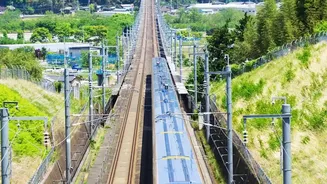
The immediate focus of the project is the operationalization of a specific segment in Gujarat. The government has set a target to launch the first bullet train service on the Surat-Bilimora section by August 2027. This 50-kilometer stretch is planned to be the first part of the massive 508-km corridor to open to the public. Work on this and adjacent sections is proceeding rapidly. For example, civil construction on the Vapi-Surat stretch is expected to be completed by December 2026. This phased approach allows the National High Speed Rail Corporation Ltd (NHSRCL), the agency implementing the project, to commission completed parts of the line and begin services, rather than waiting for the entire corridor to be finished.
The Bigger Picture: A High-Tech Corridor
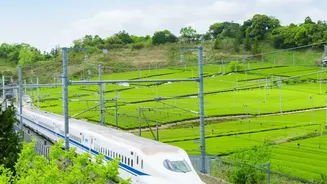
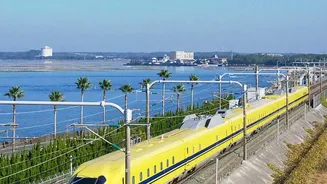
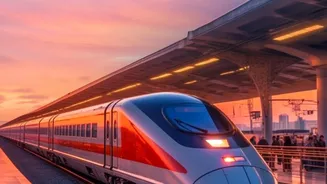
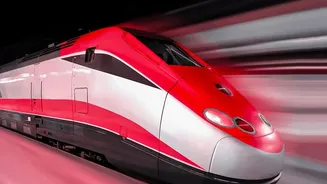
The full Mumbai-Ahmedabad High-Speed Rail (MAHSR) project is an undertaking of immense scale and complexity. Spanning 508 kilometers, the corridor will connect the two financial centers, passing through Maharashtra, Gujarat, and the Union Territory of Dadra and Nagar Haveli. The line will feature 12 modern stations, including hubs at Mumbai (BKC), Surat, Vadodara, and Ahmedabad. The project utilizes Japan's renowned Shinkansen technology, specifically the E5 series trains, known for their exceptional safety record, speed, and efficiency. These trains are designed to operate at speeds of up to 320 km/h, drastically cutting travel time between the two cities from over six hours by conventional rail to just over two hours.
More Than Just Speed
The impact of the bullet train extends far beyond just faster travel. The project is expected to be a significant driver of economic growth along the corridor, fostering business and tourism. It promises a travel experience with enhanced comfort, safety, and reliability. The E5 series trains are equipped with advanced safety systems, including anti-derailment mechanisms and automatic braking. Passenger amenities are also a priority, with plans for spacious seating, modern interiors, and facilities like multipurpose rooms for feeding infants and extra-spacious restrooms for passengers with wheelchairs. By providing a high-speed, energy-efficient alternative to air and road travel, the project also aims to contribute to a greener transportation network, modernizing India's railway infrastructure for the 21st century.