









A Cell Built From Scratch
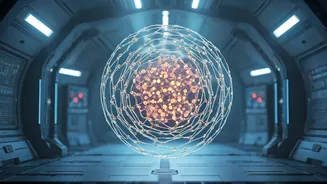
In a landmark achievement, researchers have designed and constructed what is being called a minimal synthetic cell. This isn't science fiction; it's the result of decades of work in a field known as synthetic biology. Teams, notably from the J. Craig
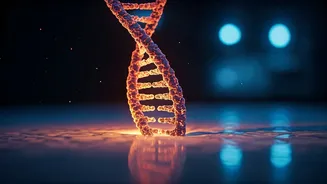
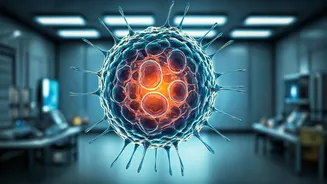
Venter Institute, succeeded in creating a bacterium, dubbed JCVI-syn3.0, that operates on the smallest genome of any known self-replicating organism. They essentially stripped down a natural bacterium's genetic code to its bare essentials—only the genes needed for life—and synthesized that code in the lab. This synthetic DNA was then transplanted into a donor cell, effectively rebooting it to become a new, lab-made life form controlled entirely by the artificial genome. More recent efforts have even built simple cells from the ground up, using non-living chemicals to create entities that can feed, grow, and multiply for several generations.
The Promise: A New Industrial Revolution
The potential applications of this technology are staggering. Proponents envision these minimal cells as programmable biological chassis. By adding specific genes back into the minimal genome, scientists could design cells to perform specific tasks with incredible efficiency. Imagine microscopic factories that can produce clean biofuels, manufacture life-saving vaccines and pharmaceuticals, or create novel, self-repairing materials. These engineered cells could be designed to clean up environmental pollutants, act as tiny sensors for detecting disease in the body, or even produce food with enhanced nutritional value. Because the cell's genetic 'operating system' is known and designed, it offers a level of control and predictability that was previously impossible, potentially kicking off a new bio-economy.
The Peril: Questions of Safety and Security
With great power comes great responsibility, and the creation of synthetic life is no exception. The most immediate concerns are around biosafety and biosecurity. What happens if a synthetically created organism escapes the lab? Could it disrupt natural ecosystems in unpredictable ways? While the current minimal cells are fragile and designed to survive only in controlled lab conditions, future, more robust versions could pose a real risk. There are also biosecurity fears: the same technology that could be used to create life-saving medicines could, in the wrong hands, potentially be weaponized. These risks have been part of the conversation since the beginning, prompting calls for stringent regulation and oversight to ensure that this powerful technology is used safely and ethically.
The Philosophical Divide: What Is Life?
Beyond the practical applications and risks, synthetic cells force us to grapple with profound philosophical and ethical questions. By building a living, replicating cell from inanimate parts, have we blurred the line between life and non-life? For some, this achievement is the ultimate expression of human ingenuity, fulfilling physicist Richard Feynman's famous declaration: “What I cannot create, I do not understand.” It offers a powerful tool to finally comprehend the fundamental principles of biology. For others, it crosses a moral boundary, venturing into territory once reserved for nature or a divine creator. The debate also touches on issues of access and equity: who will benefit from these new technologies, and who might be left behind or put at risk?