






The Old Story: Big Dinosaurs, Small Mammals
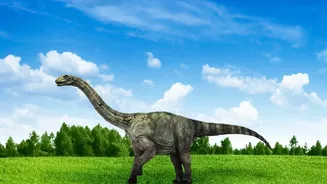
The classic story of the Mesozoic Era is one of dominance. For over 150 million years, dinosaurs ruled the planet, evolving into giants that defy modern imagination. In this world, early mammals were long portrayed as minor players. The conventional wisdom
held that these small, shrew-like creatures were suppressed by their colossal reptilian neighbours, forced into a nocturnal existence and unable to grow large or diversify because the major ecological roles were already taken. The 'Age of Dinosaurs' was, in this telling, a time when mammals were simply waiting for their moment, which only came after a massive asteroid cleared the board 66 million years ago.
A Puzzling Gap in the Fossil Record
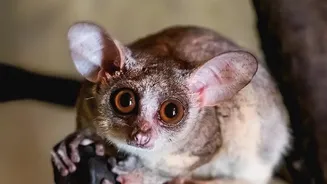
However, a strange gap in the dinosaur fossil record has long puzzled paleontologists. While dinosaurs achieved truly immense sizes, there has been a conspicuous absence of very small ones. Even the smallest known non-avian dinosaurs weighed around 450 grams, roughly the size of a rabbit. In modern ecosystems, small animals are incredibly common; about 75% of living mammals and 90% of birds are smaller than the tiniest known non-avian dinosaurs. This raised a critical question: if being small is such a successful strategy, why were there no mouse-sized or sparrow-sized dinosaurs?
The New Hypothesis: Competitive Exclusion
A new study published in the journal Evolution by researchers from the American Museum of Natural History and Princeton University offers a compelling answer: it was the mammals. The research suggests that early mammals may have effectively locked dinosaurs out of the small-body niches. This idea hinges on a key ecological principle known as 'competitive exclusion'. The principle states that two species competing for the exact same limited resources in the same ecological niche cannot coexist. Inevitably, one will have a slight advantage and will outcompete the other. The new study proposes that early mammals, though small, were so successful and numerous in the undergrowth that they created intense competition for food and space, effectively preventing dinosaurs from evolving to become smaller.
A Two-Way Street of Competition
This reframes the entire dynamic between the two groups. It wasn't just a one-sided affair where giant dinosaurs kept mammals small. Instead, it appears to have been a two-way competition. While dinosaurs dominated the large-animal niches and prevented mammals from getting big, mammals dominated the small-animal niches and may have prevented dinosaurs from getting tiny. The study used mathematical models to analyze body size evolution. These models could successfully predict the typical body sizes of modern mammals and birds based on their physiology and energy use. However, the same models could not explain why dinosaurs didn't shrink to similar sizes, suggesting that an external, ecological factor—like competition—was at play.
Rewriting Our Picture of the Past
This finding adds another layer of complexity to our understanding of prehistoric ecosystems. It suggests that far from being passive bystanders, mammals were active and crucial players shaping the evolutionary trajectory of even the mighty dinosaurs. While some Mesozoic mammals were big enough to prey on small dinosaurs, the more significant impact may have come from the sheer number of tiny mammals occupying the small-prey and insectivore roles. They weren't just hiding from dinosaurs; they were carving out a domain for themselves so effectively that they created an evolutionary barrier for their larger neighbours. This research highlights how competition, not just catastrophic events, is a powerful force in shaping the tree of life.