

The Ultimate Dress Rehearsal
Before astronauts ever board a new spacecraft, the vehicle must prove it can handle every phase of a mission on its own. This is the fundamental purpose of uncrewed flights: to act as a full-scale dress rehearsal. The philosophy is 'test as you fly'.
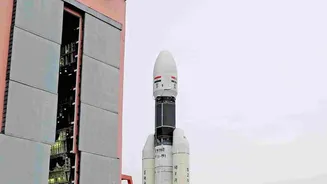
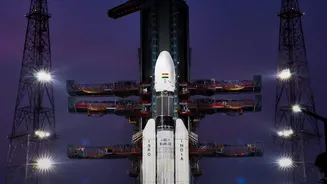
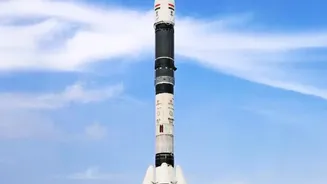
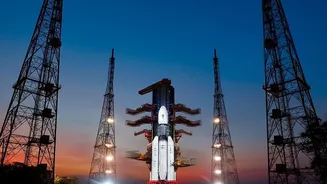
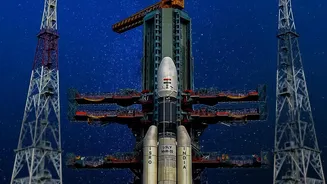
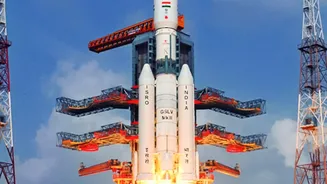
Every system — from the launch vehicle and orbital manoeuvres to the life support and re-entry systems — is pushed to its limits without risking a human crew. These tests are not just about a simple pass or fail. They generate terabytes of invaluable data, revealing how the spacecraft performs in the harsh reality of space. For Gaganyaan, uncrewed missions like the planned G1 flight are designed to validate the performance of the entire system from end to end, ensuring every component works in perfect harmony. This includes testing the human-rated LVM3 rocket, the crew module's ability to survive in orbit, and the complex procedures for a safe return to Earth.
Perfecting The Most Critical Moment: Escape
One of the most dangerous moments of any space mission is the launch itself. A Crew Escape System (CES) is the astronauts' only lifeline if something goes catastrophically wrong on the launchpad or during ascent. Testing this system is paramount. ISRO's Test Vehicle Abort Mission-1 (TV-D1) was designed specifically for this purpose. The successful test in October 2023 demonstrated the CES's ability to pull the crew module away from the rocket at transonic speeds — the point of maximum aerodynamic stress — and carry it to a safe distance before splashing down in the sea. This wasn't a one-off test. It's part of a series of demonstrations to qualify the abort mechanism under different conditions, proving that no matter what happens to the rocket, the crew can be saved.
Mastering a Safe Return to Earth
Getting to space is only half the journey; getting back safely is arguably the harder part. Uncrewed tests are crucial for perfecting the re-entry and landing sequence. For Gaganyaan, this means a splashdown in the ocean. ISRO has conducted a series of Integrated Air Drop Tests (IADT) to validate the complex parachute system responsible for slowing the crew module from orbital speeds to a gentle splash. The deceleration system uses a total of 10 parachutes of different types deployed in a precise sequence. These tests, which involve dropping a simulated crew module from helicopters and aircraft, verify that the drogue, pilot, and main parachutes deploy correctly and can handle the immense loads. The successful recovery of the module by the Indian Navy in these drills also rehearses another vital part of the mission chain.
Learning from Global Experience
India's approach is validated by the experience of every other space-faring nation. NASA's Artemis I mission in 2022 was an uncrewed flight test that sent the Orion capsule on a journey around the Moon and back. The mission proved the readiness of its deep space rocket and spacecraft, but it also revealed valuable lessons. For instance, engineers noted that the heat shield material wore away differently than predicted, providing crucial data for improving the system before putting astronauts on board. Similarly, SpaceX's Demo-1 mission in 2019 was an uncrewed flight of its Crew Dragon capsule to the International Space Station. It successfully tested autonomous docking, re-entry, and splashdown, paving the way for the first crewed flight, Demo-2, and restoring America's human launch capability. These missions show that uncrewed flights often uncover unexpected issues that can only be found through real-world testing.