

The Purity Problem
The desire for pure honey is understandable. It's a natural sweetener prized for its flavour and health benefits. However, honey is one of the world's most adulterated foods. To cut costs, some producers dilute pure honey with cheaper sugar syrups like
those from corn, rice, or sugarcane. This practice not only cheats consumers but also diminishes the nutritional value of the final product. In response, a wave of simple do-it-yourself tests has spread online, promising an easy way to spot a fake. But these tests have a fundamental flaw: they are easily fooled.
Myth 1: The Water Test
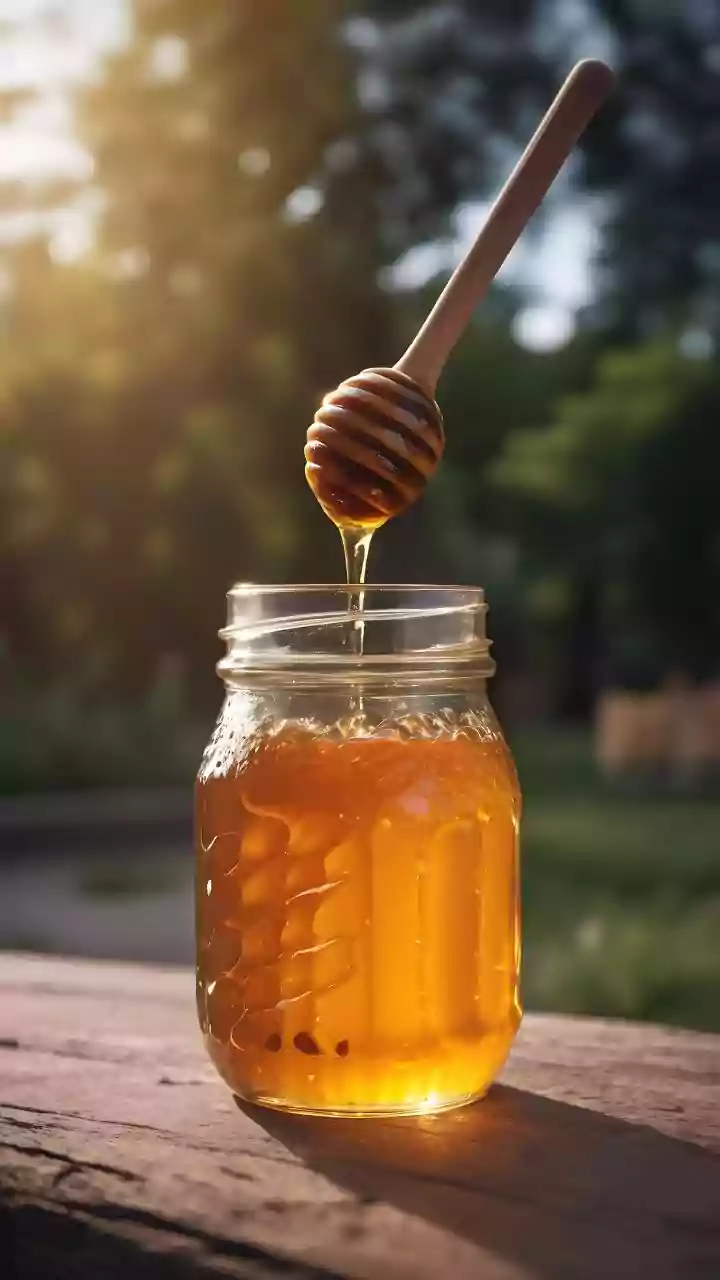
The most common test involves dropping a spoonful of honey into a glass of water. The theory is that pure honey, being dense, will sink to the bottom as a cohesive lump, while adulterated honey will dissolve quickly. The reality is this test only measures density and viscosity. While pure honey is indeed dense, so are many modern, scientifically engineered syrups designed to mimic it. Furthermore, the natural viscosity of real honey varies based on its floral source, moisture content, and temperature. A perfectly pure, but runnier, type of honey might fail this test, while a thick, adulterated syrup could easily pass.
Myth 2: The Flame Test
Another popular spectacle is the flame test, where a cotton swab or matchstick dipped in honey is set alight. The claim is that pure honey will burn, while fake honey, containing excess water, will just sputter. This test is not a measure of purity but of moisture content. All honey naturally contains some water, typically between 17-20%. A pure honey harvested during a humid season might contain enough moisture to fail the test, whereas a syrup that has been artificially thickened can have low moisture and burn perfectly well.
Myth 3: The Thumb and Paper Tests
Other similar tests include placing a drop of honey on your thumb or on blotting paper. If the honey stays in a bead and doesn't spread, it's considered pure; if it runs or gets absorbed, it’s deemed fake. Like the other tests, these are simply gauging thickness and moisture. They don't account for the fact that natural honey comes in a wide variety of thicknesses. A thick corn syrup can easily pass the thumb test, while a naturally thin, pure acacia honey might fail.
So, How Is Honey Truly Tested?
Verifying honey's authenticity is a complex scientific process that goes far beyond what can be done in a kitchen. Laboratories use sophisticated methods to get a definitive answer. Techniques like Nuclear Magnetic Resonance (NMR) spectroscopy create a detailed chemical fingerprint of the honey, allowing scientists to spot foreign sugars with incredible accuracy. Other methods, like stable isotope ratio analysis, can determine the botanical origins of the sugars, distinguishing between nectar from flowers (like in real honey) and sugars from plants like corn or sugarcane. These tests are what food safety authorities, including the FSSAI in India, rely on to enforce standards.
How to Be a Smarter Honey Buyer
Since home tests are unreliable, the best strategy is to become an informed consumer. Firstly, read the label carefully. Look for the FSSAI license number and avoid products labelled 'honey blend'. Be wary of honey that is suspiciously cheap, as producing pure honey is a resource-intensive process. Secondly, buy from trusted sources. This could be a local beekeeper or a reputable brand that provides transparency about its sourcing and testing. Finally, understand the nature of real honey. Many people mistakenly believe that honey that crystallises has gone bad or is mixed with sugar. In fact, crystallisation is a natural process for most types of pure, raw honey and is often a sign of authenticity.