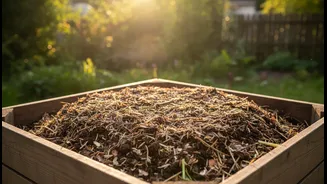








The Monsoon Composting Problem
For gardeners across India, the arrival of the monsoon is a celebrated event. But inside the compost bin, it can be another story. The constant moisture and high humidity can turn a healthy, earthy-smelling compost pile into a waterlogged, foul-smelling
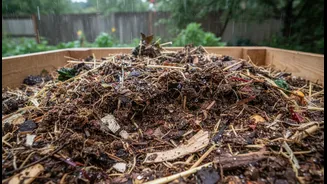
disaster. The science is simple: composting relies on aerobic microbes, tiny organisms that need oxygen to break down organic waste efficiently. When a compost pile gets too wet, water fills the air pockets, creating an anaerobic (oxygen-free) environment. This invites the wrong kind of bacteria, which produce unpleasant odours like ammonia or rotten eggs and create a slimy texture instead of rich, crumbly compost. The abundance of fresh green kitchen scraps and garden clippings during the rains, which are high in nitrogen and water, only makes the problem worse.
Your Secret Weapon: A Stockpile of 'Browns'
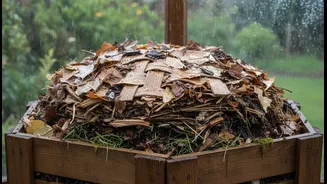
The key to countering excess moisture is to master the balance between 'greens' and 'browns'. 'Greens' are nitrogen-rich, moist materials like kitchen scraps and fresh grass. 'Browns' are carbon-rich, dry materials. During the monsoon, your most valuable composting asset is a ready supply of browns. This includes dried leaves, shredded cardboard (without glossy prints or plastic tape), newspaper, sawdust, and cocopeat. These materials perform two critical jobs: they absorb excess moisture from the greens and create air pockets, which helps maintain the aerobic conditions needed for good decomposition. The most effective strategy is to prepare before the rains begin. Spend the dry season collecting and storing fallen leaves in sacks or bags. Having a large, dry stockpile of carbon-rich material is the single most important step you can take for successful monsoon composting.
Let It Breathe: The Importance of Airflow
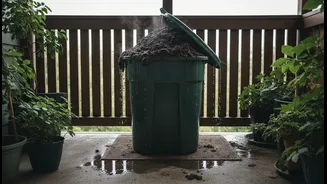
A wet pile is a compacted pile, and a compacted pile has no air. To keep your compost healthy, you must ensure it is well-aerated. The simplest way is to turn the pile with a garden fork every few days, especially after heavy rain. This breaks up clumps, distributes moisture, and introduces a fresh supply of oxygen. If turning is difficult, you can improve passive aeration. Start your pile on a raised base of coarse twigs or even a wooden pallet to improve drainage and allow air to enter from below. Another effective technique is to insert perforated PVC pipes or wooden stakes vertically into the pile to create permanent air channels. Covering the bin with a lid or tarp is essential to shield it from direct rain, but ensure the cover is not airtight; airflow is still crucial.
Why Compost Activators Aren't the Answer
When a compost pile stalls or starts to smell, it's tempting to reach for a commercial 'compost activator'. These products often contain concentrated sources of nitrogen or a cocktail of microbes, designed to kick-start decomposition. However, they are typically effective only when a pile has too much carbon (browns) and not enough nitrogen (greens). During the monsoon, the problem is almost always the opposite: too much nitrogen-rich, wet material and not enough carbon or air. Adding a nitrogen-based activator to a pile that is already soggy and smelling of ammonia will only worsen the imbalance. The unpleasant smell is a signal of anaerobic conditions, which an activator cannot fix. The microbes needed for composting are already present in the air, in soil, and on the organic materials themselves; they don't need to be added if the conditions are right.
A Simple Recipe for Monsoon Success
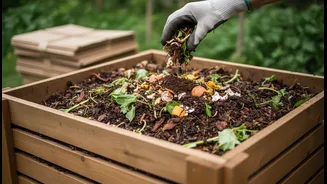
Forget complicated ratios and expensive additives. Follow this simple rule of thumb for trouble-free composting during the rains. For every one part of wet kitchen waste ('greens') you add to your bin, add at least two parts of dry material ('browns'). This could be a bucket of vegetable peels balanced with two buckets of dry leaves or shredded cardboard. Mix the new materials into the pile as you add them to ensure they are well-integrated. Cover the bin to protect it from rain, but allow for ventilation. Turn the pile every three to four days to keep it aerated. If it starts to look too wet or develops an off-smell, simply mix in more dry browns. This fundamental approach of balancing moisture with carbon and ensuring airflow is far more effective than any store-bought solution.