


The Return of a Legend
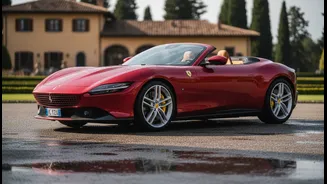
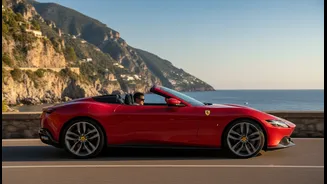
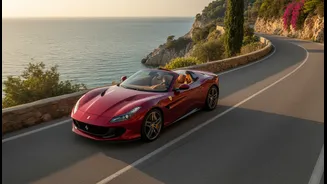
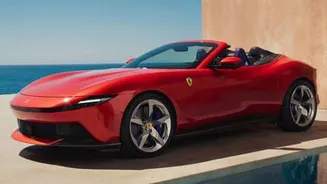
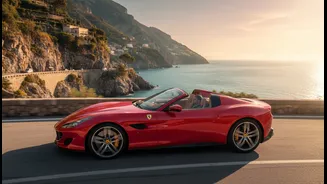
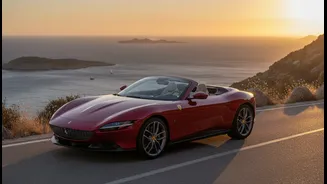
When Ferrari unveiled the Roma Spider, it did more than just introduce a new convertible. It revived a tradition. This marked the first time in 54 years that a front-engined Ferrari sported a fabric roof, a feature last seen on the legendary 1969 365
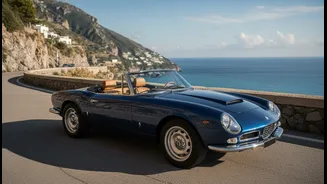
GTS4. In a market dominated by complex and heavy retractable hard tops, this decision was a deliberate statement. The Roma Spider isn’t just a Roma coupe with the roof removed; it’s a thoughtfully engineered homage to the golden era of Italian grand touring, designed to evoke the “La Nuova Dolce Vita” or “the new sweet life.” The choice connects the car to a lineage of iconic open-top Ferraris, like the 250 GT California, that were celebrated for their elegance and carefree spirit.
More Than Just Fabric
Choosing a soft top wasn't about simply going back in time. Modern technology has transformed what a fabric roof can be. The Roma Spider’s top is a sophisticated five-layer assembly that provides acoustic and thermal insulation on par with a retractable hard top. It opens or closes in a mere 13.5 seconds at speeds up to 60 km/h. This modern engineering delivers classic benefits: a fabric roof is lighter and more compact when stowed. By avoiding a bulky metal roof, Ferrari preserved the car's sleek proportions and freed up more boot space, making it more practical. The weight saving also contributes to the car's excellent power-to-weight ratio, a critical aspect of its performance.
The Sound of Performance
One of the most cherished aspects of a classic Spider is the unfiltered connection to the driving experience, and a huge part of that is sound. A fabric roof, even a modern, insulated one, allows more of the engine's symphony into the cabin. This was a key consideration for Ferrari. The Roma Spider is powered by a 3.9-litre twin-turbo V8, an engine that has won multiple “International Engine of the Year” awards. This 612-horsepower engine is known for its exhilarating soundtrack. By opting for a soft top, Ferrari ensured that the driver and passenger can fully appreciate the glorious noise from the V8, creating an immersive, sensory experience that a more isolated hard-top convertible might muffle. It’s a choice that prioritizes emotion and engagement, hallmarks of the classic Spider character.
High-Tech Heart, Classic Soul
The fabric roof may be a nod to the past, but the rest of the car is firmly planted in the 21st century. The Roma Spider shares its advanced all-aluminium chassis and powertrain with the Roma coupe. It boasts an eight-speed dual-clutch transmission, an active rear spoiler that adjusts for optimal downforce, and Ferrari’s sophisticated Side Slip Control system for incredible handling precision. The cabin features a digital instrument cluster and a central 8.4-inch touchscreen, a clear departure from the analog dials of the past. This juxtaposition is what defines the Roma Spider. It isn't a retro car; it's a thoroughly modern supercar that uses a classic element to define its soul. The fabric roof isn't a technological compromise but a deliberate aesthetic and experiential choice.
A Statement of Intent
In the competitive supercar landscape, differentiation is key. By bringing back the soft top, Ferrari has carved out a unique niche for the Roma Spider. It stands apart from its predecessor, the Portofino M, and other hard-top rivals by offering a different flavour of open-air motoring. It’s a car built not just for staggering lap times but for the pleasure of the journey. The extensive personalisation options for the roof, including special fabrics and contrasting stitching, further underscore the emphasis on style and individuality. This decision signals that in the pursuit of high technology, there is still room for tradition, and that sometimes, the most classic solution can create the most contemporary and compelling character.