






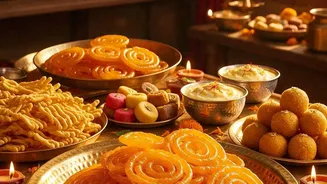
Each year, millions of married Hindu women undertake one of the world's most demanding fasts: Karwa Chauth. Going without food or even a sip of water from sunrise to moonrise is an immense test of will. But what does this ancient act of abstinence truly
say about our relationship with eating and drinking?
The Ritual of Abstinence
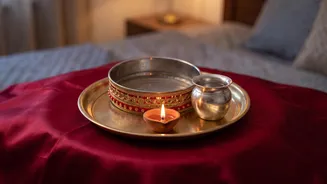
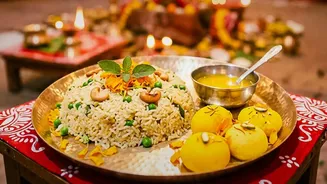
Karwa Chauth is a one-day festival celebrated in many parts of India, traditionally by married women for the longevity and well-being of their husbands. The fast, known as a 'nirjala vrat', is absolute — no food or water from the first light of dawn until the moon is sighted at night. The day begins before sunrise with a special meal called 'sargi', gifted by a mother-in-law, designed to provide sustenance for the long hours ahead. The fast concludes only after prayers are offered to the moon, and the husband offers his wife the first sip of water and bite of food. While rooted in stories of legendary queens like Veervati and Savitri, who showed immense devotion to their husbands, the festival's meaning continues to evolve.
A Test of Mind and Body
The physical challenge of a waterless fast is obvious, demanding significant mental and physical prowess. Proponents view it as a powerful exercise in self-control and spiritual discipline. By temporarily detaching from fundamental bodily needs like hunger and thirst, the fast is said to shift focus toward spiritual and emotional goals, purifying the mind and strengthening resolve. Some health-focused interpretations connect this practice to modern wellness concepts like autophagy—a cellular cleaning process that can be triggered by fasting, where the body recycles damaged components. While a healthy person can typically manage a day-long dry fast, it's a significant physiological stressor that requires careful consideration.
Beyond the Fast: A Day of Community
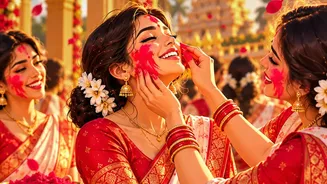
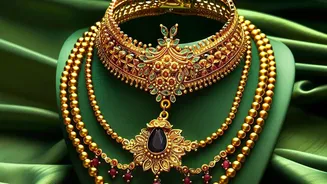
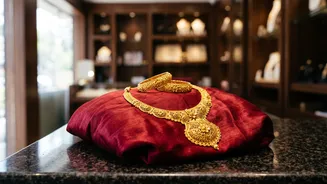
To focus only on the abstinence of Karwa Chauth is to miss half the story. The day is also a vibrant celebration of community and sisterhood. Historically, the festival was a way for newly married women, often living far from their families, to bond with other women in their new village, creating a network of 'god-friends'. This social aspect remains crucial. Women gather in the afternoon to perform puja together, dress in festive finery, apply henna, and share stories and songs. It’s a day marked not by the emptiness of a plate, but by the fullness of shared experience, transforming a personal sacrifice into a collective celebration.
A Tradition in Transition
Like any living tradition, Karwa Chauth is adapting to modern times. The festival has faced criticism for reinforcing patriarchal norms, placing the responsibility for a husband's health solely on his wife. In response, the practice has begun to evolve into a more reciprocal expression of love and partnership. It's increasingly common for husbands to fast alongside their wives as a gesture of solidarity and mutual respect. Some people adapt the rigours of the fast, choosing to consume water or fruit, prioritising health while still honouring the spirit of the day. This flexibility shows that the festival is not a rigid decree but a tradition capable of reflecting contemporary values of equality and shared commitment.