



Rethinking Core Strength
When we hear “core work,” many of us picture endless crunches in pursuit of a visible six-pack. But true core strength is about something far more functional: stability. Your core is a complex system of muscles, including the deep spinal stabilizers,
obliques along your sides, glutes, and lower back. Its primary job is to create a solid, stable base for all your movements, from lifting groceries to simply walking. A key concept in this is maintaining a “neutral spine.” This refers to the natural, gentle curves of your back, a position where your spine is under the least amount of stress. Strengthening your body’s ability to hold this position during movement is the real goal of core training.
The Challenge of a Full Side Plank
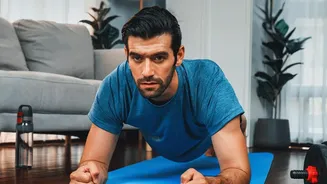
The full side plank is a fantastic exercise because it challenges the entire lateral chain of muscles responsible for this stability, particularly the obliques and the quadratus lumborum in the lower back. However, it's also very demanding. Holding a straight line from shoulder to foot requires immense strength and control. For many, jumping straight into a full side plank can lead to common form breakdowns. The most frequent mistake is letting the hips sag toward the floor, which defeats the purpose of the exercise and can put strain on the lower back. Other issues include the torso rotating forward, placing undue stress on the shoulder joint, or craning the neck out of alignment. When form is compromised, the exercise becomes less effective and can increase the risk of injury.
The Knee-Down Plank Advantage
This is where the knee-down, or modified, side plank shines. It’s not an “easier” or lesser version; it’s a smarter starting point for mastering the mechanics. By placing your bottom knee on the ground, you shorten the lever, reducing the overall load your core has to stabilize. This makes it significantly more manageable to focus on what truly matters: achieving and holding proper alignment. With less strain, you can concentrate on keeping your hips lifted and pushed slightly forward, maintaining that straight line from your head to your knees, and engaging your core muscles without your form breaking down. It allows you to build foundational strength and muscle memory correctly, which is far more valuable than struggling through a sloppy full plank.
How to Do It Right
Ready to try it? Here’s a step-by-step guide to the perfect knee-down side plank: 1. Lie on your right side with your knees bent and stacked. Prop your upper body up on your right forearm, ensuring your elbow is directly underneath your shoulder to protect the joint. 2. Engage your core by gently drawing your belly button toward your spine. This is the bracing action that keeps your spine safe. 3. Press into your right forearm and right knee, lifting your hips off the floor. Your body should form a straight line from your head, through your torso, to your knees. 4. Avoid letting your hips drop or roll back. Think about actively lifting your bottom hip toward the ceiling. You should feel the work primarily in the side of your waist (your obliques). 5. Keep your neck long and in line with your spine. Your gaze can be straight ahead. Hold for 15-30 seconds, breathing steadily. Lower your hips with control and repeat on the left side.
Building on Your Foundation
The goal of a modification isn't to stay there forever, but to build the strength needed to progress. Once you can comfortably hold a knee-down side plank with perfect form for 45-60 seconds, you can start to advance. A great next step is to perform the exercise from your knees but straighten your top leg. This adds a little more length and challenge. From there, you can try staggering your feet in a full side plank (one foot in front of the other) for a wider base of support, before eventually moving to the final version with your feet stacked. The key is to progress at your own pace, always prioritizing good form over the duration of the hold or the difficulty of the variation. Quality of movement is always more important than quantity.