

Karnataka’s Royal Mysore Pak
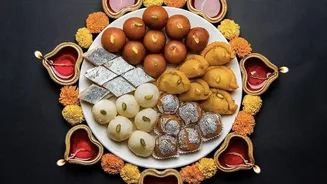
A sweet that was literally born in a palace, Mysore Pak is a testament to royal indulgence. First created in the kitchens of the Mysore Palace for King Krishna Raja Wadiyar IV, this iconic sweet has a simple but magical recipe. It combines gram flour
(besan), generous amounts of ghee, and sugar to create a block that can range from a soft, fudge-like consistency to a more porous, brittle texture. The name itself means 'Mysore's confection'. Its golden colour and melt-in-the-mouth quality make it a fittingly regal start to any festive spread, representing the rich heritage of the South.
West Bengal's Delicate Sandesh
From the grand richness of Mysore Pak, we move east to the subtle elegance of Sandesh. A cornerstone of Bengali cuisine, Sandesh is crafted from fresh, finely kneaded chhena (a fresh, unripened curd cheese), and sugar. Unlike fried or heavily syrupy sweets, its beauty lies in simplicity and texture. It can be delicately flavoured with cardamom or saffron and is often moulded into beautiful shapes like shells or elephants. The name 'Sandesh' also means 'message', and this sweet is often used to convey good news and celebrate joyous occasions, making it a perfect symbol of festive cheer.
Rajasthan’s Honeycomb Ghevar
Ghevar is a sweet that looks as fascinating as it tastes. This disc-shaped Rajasthani delicacy has a unique, honeycomb-like texture. It's made by drizzling a batter of flour and ghee into hot oil, a process that requires considerable skill to create its signature porous web. The crisp, golden disc is then soaked in sugar syrup and often topped with rabri (thickened sweet milk), nuts, and silver leaf. Traditionally associated with the monsoon festivals of Teej and Raksha Bandhan, Ghevar's intricate preparation and spectacular appearance speak to the vibrant and celebratory culture of the West.
Maharashtra’s Comforting Puran Poli
More than just a sweet, Puran Poli is a wholesome, comforting dish deeply woven into Maharashtrian culture. It is a soft, thin flatbread filled with a sweet mixture called 'puran', which is made from cooked chana dal (split Bengal gram) and jaggery, scented with cardamom and nutmeg. Served warm with a dollop of ghee, it’s a staple during festivals like Ganesh Chaturthi and Holi. Its history is believed to trace back to the Maratha Empire, where it served as an energy-giving food for warriors. Puran Poli represents the heart of Central and Western India—warm, fulfilling, and steeped in tradition.
Kerala's Creamy Ada Pradhaman
Heading south again, we arrive in Kerala for a taste of Ada Pradhaman, often called the 'king of payasams'. This traditional dessert is a highlight of the grand Onam sadya (feast). It’s a rich, creamy pudding made with 'ada' (small, flat pieces of rice pasta), jaggery, and coconut milk. The ada is slow-cooked in a luscious blend of thick and thin coconut milk, creating a silky texture. Garnished with cashews and coconut pieces fried in ghee, it is a luxurious treat that embodies the abundance of 'God's Own Country'.
Assam’s Versatile Pitha
From the Northeast, we have Pitha, a broad term for a variety of rice cakes that are central to festivals like Bihu in Assam. Pithas can be sweet or savoury, steamed, fried, or baked. One of the most popular sweet versions is the Til Pitha, a thin, cylindrical crepe made of rice flour filled with a mixture of toasted black sesame seeds and jaggery. Another is the Narikol Pitha, stuffed with a sweet coconut filling. These rice-based treats showcase the agricultural heart of the region and the simple, profound flavours of its cuisine.
Jammu & Kashmir’s Royal Shufta
Travel to the northernmost tip of India for Shufta, a rich and warming dessert that is truly fit for royalty. This traditional Kashmiri delicacy is a luxurious medley of dry fruits and nuts. Ingredients like almonds, walnuts, cashews, and dates are soaked and then gently fried in ghee before being simmered in a sugar syrup spiced with cardamom, cinnamon, and saffron. Often, small cubes of fried paneer are also added, enhancing its richness. Shufta is more than a dessert; it’s a powerhouse of energy, designed to provide warmth in the cold climate and represents the luxurious flavours of the Kashmiri table.