




A Partnership for a New Space Age
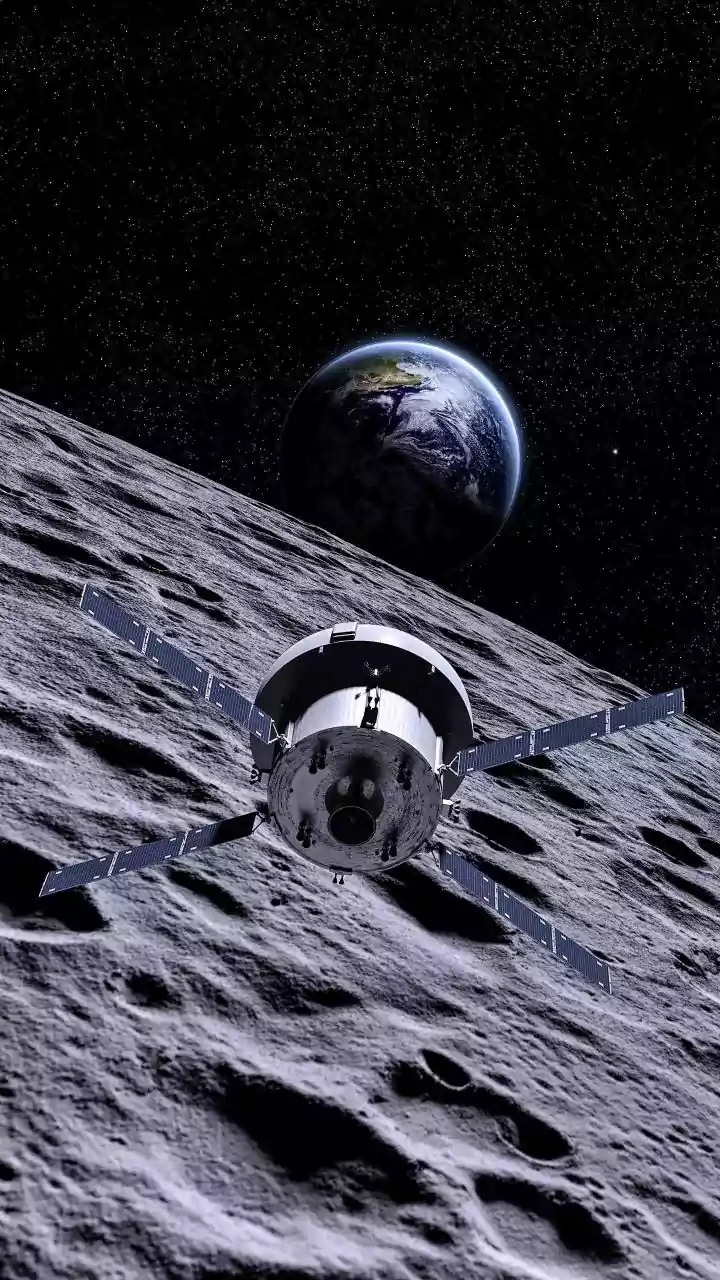
NASA's ambitions for the Artemis program go far beyond flags and footprints. The goal is to build a sustainable presence on the Moon, a true lunar base camp that can support astronauts for long durations. That vision, and the even more ambitious goal of
sending humans to Mars, runs into a fundamental problem: power. Solar panels are useful, but a lunar night lasts for 14 Earth days, and Mars is much farther from the Sun. To solve this, NASA has deepened its decades-long collaboration with the U.S. Department of Energy (DOE), the nation's experts in nuclear technology. A recently signed memorandum of understanding solidifies their joint effort to develop space-rated nuclear systems. The partnership tasks the DOE with providing expertise in nuclear fuel and reactor safety, while NASA acts as the lead integrator, defining the requirements for exploring the cosmos. The goal is to have American nuclear reactors operating on the Moon and in deep space, enabling a new 'Golden Age' of exploration.
Two Nuclear Paths: On the Surface and in Transit
The collaboration is focused on two distinct but equally crucial technologies: Fission Surface Power (FSP) and Nuclear Thermal Propulsion (NTP). Fission Surface Power is essentially a small-scale nuclear reactor designed to be deployed on the surface of the Moon or Mars. This system would provide a continuous, reliable power source, independent of sunlight, capable of generating upwards of 40 kilowatts—enough to run dozens of households and power habitats, science experiments, and rovers through the long, cold lunar night. NASA and the DOE are aiming to have a reactor ready for the lunar surface by the early 2030s. Nuclear Thermal Propulsion, on the other hand, is about getting there faster. An NTP engine uses a nuclear reactor to heat a propellant like liquid hydrogen to extreme temperatures, creating thrust. This method is about twice as efficient as the best chemical rockets used today, which could slash the transit time for a human mission to Mars. Reducing travel time is critical for astronaut safety, as it minimizes their exposure to deep-space radiation and the health effects of microgravity.
Why Nuclear is a Game Changer
For decades, the dream of sending humans to Mars has been constrained by the tyranny of the rocket equation. With conventional chemical rockets, the amount of propellant needed for a round trip is immense, requiring complex, multi-launch mission architectures. Nuclear Thermal Propulsion changes this calculation. By significantly increasing fuel efficiency, NTP reduces the overall mass that needs to be launched from Earth, making missions simpler and more robust. It also enables new safety options, like the ability to abort a mission and return to Earth quickly if something goes wrong. Meanwhile, on the surface, Fission Surface Power unlocks the potential for true settlement. Without a constant source of power, a lunar base would be limited to what it could achieve during the sunlit periods. A fission reactor provides the 'always on' electricity needed to run life support, conduct large-scale science, and even test technologies for utilizing local resources, like mining for water ice—a process essential for producing air, water, and even rocket fuel on site.
From Concept to In-Space Demonstration
This isn't just theory. The partnership is actively moving these technologies from the lab to the launchpad. A key upcoming milestone is the DRACO mission, short for Demonstration Rocket for Agile Cislunar Operations. A collaboration between NASA and DARPA, DRACO aims to test a nuclear thermal rocket engine in orbit for the first time in more than 50 years, with a potential launch window as early as late 2025 or 2026. The reactor will only be activated once it reaches a safe, high orbit, where it will take hundreds of years to naturally de-orbit, ensuring any residual radioactive material is spent. The data from DRACO will be invaluable for designing the full-scale engines needed for Mars. Simultaneously, work on Fission Surface Power is proceeding through commercial partnerships, with companies like Lockheed Martin and Westinghouse developing reactor designs. The plan is to mature these concepts toward a flight-ready unit that can be demonstrated on the Moon.