



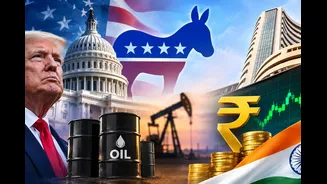
The results of the US midterm elections are in, delivering a rebuke to the sitting president and shifting control of Congress. For India, this political upheaval in Washington introduces significant uncertainty into the future of a crucial partnership.
A New Political Map in Washington
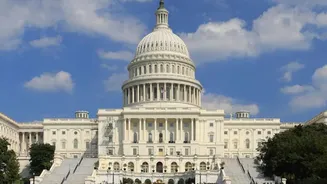
American voters have handed control of both the House of Representatives and the Senate to the Democratic Party, delivering a significant blow to President Donald Trump and the Republicans. This sweeping victory, surpassing many expectations, was driven by voter discontent over economic anxieties, rising fuel costs, and foreign policy, particularly the war with Iran. With Democrats now in control of both chambers, President Trump's domestic agenda is effectively stalled. This sets the stage for two years of heightened political friction, with Congress empowered to block the president's legislative agenda and launch investigations. For New Delhi, this new reality in Washington complicates an already complex relationship, especially on the economic front.
The Big Question: What Happens to Trade Talks?
The most immediate question for India is the fate of the bilateral trade agreement, which has been under negotiation. Experts are divided on the implications. Some believe the Democratic win could ease pressure on India, as the new Congress is expected to scrutinize President Trump's aggressive use of tariffs more closely. However, many analysts caution against expecting a major policy reversal. A strong protectionist sentiment now exists in both parties, with a shared focus on economic nationalism and protecting American jobs. The president retains significant executive authority to impose tariffs without congressional approval, using tools like Section 232 and 301 investigations. In fact, facing a hostile Congress, the administration might increase pressure on India to secure a quick trade deal as a much-needed foreign policy 'win'.
Key Sticking Points Remain
The core issues dividing India and the US in trade talks are unlikely to disappear. Washington has been pushing for greater market access for its agricultural and industrial goods, while New Delhi is seeking relief from high tariffs on its exports, such as steel and aluminium. The trade framework being negotiated is seen by some as fundamentally different from India's other free trade agreements, with the US retaining its tariffs while India is expected to lower its own. Furthermore, broader strategic issues, such as India's continued purchase of Russian oil, have been linked to trade discussions, creating another layer of complexity. A Democratic-controlled Congress might debate these sanctions and tariffs with more vigor, but it won't necessarily lead to a more accommodating stance toward India.
Beyond Tariffs: IPEF and Tech Cooperation
The uncertainty extends to broader economic initiatives like the Indo-Pacific Economic Framework for Prosperity (IPEF). Launched in 2022, IPEF is a cornerstone of US economic engagement in Asia, covering trade, supply chains, and the clean economy. While India is a key partner, the trade pillar of IPEF has already faced political headwinds within the US due to anti-trade sentiment. A divided government or shifting priorities in a new Congress could further slow progress. On the other hand, areas like technology and defense cooperation enjoy strong bipartisan support, driven by shared strategic concerns about China. Cooperation on advanced technologies, resilient supply chains, and defense manufacturing will likely remain a stable pillar of the relationship, regardless of the political friction over trade.