

The Enduring Allure of Gold
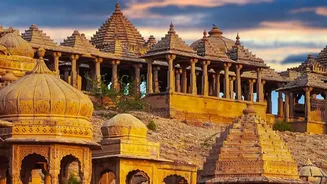
For centuries, a touch of gold has signified artistry, devotion, and royalty in India. From the delicate gold leaf on sweets, known as vark, to the gilded domes of temples, this precious metal is woven into our cultural fabric. Today, that timeless shimmer
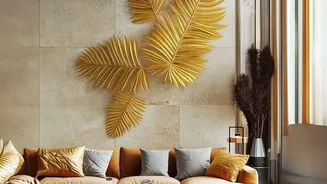
is finding a new role within the clean lines and neutral palettes of contemporary homes. It's no longer about ostentatious displays, but about adding warmth, texture, and a story. A flash of gold on a wall, a thread of it in a cushion, or the gleam from a traditional painting connects a space to a history of master craftsmanship, making it feel curated and deeply personal.
Zardozi: From Royal Robes to Statement Walls
Zardozi, the opulent art of weaving with metallic threads, once graced royal attire and ceremonial textiles. This three-dimensional embroidery, often incorporating pearls and beads, is now making a stunning transition from fashion to home interiors. Instead of being confined to clothing, Zardozi is being reimagined for wall art, accent cushions, and even as upholstered panels on furniture. A framed Zardozi panel can become a striking focal point in a minimalist living room, adding texture and a touch of heritage that mass-produced art cannot replicate. For a subtler approach, velvet cushions with Zardozi detailing on a modern sofa can add a layer of opulence and depth.
Pichwai & Tanjore: Art That Anchors a Room
Traditional Indian paintings, rich with gold leaf and intricate detail, are moving from prayer rooms to become celebrated centerpieces in contemporary design. Pichwai paintings, originating from Nathdwara, Rajasthan, are known for their vibrant depictions of Lord Krishna, lotus blooms, and cows. Their detailed craftsmanship and cultural depth can anchor a modern room, providing a powerful focal point that sparks conversation. Similarly, Tanjore paintings, with their characteristic gold foil work and embedded semi-precious stones, offer a unique blend of art and artifact. When placed on a neutral wall, a large Pichwai or Tanjore painting balances modern simplicity with traditional richness, creating a space that feels both serene and soulful.
Thikri: The Shimmer of Mirror Mosaics
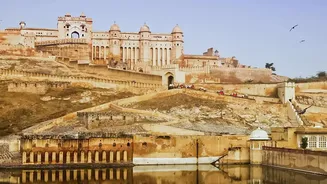
Originating in the palaces of Rajasthan, Thikri is the art of creating intricate patterns with hand-cut mirror pieces set in plaster. The iconic Sheesh Mahal (Palace of Mirrors) in Amer Fort is a testament to its dazzling effect, where a single flame could illuminate an entire hall. Today, interior designers are using Thikri to bring that same light-scattering magic into modern homes. It’s being used to create stunning accent walls, decorative panels, and even unique backdrops for a home mandir. A Thikri-adorned wall or a framed piece of this art catches and reflects light, making a space feel brighter, larger, and infused with a sense of royal heritage.
A Guide to Tasteful Gilding
Incorporating gold into your home is about balance. The key is to treat it as a precious accent, not the main event. Start small with a few handcrafted pieces, like brass diyas or a small figurine, to add a subtle touch of heritage. When using gilded textiles like Zardozi, let one or two cushions be the statement, rather than overwhelming a sofa. Pair gilded art or furniture with neutral palettes like whites, greys, and earthy tones to allow the gold to stand out without competing. The beauty of these crafts lies in their hand-made nature; giving each piece enough space to be appreciated allows its story and craftsmanship to truly shine.