








The Core Issue: Protecting Drivers
At the heart of any vehicle recall is the non-negotiable issue of owner safety. Recent recalls from Ford underscore the real-world risks when automotive systems fail. For instance, a massive recall of over 741,000 vehicles was initiated in mid-2026 due
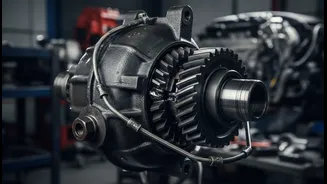
to a transmission park system defect. This issue could allow a parked car to roll away unexpectedly, posing a significant danger to property and, more importantly, to people nearby. The US National Highway Traffic Safety Administration (NHTSA) noted that Ford was aware of several allegations of property damage and injuries related to this single issue. Another recent recall involved the Mustang Mach-E, where a rear differential pinion shaft could fracture, leading to a sudden loss of power while driving or causing the vehicle to move when parked. These examples highlight how failures can directly endanger drivers, passengers, and pedestrians, making proactive recalls a critical safety measure.
The Ghost in the Machine: Decoding Software Bugs
Modern cars are essentially computers on wheels, running on millions of lines of code that control everything from the engine to the infotainment screen. This complexity means that a software bug can be as dangerous as a mechanical fault. A recent software glitch prompted Ford to recall over 4 million vehicles because it could cause trailer brake lights and turn signals to malfunction, increasing crash risks. In other instances, software errors can prevent critical safety systems from working. A separate recall was issued for hybrid models because a software error could stop the vehicle from producing a pedestrian warning sound at low speeds. Unlike a physical defect, software problems are often invisible and can affect crucial functions like automatic braking or airbag deployment without warning. The solution is often a software update, which manufacturers can sometimes deploy over-the-air, but the potential for harm before the fix is significant.
The Old Foe: Understanding Mechanical Fatigue
While software issues grab modern headlines, traditional mechanical failures remain a persistent threat. Mechanical fatigue is the progressive damage that occurs when a material is subjected to repeated stress and strain over time. Think of bending a paperclip back and forth until it snaps; the same principle applies to car parts. Components in a car's suspension, engine, and drivetrain are constantly exposed to vibrations and load cycles that can lead to microscopic cracks. Over thousands of kilometres, these tiny cracks can grow until the part fails unexpectedly. A recent recall of the Mustang Mach-E for a fracturing pinion shaft is a classic example of potential mechanical fatigue. This type of failure isn't due to a single major impact but the accumulation of stress from normal use, a silent process that can have abrupt and dangerous consequences.
A Dangerous Cocktail: When Software and Hardware Fail Together
The most complex and concerning issues arise when software bugs and mechanical wear interact. In some cases, a software command can cause unexpected stress on a physical part, accelerating its fatigue and eventual failure. For example, a recent Ford recall concerned a transmission issue where certain shifts commanded by the vehicle's software could cause the transmission parking pawl to engage while the car was in motion, damaging the component. Over time, this damage could prevent the vehicle from being securely held in 'Park'. Here, a software problem directly leads to mechanical damage. This dangerous interplay highlights the new reality of vehicle engineering: a faulty line of code can be just as destructive as a flaw in a piece of steel, and automakers must now test for both digital and physical endurance simultaneously. The fix for such problems often involves both a software update and a physical inspection or replacement of parts.