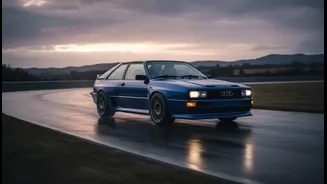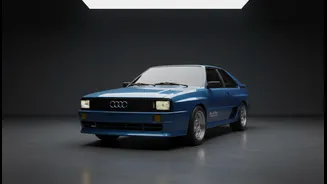





An Icon Forged in Rallying
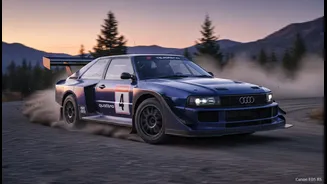
To understand the hype, you have to go back to the 1980s and the infamous Group B era of the World Rally Championship (WRC). This was a time of minimal regulations and maximum power, producing some of the fastest and most dangerous cars ever raced. Audi
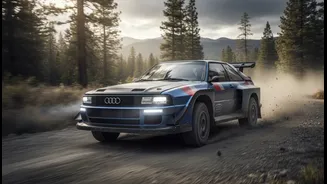
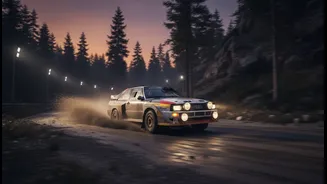
dominated this era with its revolutionary “Quattro” all-wheel-drive system, which transformed the sport forever. The ultimate expression of this was the Audi Sport Quattro. To qualify for Group B, manufacturers had to build at least 200 road-legal versions. Audi created a car with a shorter wheelbase for agility, a powerful five-cylinder turbo engine, and body panels made from lightweight Kevlar. It was a monster on the rally stage and an instant legend, with only 169 ever sold to the public.
Enter HSR, The Modern Masters
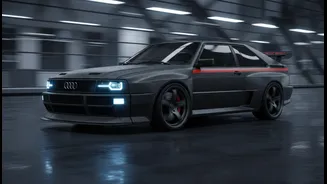
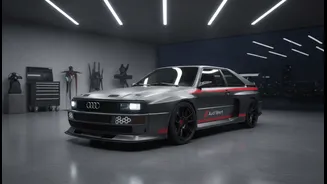
This new revival is not an official Audi project. Instead, it comes from a German specialist called HSR Manufaktur, which stands for Homologation Specials Reimagined. Their mission is to resurrect motorsport legends using modern technology. This process, known as 'restomodding', blends classic design with contemporary performance and reliability. HSR isn't using priceless original Sport Quattros for their project. They start with a period-correct (and more common) Audi Coupe B2 chassis, the same base the original rally cars used. This preserves the few original cars left while creating an authentic foundation for their modern tribute.
Rebuilding a Legend, Piece by Piece
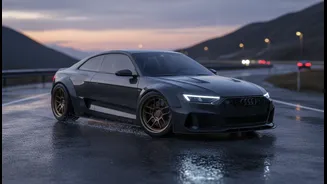
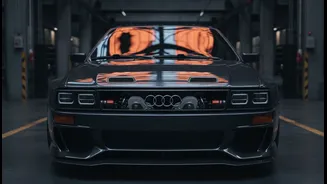
The HSR Type 859, as it's called, is a complete re-engineering of the classic. The donor chassis is shortened, and the wheelbase is subtly stretched to improve the high-speed stability that the original sometimes lacked. A hidden roll cage is integrated for modern safety and chassis stiffness. The bodywork is where the biggest visual change occurs. Every panel is replaced with lightweight carbon fibre, keeping the car's weight down to a feather-light 1,200 kg. Under the hood, HSR installs a modern Audi 2.5-litre five-cylinder engine—the same award-winning motor found in the recent RS3—but heavily modified with forged internals to produce a staggering 500 to 600 horsepower, selectable by the driver. This power is sent to all four wheels through a reinforced six-speed manual gearbox.
The Strategy Behind 84 Cars
HSR has committed to building only 84 examples of the Type 859. This number isn't arbitrary; it's a direct nod to 1984, the year Audi won the WRC manufacturer's title with the Quattro. This decision is a masterstroke in business strategy. In the world of high-end collectibles, scarcity is the ultimate driver of value. By strictly limiting production, HSR guarantees from day one that the Type 859 will be one of the most exclusive cars on the road. This strategy elevates the car from a simple replica to a blue-chip collector's item before the first one is even delivered. It creates immense desirability among wealthy enthusiasts who prize uniqueness above all else.
The High Price of Exclusivity
Such craftsmanship and rarity come at a steep price. The HSR Type 859 starts at approximately €500,000, which translates to over ₹5 crore before any import taxes and customisation. For that price, buyers get a vehicle hand-built to their specifications, blending the raw soul of a Group B rally car with modern conveniences like air conditioning and selectable driving modes. It's a car with a power-to-weight ratio that rivals modern hypercars like the Ferrari SF90, but with the analogue feel of a manual gearbox and the unmistakable silhouette of a 1980s icon. HSR reports that demand is already high, particularly from collectors in the USA and Europe, and prospective owners must apply to be considered for an allocation.