








After years of sluggishness, India's automobile market is showing strong signs of a revival, and it's being led by an unexpected group: first-time buyers. Their return points to renewed consumer confidence and a potential turning point for the industry.
The Return of the First-Time Buyer
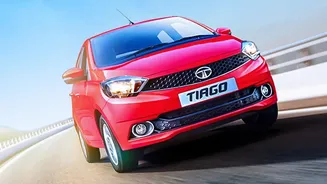
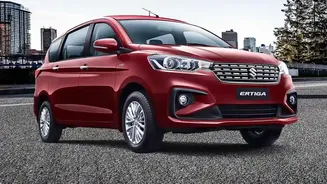
The most significant indicator of the auto market's health is the resurgence of new entrants. At Maruti Suzuki, India's largest carmaker, first-time buyers accounted for 54% of sales between April and August 2026, a substantial jump from 42% in the same period last year. This isn't an isolated trend. Other major players like Tata Motors and Mahindra & Mahindra have also reported a noticeable increase in first-time customers. This demographic, which had been priced out of the market due to rising costs, is now returning, suggesting that car ownership is becoming accessible once again for a broader segment of the population. This shift is crucial as it expands the base of the market, paving the way for sustained, long-term growth rather than just a temporary sales spike.
What's Driving the Comeback?
A key catalyst for this revival was the government's reduction of the Goods and Services Tax (GST) on smaller cars in September 2025. The tax on vehicles under four metres was lowered from 28% to 18%, making entry-level hatchbacks and compact cars significantly more affordable. For many models, this translated into price cuts of up to ₹1.3 lakh, a crucial factor for budget-conscious buyers. Stable interest rates on auto loans have also played a vital role, making equated monthly installments (EMIs) more manageable. This improved affordability is encouraging many who previously relied on two-wheelers to make the leap to their first car. Automakers note this has given fresh momentum to India's journey toward mass motorisation.
Broad-Based Growth Across Segments
While the entry-level segment is making a strong comeback, the growth isn't limited to small cars. The entire passenger vehicle market is experiencing an upswing. According to recent industry data for September 2026, passenger vehicle sales saw a 21% year-on-year increase. Carmakers like Tata Motors and Mahindra registered impressive gains, with overall domestic passenger vehicle volumes rising 37% year-on-year in August 2026. This indicates a broad-based recovery that extends beyond the first-time buyer. The demand for utility vehicles (UVs) remains particularly robust, continuing to outpace overall market growth and capturing a larger share of sales. This dual-engine growth—powered by both affordable small cars and popular SUVs—points to a healthy and diverse market.
The SUV Juggernaut Continues
Even with the revival of hatchbacks, the love affair with Sports Utility Vehicles shows no signs of slowing down. SUVs continued their market share expansion, climbing to 58% in the current fiscal year. This trend reflects a shift in consumer preference towards vehicles that offer higher ground clearance, more space, and a commanding road presence. Interestingly, this preference is also seen among first-time buyers, many of whom are now opting for a compact SUV as their inaugural vehicle instead of a traditional hatchback. Models like the Tata Punch have seen sales nearly double year-on-year, highlighting the incredible demand in this category. This demonstrates that while affordability is bringing buyers back, aspirations are simultaneously pushing them towards larger, more feature-rich vehicles.
The Road Ahead: Festive Hopes and Cautious Optimism
The industry is looking ahead to the upcoming festive season, a period that typically accounts for a significant portion of annual sales, with high expectations. With healthy demand and improved consumer sentiment, analysts anticipate a 'bumper' festive season. However, there is also a degree of caution. After a period of strong growth, sales figures will be compared against a high base from the previous year, which could lead to a normalisation of growth rates. Furthermore, potential challenges such as sustained inflationary pressures and volatile global conditions could pose risks to the current momentum. For now, though, the prevailing sentiment is one of confidence, as the return of the first-time car buyer provides a solid foundation for the industry's performance in the months to come.