






An Ambitious New Target
In a significant move for the booming commercial space industry, President Donald Trump signed a new National Space Transportation Policy in August 2026. The directive sets a bold national goal: to create the capacity for more than 1,000 commercial space launches
and re-entries annually by 2030. This represents a massive increase from the launch cadences seen in previous years, signaling a strategic push to maintain and expand America's dominance in space commerce and exploration. The policy is the first major update to the nation's space transportation framework since 2013 and is framed as a direct response to the explosive growth driven by commercial operators.
Decoding 'Throughput'
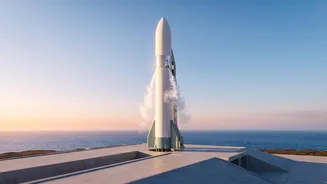
A key term in the new policy is "throughput," which essentially refers to the total volume and frequency of launches a spaceport and its surrounding infrastructure can handle. Think of it like an airport's capacity for takeoffs and landings. As the number of companies wanting to launch satellites and other payloads has surged, the existing infrastructure—launch pads, ground support, and regulatory processes—has become a bottleneck. The administration's policy aims to break this logjam by directing federal agencies to identify new potential launch and re-entry sites on federal lands, streamline scheduling, and invest in upgrading existing facilities to handle a much higher operational tempo. This includes integrating space launch corridors into the national air traffic control system more efficiently.
Cutting the Red Tape
A central pillar of the strategy is deregulation. The policy builds on executive orders from 2025 that aimed to remove what the administration calls "unnecessary" regulatory hurdles that slow down the commercial space sector. Specifically, the policy directs agencies to expedite environmental reviews, which have been a point of contention for launch providers who argue the current process is duplicative and causes significant delays. The Federal Aviation Administration (FAA) has been tasked with waiving certain requirements under various environmental laws for commercial space licenses, a move intended to shorten project timelines and reduce costs for launch companies. The goal is to make the U.S. an even more attractive and efficient base for the global space industry.
Fostering a Competitive Marketplace
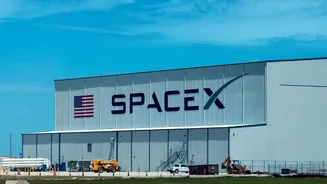
While one company, SpaceX, has dominated the U.S. launch market, the new policy emphasizes the need for a more diverse and competitive landscape. By streamlining regulations and lowering barriers to entry, the administration hopes to encourage new players and prevent the market from becoming overly consolidated. The policy memorandum explicitly directs government agencies to avoid activities that unnecessarily compete with private space companies, reinforcing a "commercial first" approach. This includes incentivizing private-sector co-development of new space transportation infrastructure, where companies can invest directly in the launch sites they plan to use. This strategy aims to foster innovation and resilience in the launch industry, ensuring the U.S. has multiple, reliable options for getting to space.
Beyond Earth's Orbit
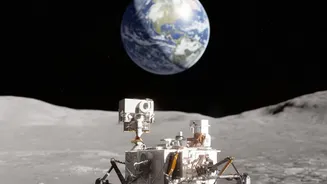
The policy's ambitions extend far beyond low-Earth orbit, tying the increase in launch capacity to deeper space exploration goals. NASA is directed to facilitate commercial access to both the Moon and Mars. This involves developing a commercial logistics architecture for transporting cargo to and from the lunar surface in support of the Artemis program, which aims to establish a sustainable presence there. Further, the policy instructs NASA to explore commercial avenues for sending robotic, and eventually human, missions to Mars, positioning the commercial sector as a key partner in humanity's expansion into the solar system.