





The Path to Akvan
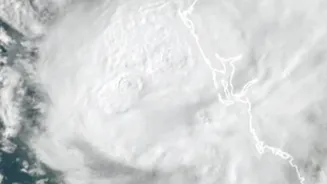
The India Meteorological Department (IMD) has been tracking a low-pressure area over the southeast Bay of Bengal that formed around November 14. It quickly strengthened into a depression and, by November 16, intensified into a cyclonic storm, earning
the name 'Akvan'. As of November 19, Cyclone Akvan has been classified as a Severe Cyclonic Storm, located over the west-central Bay of Bengal. The storm is currently moving north-northwestwards at a speed of about 9-10 kmph. Forecasters predict it will continue to strengthen into a Very Severe Cyclonic Storm before it makes landfall.
Forecast and Potential Impact
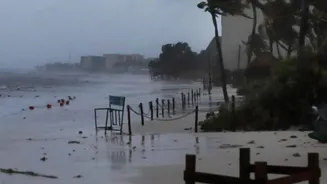
The IMD's latest bulletins project that Akvan will make landfall between Narsapur and Puri, affecting the coasts of North Andhra Pradesh and South Odisha, around noon on November 20. At landfall, it is expected to be a Severe Cyclonic Storm with sustained wind speeds of 90-100 kmph, gusting up to 110 kmph. Heavy to extremely heavy rainfall is predicted for coastal districts of Andhra Pradesh and Odisha. Tamil Nadu and Puducherry may also experience heavy rainfall and strong winds as the system moves past. The IMD has issued warnings for extensive damage to infrastructure like thatched homes, power lines, and communication poles, advising the complete suspension of fishing operations in the affected areas.
A Season of Storms
The arrival of Akvan is particularly concerning as it follows closely behind Cyclones Arnab and Murasu, which recently caused significant damage in the same region. This succession of storms has left communities with little time to recover, putting increased pressure on disaster management resources. The repeated impact highlights a potentially active cyclone season, underscoring the vulnerability of India's eastern coastline. State governments, already in response mode, are now escalating their preparedness efforts for what is the third major system to threaten the coast in just a few weeks.
How Cyclones Get Their Names
Ever wonder where names like 'Akvan' come from? The practice of naming cyclones helps avoid confusion and makes public warnings easier to understand. For the North Indian Ocean, which includes the Bay of Bengal and the Arabian Sea, a panel of 13 member countries, including India, Iran, and others, provides a list of names. These names are used sequentially. 'Akvan' was a name contributed by Iran from the current list. A storm system is officially named by the IMD once it intensifies into a Cyclonic Storm, meaning it has sustained wind speeds of at least 62 kmph.
States on High Alert
In response to the threat, state governments have activated their disaster management protocols. In Andhra Pradesh, 13 National Disaster Response Force (NDRF) teams and 11 State Disaster Response Force (SDRF) teams have been put on standby for emergency relief operations. Similarly, Odisha has deployed 74 rescue teams, a combination of NDRF and Odisha Disaster Rapid Action Force (ODRAF) units, to vulnerable southern districts. Authorities are identifying low-lying and landslide-prone areas for potential evacuations and have set up 24-hour control rooms. Residents in affected areas can use emergency numbers like 112 and 1070 for assistance.