





1. Lemon Juice Concoctions
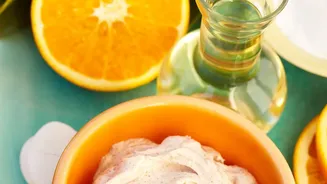
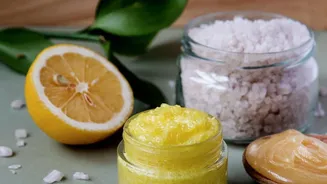
Lemon juice is often hailed as a natural skin lightener because it contains citric acid, an alpha-hydroxy acid (AHA), and vitamin C. However, the version in your kitchen is not the same as a carefully formulated cosmetic product. Lemon juice is highly
acidic, with a pH of around 2, which can severely disrupt your skin's natural acid mantle (which sits at a healthier 4.5 to 5.5 pH). This disruption can lead to excessive dryness, peeling, and irritation. Worse, citrus juices contain compounds called furanocoumarins. When these are applied to skin that is then exposed to sunlight, they can cause a severe reaction called phytophotodermatitis. This condition looks like a chemical burn, complete with redness and blistering, and can result in long-lasting dark patches of hyperpigmentation—the very issue you were trying to solve.
2. Baking Soda Scrubs
Promoted as a cheap and effective exfoliant, baking soda is another kitchen ingredient that poses a significant risk to your skin's health. While lemon juice is too acidic, baking soda sits at the other extreme. It is highly alkaline, with a pH of around 9. Applying such a high-pH substance to your face strips away its natural oils and damages the protective acid mantle. A compromised skin barrier cannot effectively retain moisture or protect against bacteria and environmental pollutants. The immediate feeling of smoothness is often followed by dryness, redness, and sensitivity. Over time, using baking soda can make skin more prone to inflammation and even breakouts, as the skin struggles to rebalance itself.
3. Turmeric and Yoghurt Masks
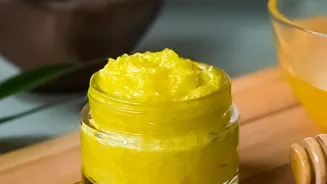
This traditional mask is a favourite in many households, and turmeric does have science-backed benefits. Its active compound, curcumin, is a powerful antioxidant and anti-inflammatory. Studies show formulated curcumin extracts can help regulate melanin production. However, the results are not guaranteed with raw kitchen turmeric. The concentration of curcumin in spice-grade turmeric is variable and not designed for skin absorption. Often, any immediate brightening effect is simply the temporary yellow tint of the spice, which can also stain the skin. While it is generally safer than lemons or baking soda, relying on a DIY turmeric mask for significant or permanent brightening of dark spots is unlikely to yield the same results as a professional formulation. It's beneficial, but not a guaranteed fix.
4. Gram Flour (Besan) Pastes
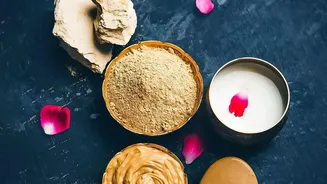
Gram flour, or besan, is a beloved ingredient in traditional Indian skincare for cleansing and exfoliation. When mixed into a paste, it does an excellent job of absorbing excess oil and gently scrubbing away dead skin cells and surface grime. This can leave the skin feeling smoother and looking temporarily fresher and brighter, simply because the dulling layer of debris has been removed. However, gram flour itself does not contain any active ingredients that inhibit melanin production or chemically lighten pigmentation. It cleans and provides a mild physical exfoliation, but it does not treat hyperpigmentation at a cellular level. It can reveal a brighter surface, but it cannot fundamentally change skin tone or erase deep-set dark spots.
5. Sugar and Salt Scrubs
Using sugar or salt to physically scrub the face is a common but damaging practice. Unlike cosmetic exfoliants that use perfectly round, smooth beads, the crystals found in table salt and sugar are sharp and irregularly shaped. When rubbed against the delicate skin of the face, these jagged edges can create microscopic tears. This physical damage compromises the skin barrier, leading to irritation, redness, and inflammation. For many people, especially those with sensitive or darker skin tones, this kind of inflammation can trigger post-inflammatory hyperpigmentation, creating new dark spots in the process of trying to remove old ones. A gentle approach is always better for exfoliation.
6. Potato Juice Applications
Folk wisdom suggests that the juice or slices of raw potato can lighten dark circles and spots. The claim is often linked to an enzyme called catecholase, which is thought to reduce pigmentation. However, there is very little robust scientific evidence to prove its effectiveness on human skin. The active components in a raw potato are unstable, meaning they degrade quickly upon exposure to air and light. Furthermore, these molecules are often too large to penetrate the skin deep enough to reach the melanocytes where pigment is actually produced. While a cool potato slice might feel soothing and temporarily reduce puffiness, relying on it for true brightening is likely to be a disappointing and ineffective experiment.
7. Honey and Cinnamon Masks
Honey is known for its natural antibacterial and humectant properties, making it soothing and hydrating for the skin. While beneficial, it is not a primary brightening agent. The real problem in this popular combination is cinnamon. While it offers antioxidant benefits, cinnamon is also a very common and potent skin irritant. The warming sensation it creates is actually a sign of irritation for many, caused by a compound called cinnamaldehyde. Applying it to your face can easily lead to contact dermatitis, causing intense redness, a burning feeling, and inflammation. For some, this irritation can be severe enough to cause mild burns and subsequent hyperpigmentation, making it a risky ingredient for facial use, especially for those with sensitive skin.