


The RBI's Wait-and-Watch Approach
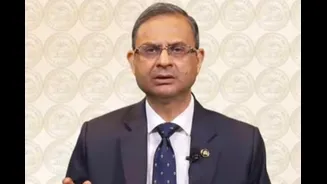
In its August 2026 monetary policy meeting, the RBI's Monetary Policy Committee (MPC) unanimously decided to keep the benchmark repo rate steady at 5.25%. This is the fourth consecutive meeting where the rate has been held, signaling a cautious 'wait-and-watch'
approach from the central bank. Governor Sanjay Malhotra cited the need for greater clarity on the inflation outlook amid global uncertainties, including geopolitical tensions and volatile crude oil prices, as key reasons for the hold. The bank's policy stance remains 'neutral', which gives it the flexibility to move in either direction depending on how economic conditions evolve.
Decoding the Repo Rate
So, what exactly is the repo rate? Think of it as the interest rate at which commercial banks borrow money from the RBI for their short-term needs. It's one of the central bank's most powerful tools for managing inflation and liquidity in the economy. When the RBI wants to make borrowing more expensive to cool down inflation, it increases the repo rate. When it wants to encourage economic activity, it cuts the rate, making loans cheaper. This rate change is then passed on by banks to their customers, affecting everything from home loans to car loans.
The Link to Your Floating-Rate Loan
If you have a home, auto, or personal loan with a floating interest rate, the repo rate is particularly important. Most such loans taken in recent years are linked to an external benchmark, which is often the RBI's repo rate. This means that when the repo rate goes up or down, the interest rate on your loan is supposed to move with it, directly impacting your Equated Monthly Instalment (EMI) or the loan's tenure. A hold on the repo rate means that, for now, your EMI is unlikely to change due to any policy action.
Why This Pause Creates a Planning Moment
A stable EMI is good news, but a pause is not a promise. The headline of today’s decision is that stability creates a crucial window for borrowers to plan. The RBI is holding rates steady because the future is uncertain; while growth is resilient, inflation risks remain. This 'neutral' stance means the next move could still be a hike if inflation picks up, or a cut if the economy needs support. This uncertainty makes it more important than ever for borrowers with floating-rate loans to manage their expectations. Getting comfortable with the current EMI could be a mistake if you aren't prepared for a potential increase in the coming months.
What Should Borrowers Do Now?
This period of stability is the perfect time to review your finances rather than relax. First, understand your loan agreement. Know exactly how your interest rate is benchmarked and when it resets. Second, use this time to build a buffer. Consider making partial prepayments if possible; even small amounts can reduce your principal loan amount, which will soften the blow of any future rate hikes. Third, use an online EMI calculator to simulate what a 0.50% or 1% increase in your interest rate would do to your monthly payment. This helps you budget for a worst-case scenario. Finally, if you have a high-cost loan and a good credit score, you could explore refinancing options with other lenders who might offer a lower interest 'spread' over the benchmark rate.