




Meet PRIMA, NASA’s New Cosmic Probe
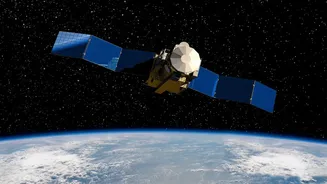
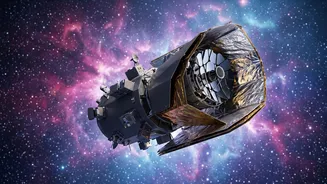
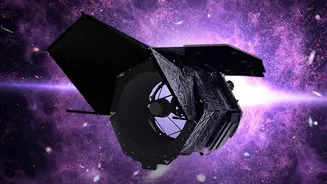
The mission, officially named the PRobe far-Infrared Mission for Astrophysics, or PRIMA, represents a new strategic direction for NASA. Recently selected to move forward into its design phase, PRIMA is the first in a new class of missions called Probe
Explorers. These are medium-cost, strategic missions recommended by the National Academies' influential Decadal Survey, which sets scientific priorities for the nation. PRIMA is designed to be a workhorse, filling a crucial gap in our ability to observe the universe. While the James Webb Space Telescope excels at seeing in the near- and mid-infrared, and ground-based arrays like ALMA capture radio waves, a massive portion of the electromagnetic spectrum in between remains largely unexplored. This is the domain of far-infrared light, and PRIMA is being built to master it. The mission has officially entered its preliminary design stage, known as Phase B. This step is critical, as the mission must pass a rigorous confirmation review to assess its technical feasibility, cost, and schedule before it can be approved for full implementation and construction.
A Window into the Cool Universe
So, why far-infrared? This type of light is essential for seeing things that are either too cold, too dusty, or too distant to be seen clearly by other telescopes. Far-infrared radiation is the faint heat glow emitted by objects that don’t shine brightly in visible light. This includes the vast clouds of dust and gas where new stars and planets are born, the swirling material around supermassive black holes, and the earliest galaxies whose light has been stretched over billions of years of cosmic expansion. To capture this faint glow, PRIMA’s 1.8-meter telescope must be incredibly cold itself—chilled to just a few degrees above absolute zero. This cryogenic cooling prevents the telescope's own heat from blinding its sensitive detectors, allowing it to achieve a sensitivity orders of magnitude greater than previous far-infrared missions like the Spitzer and Herschel space telescopes. It will effectively give astronomers a new set of eyes to study the hidden processes that shape the cosmos.
An Ambitious Scientific To-Do List
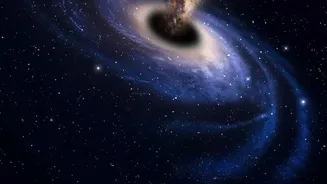
PRIMA’s scientific objectives are both broad and fundamental, aiming to answer some of the biggest questions in astrophysics. A primary goal is to unravel the mysteries of planet formation. By tracking the distribution of key molecules like water vapor and ice within the dusty disks surrounding young stars, PRIMA will help scientists understand how planets acquire their atmospheres and the ingredients for life. The mission will also peer deep into cosmic history to trace the co-evolution of galaxies and the supermassive black holes at their centers. It will investigate how these behemoths grow and how their immense energy output influences the formation of stars within their host galaxies. Furthermore, PRIMA will create vast maps of the sky to chart the buildup of cosmic dust and heavy elements over billions of years. These elements, forged in the hearts of stars and scattered by supernovae, are the building blocks of everything we see today, including our own planet.
The Path to a 2033 Launch
With a projected cost cap of $1.2 billion—a fraction of the $10 billion James Webb Space Telescope—PRIMA embodies a more focused, cost-effective approach to flagship-level science. As the mission proceeds through its current design phase, engineers at NASA's Jet Propulsion Laboratory and collaborating institutions will refine the telescope's architecture and technology. The upcoming confirmation review will be a major milestone, where the agency gives the final green light to begin building hardware for Phase C. If it successfully clears this hurdle, NASA will target a launch no earlier than 2033 for what is planned to be a five-year primary mission. Its development and potential discoveries are directly aligned with NASA’s long-term targets, which are heavily guided by the scientific community’s recommendations for exploring our cosmic origins.