


A Disaster Compounded
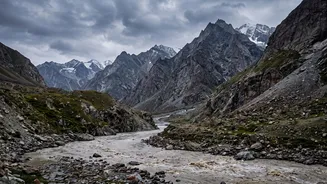
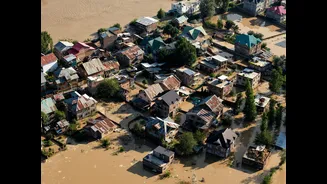
In the wake of a catastrophic glacier collapse on August 26, which triggered a flash flood that tore through the Nepal-Tibet border region, a new crisis has emerged. The debris from the initial disaster—a torrent of rock, ice, and mud—has blocked the flow
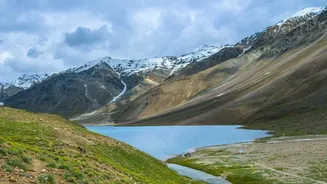
of the Bhotekoshi river system, creating a vast natural dam. Behind this precarious blockage, a large barrier lake has formed near the confluence of the Chhochen Khola and Purepu Tsangpo rivers. Chinese authorities monitoring the situation estimated the lake held around 2 million cubic metres of water shortly after its formation and warned it was already overflowing, posing a high risk of a breach.
The Scale of the Threat
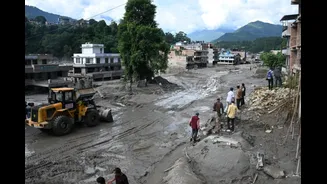
The new lake represents a ticking time bomb for communities downstream. Barrier lakes formed by landslides are inherently unstable. A sudden failure of this natural dam would release an immense wall of water, creating a disaster scenario similar to a glacial lake outburst flood (GLOF). Authorities issued high alerts for multiple districts, including Rasuwa, Nuwakot, and Dhading, as the initial flood devastated villages and crucial infrastructure like roads, bridges, and hydropower plants. Rescue operations for the first flood, which left hundreds dead and thousands missing, were temporarily halted due to the threat posed by the new lake, as even a partial breach could send a deadly surge through areas where recovery efforts are underway.
Echoes of Past Tragedies
For Nepalis, this scenario brings back haunting memories of previous disasters. The 2014 landslide in Jure that dammed the Sunkoshi River killed over 150 people and created a similar crisis. More recently, the 2021 Melamchi flood, caused by a massive debris flow, demonstrated the destructive power of such events. These past deluges underscore the fragility of the Himalayan landscape and the immense danger that landslides and blocked rivers pose to downstream populations. The current crisis on the Bhotekoshi is a painful reminder that the danger often doesn't end with the initial event but can cascade into secondary, equally devastating threats.
A Race Against Time and Nature
In response to the looming threat, authorities have been in a desperate race against time. The Nepalese Army was deployed to the disaster zone, and evacuations were ordered for residents in the most vulnerable low-lying areas. Experts from Nepal and China have been monitoring the lake's stability using satellite imagery and conducting simulations to predict the potential impact of a breach. Fortunately, by August 31, Chinese officials reported that the barrier lake had begun to drain through a natural outflow, significantly easing the immediate risk of a catastrophic outburst. However, with the monsoon season active, the situation remains precarious as further rainfall could increase river levels and destabilize slopes anew.
The Himalayas' Climate Crisis
This event is not an isolated incident but a stark symptom of a broader, more alarming trend. Climate change is accelerating the melting of Himalayan glaciers, making the region's steep slopes more unstable. Scientists have described these changes as creating a “new normal” of cascading hazards, where one disaster, like a glacier collapse, triggers another, like a landslide and subsequent damming of a river. As glaciers retreat, they leave behind vast quantities of loose rock and sediment, which can be easily mobilized by heavy rains or seismic activity, creating the perfect conditions for destructive debris flows and floods that threaten millions living in the Himalayan foothills.