








The Search for Reliable Buyers
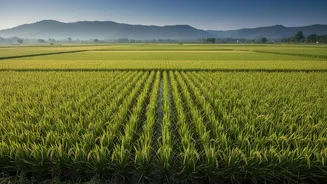
For any farmer, the decision to plant a crop starts with a simple question: will someone buy it? For staples like rice and wheat, the answer is a guaranteed 'yes' thanks to government procurement and vast, established supply chains. For alternative crops,
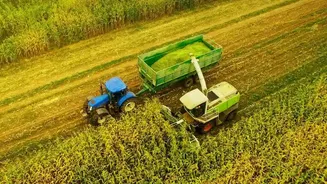
the answer is often a nervous 'maybe'. While there is growing consumer interest in grains like millets, the demand is still largely concentrated in niche, urban markets. Farmers often lack direct access to these buyers, leaving them at the mercy of middlemen who dictate low prices. The entire infrastructure—from processing units that can handle small grains to distribution networks and retail presence—is underdeveloped compared to mainstream cereals. Without large, reliable buyers creating consistent demand, farmers are hesitant to risk planting a crop that might not sell, keeping supply low and preventing the economies of scale needed to make these crops commercially viable.
The High-Stakes Gamble Without Insurance
Farming is inherently risky, but crop insurance is meant to provide a safety net. However, these safety nets are often designed for major commodity crops. Schemes like the Pradhan Mantri Fasal Bima Yojana (PMFBY) exist, but their effectiveness for farmers of diversified or alternative crops can be limited. The systems for assessing losses and calculating payouts are often based on data from mainstream crops, making it difficult to apply them to less common ones. This 'insurance gap' means that a farmer who diversifies into millets, pulses, or other alternative crops is often taking on a greater personal financial risk. If a drought, flood, or pest attack occurs—all increasing threats due to climate change—they may face total financial ruin without recourse. This lack of a formal safety net acts as a powerful disincentive, pushing farmers back towards the insured familiarity of rice and wheat, even if alternative crops are better for the land and climate.
The Price Rollercoaster
Perhaps the most significant barrier is price volatility. Major crops like rice and wheat benefit from a Minimum Support Price (MSP), a government-set floor price that guarantees a certain level of income. Most alternative crops do not have this protection. As a result, farmers are exposed to wild market swings. One season, a surge in demand might bring high prices, but the next, a slight oversupply could cause prices to crash, wiping out a farmer's profit. This uncertainty makes financial planning impossible. A farmer cannot invest in better seeds or equipment if they have no idea what their crop will be worth in six months. Calls for a Price Stabilisation Fund have been made to cushion these shocks, but without a consistent procurement system, prices remain dangerously unpredictable. This instability makes alternative crops a high-stakes gamble that many small and marginal farmers simply cannot afford to take.
A Disconnected System
These three challenges—a lack of buyers, inadequate insurance, and price volatility—do not exist in isolation. They form a vicious cycle. Without a guaranteed buyer, there's no incentive to develop processing infrastructure. Without infrastructure and a stable market, insurers are reluctant to create tailored products for these crops. And without insurance or stable prices, farmers are unwilling to plant them, which keeps the supply too low to attract large-scale industrial buyers. Breaking this cycle requires more than just telling farmers to diversify. It requires a holistic approach that builds the entire ecosystem. Government initiatives and Farmer Producer Organisations (FPOs) are working to connect farmers to markets and improve value chains, but these efforts need to be scaled significantly. Digital platforms are also emerging to connect farmers directly with buyers, but their reach is still limited.