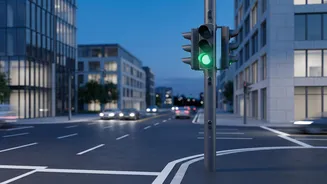







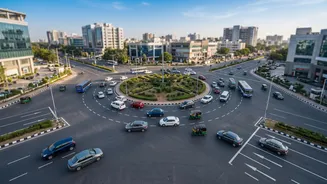

What is the Intelligent Traffic Management System?
The Union Cabinet has greenlit the implementation of an Intelligent Traffic Management System (ITMS) for Delhi, a high-tech initiative designed to overhaul the capital's congested road network. With an estimated cost of Rs 1,789.52 crore, the project
aims to replace the current system of fixed-time signals with a dynamic, responsive network that manages traffic in real time. This initiative is a joint effort by the central government and the Delhi government to improve urban mobility and traffic infrastructure in the national capital. The Delhi Police will be the implementing agency for this ambitious project, which aims to give a 'brain' to the city's traffic infrastructure by integrating signals, cameras, and AI capabilities into one cohesive system.
How Will the AI Actually Work?
At its core, the ITMS will function like a city-wide nervous system for traffic. It will use a vast network of AI-powered cameras and sensors at 1,092 locations to collect real-time data on traffic density, vehicle speed, and queue lengths. Instead of the current 1,529 signals that operate on static timers, the new Adaptive Traffic Control Systems (ATCS) will use this data to dynamically adjust signal timings. If a particular direction has heavy traffic, the system can automatically shorten its red light, while coordinating with subsequent signals along 42 identified corridors to create 'green waves' that reduce stoppages and improve flow. This information will be fed to a central command and control centre, enabling a holistic and intelligent management approach.
Beyond Faster Commutes: Added Benefits
The project’s scope extends far beyond just cutting down travel time. A significant component is automated enforcement at 1,029 locations, where AI cameras will automatically detect a range of violations. This includes red-light and stop-line jumping, speeding, wrong-way driving, and not using helmets or seatbelts. Another critical feature is the creation of priority green corridors for emergency vehicles like ambulances, allowing them to navigate through traffic with minimal interruption. Furthermore, the system will provide real-time traffic updates to commuters via variable message signs and digital platforms, helping them make informed decisions about their routes.
The Road Ahead: Timeline and Implementation
This massive overhaul will not happen overnight. The project is scheduled to be implemented in three phases over a 24-month period. The first phase, to be completed within 12 months, will focus on five key traffic corridors, installing 250 adaptive signal junctions. The subsequent phases will expand the network to cover a total of 42 major corridors across the city. Following the two-year implementation, there will be a five-year period for operation and maintenance. To ensure quality and technical standards, the Centre for Development of Advanced Computing (C-DAC) will serve as the Project Management Consultant, overseeing the work of the Master System Integrator selected through competitive bidding.