






A New Launchpad for a New Era
The Indian National Space Promotion and Authorisation Centre (IN-SPACe) has released an Expression of Interest (EoI), officially starting the process to hand over the operations of the new Small Satellite Launch Complex (SLC) at Kulasekarapattinam in Tamil
Nadu to a private entity. This facility, built at a cost of around ₹986 crore, is India's second spaceport after the Satish Dhawan Space Centre in Sriharikota. Spread across more than 2,200 acres in the Thoothukudi district, the spaceport is specifically designed to cater to the booming global market for small satellite launches. Its foundation stone was laid in early 2024, signaling a major infrastructure boost for the country's space ambitions.
The Strategic Advantage of Kulasekarapattinam
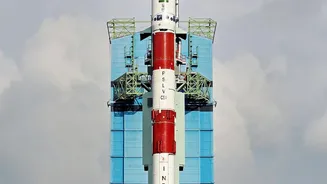
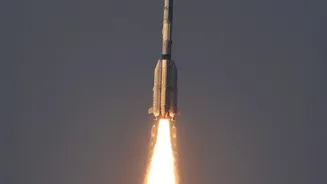
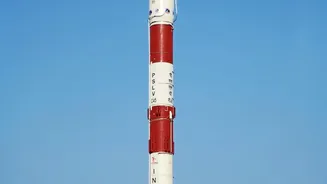
The choice of location is highly strategic. Unlike the Sriharikota launch site, which requires rockets heading for polar orbits to perform a fuel-consuming "dogleg manoeuvre" to avoid flying over Sri Lanka, Kulasekarapattinam offers a direct, unobstructed southward trajectory over the Indian Ocean. This geographical advantage is a game-changer for small launch vehicles. It saves precious fuel, which directly translates to a higher payload capacity, making launches more efficient and cost-effective. For ISRO's Small Satellite Launch Vehicle (SSLV), the difference is significant, enabling it to carry useful payloads to sun-synchronous polar orbits—a feat that is difficult from Sriharikota.
What 'Operating' a Spaceport Entails
The invitation from IN-SPACe goes far beyond simply using the launchpad. The selected private company will be responsible for the end-to-end management of the launch complex. This includes handling launch campaign operations, maintaining all facilities and systems, ensuring safety and security protocols are met, managing mission readiness, and coordinating logistics between launch customers, IN-SPACe, and ISRO. To ensure a smooth handover, ISRO will provide technical guidance, training, and operational support to the chosen firm for up to one year or until the completion of three launches. This move marks the first time a national launch facility in India is being opened for private management, representing a significant shift from a state-led to a commercial model.
Fueling India's Private Space Ecosystem
This initiative is a cornerstone of the Indian Space Policy 2023, which aims to unlock the sector for private participation and boost the national space economy. By dedicating the Kulasekarapattinam facility to small satellite launchers like the SSLV and vehicles developed by private firms, ISRO can free up its primary spaceport at Sriharikota to focus on larger, more complex missions like the Gaganyaan human spaceflight program and interplanetary exploration. The move is designed to create a vibrant ecosystem, with the Tamil Nadu government also planning a 'Space Industrial Investment Zone' in the region to attract manufacturing and research companies. It complements other efforts by IN-SPACe to encourage private enterprise, including the transfer of SSLV manufacturing technology and invitations for private firms to run satellite ground stations.