





A New Foothold on a Distant World
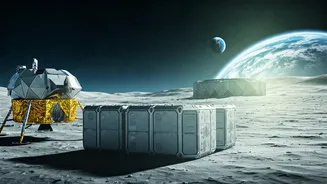
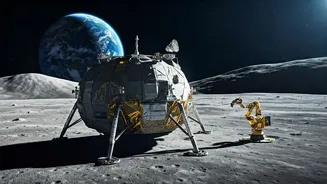
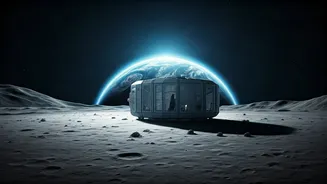
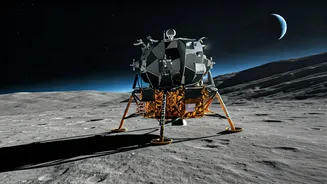
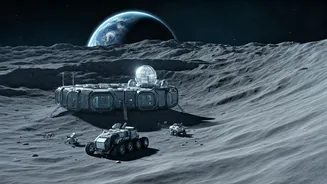
For the first time since the Apollo era, NASA is not just planning to visit the Moon, but to stay. The agency has laid out a multi-phase plan to establish what it calls the Moon Base, a permanent outpost for astronauts to live and work near the lunar
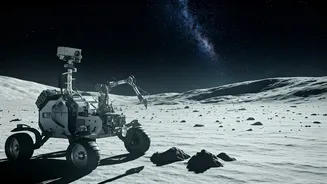
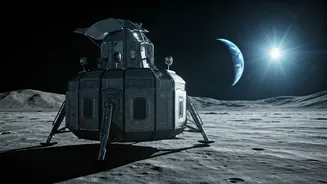
South Pole. This isn't just about planting a flag; the goal is to create a sustainable presence that will serve as a hub for groundbreaking science and a crucial proving ground for the next giant leap: sending humans to Mars. The vision includes habitats, rovers, and power systems, all designed to support long-duration missions. Recent announcements have confirmed this renewed push, with NASA Administrator Jared Isaacman framing the base as a top priority. The plan involves a staged buildup, beginning with robotic missions to test technologies and scout locations, followed by the gradual construction of the infrastructure needed to support a continuous human presence.
Why the South Pole is Prime Real Estate
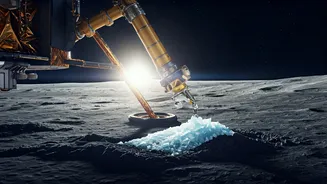
The choice of the lunar South Pole is strategic. This region offers two critical resources that are scarce elsewhere on the Moon: near-continuous sunlight and potential water ice. The rims of certain craters at the pole receive almost constant sunlight, which is ideal for solar-powered systems that would energize the base. Meanwhile, the floors of these same craters are in permanent shadow, creating ultra-cold traps where water ice is believed to have been preserved for billions of years. This ice is a game-changer. It can be mined and processed to provide breathable oxygen, drinkable water, and even rocket propellant, dramatically reducing the need for costly supply missions from Earth. By utilizing resources found on-site, a concept known as in-situ resource utilization (ISRU), a lunar base becomes far more sustainable and affordable in the long run.
The Support Turning Vision into Reality
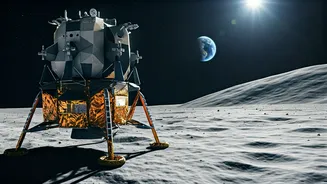
The 'early support' for this ambitious project comes from several key areas. First, there's a strong international coalition. Through the Artemis Accords, 68 nations have signed on to a common set of principles for peaceful lunar exploration, with many partners like the European Space Agency (ESA) and the Japan Aerospace Exploration Agency (JAXA) contributing critical hardware, such as habitat modules and pressurized rovers. Second, NASA is leaning heavily on commercial partnerships, awarding major contracts to private companies to build the landers and vehicles essential for the base. Just recently, NASA announced that companies like Astrobotic, Firefly Aerospace, and Intuitive Machines will undertake new robotic delivery missions to the Moon in late 2028. These commercial payload services are designed to accelerate development by delivering science and technology demonstrations to the surface, paving the way for human crews.
An Extreme Engineering Challenge
Building and operating a base on the Moon is an undertaking of immense difficulty. The environment at the South Pole is one of the harshest imaginable. Temperatures can swing wildly from 54°C in the sun to a staggering -203°C in the permanent shadows. The lunar dust, or regolith, is abrasive and damaging, capable of shredding spacesuits and clogging machinery. There's also the constant threat of radiation and micrometeoroid impacts, which require specialized shielding to protect both astronauts and equipment. To overcome these hurdles, NASA is developing new technologies for reliable power generation, dust mitigation, and autonomous robotics. The construction itself will be a phased process, with initial infrastructure and robotic rovers arriving before the first crewed landing, which is now targeted for the Artemis IV mission in 2028.