





The Power of a Rolling Boil
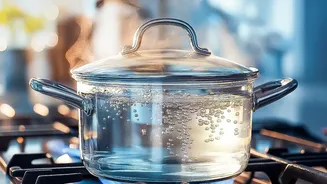
Bringing water to a rolling boil is an extremely effective way to kill or inactivate most biological contaminants. The heat damages the structure of pathogens like bacteria, viruses, and parasites, rendering them harmless. According to the U.S. Centers
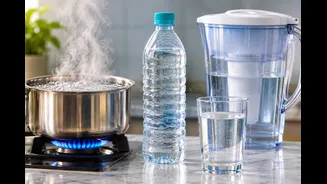
for Disease Control and Prevention (CDC), you should bring clear water to a full rolling boil for one minute to ensure it's safe from germs. At altitudes above 6,500 feet, this should be extended to three minutes. This process is highly effective against common waterborne pathogens such as E. coli, Giardia, Cryptosporidium, and Hepatitis A. This is why 'boil water' advisories are issued by health authorities after events like floods or water main breaks, which can introduce microbial contamination into the water supply.
What Boiling Leaves Behind
While heat is great for neutralising living organisms, it has little to no effect on chemical contaminants. Heavy metals such as lead, arsenic, and mercury are not removed by boiling. Similarly, agricultural chemicals like pesticides and nitrates from fertilizer runoff remain in the water after it has been boiled. Other substances, including industrial compounds, 'forever chemicals' like PFAS, and dissolved minerals that cause hard water, are also left behind. While boiling can cause some volatile chemicals like free chlorine to dissipate as gas, it is not effective against more stable disinfectants like chloramine, which is used in many water systems.
The Danger of Concentration
Worryingly, boiling water can sometimes make certain contaminants more dangerous. As water boils, some of it turns to steam and evaporates, but contaminants like lead, nitrates, and other dissolved solids do not. This means the remaining water has a higher concentration of these harmful substances than it did before. For this reason, health authorities explicitly advise against boiling water to try and remove lead; it can actually make the problem worse. If your water is known to be contaminated with chemicals or heavy metals, boiling is the wrong tool for the job and could increase your exposure.
When Is Boiling the Right Choice?
Boiling is the correct and essential response during a 'boil water' advisory, which is specifically issued for microbial contamination. It is also the most reliable method for making water safe to drink in emergencies, or when camping or travelling in areas with questionable water quality. If you are using water from a private well that could be compromised by surface runoff, boiling provides a crucial layer of protection against bacteria and parasites. However, if a 'do not drink' or 'do not use' advisory is issued, it is likely due to chemical contamination, and boiling will not make the water safe. In these cases, you must use an alternative water source, like bottled water.
Beyond Boiling: Other Purification Methods
For contaminants that boiling cannot remove, other methods are necessary. Water filters are a common and effective solution. Activated carbon filters, found in many pitchers and faucet-mounted units, are excellent at reducing chlorine, some pesticides, and improving taste and odour. For a wider range of contaminants, including heavy metals like lead, 'forever chemicals' (PFAS), and some parasites, you may need a more advanced system like reverse osmosis. Ultraviolet (UV) treatment systems can also disinfect water by killing microbes without using heat or chemicals. The best solution for your home depends on the specific quality of your local water supply.