




Governor's House (Raj Bhawan)
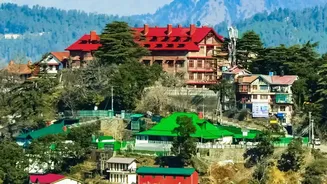
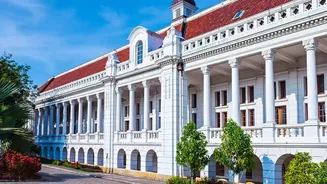
Modelled after a Scottish castle and echoing the grandeur of Buckingham Palace, the Raj Bhawan is Nainital’s most magnificent colonial edifice. Built between 1897 and 1900 as the summer residence for the British governors of the North-West Provinces,
its Victorian Gothic architecture is a photographer’s dream. The sprawling 205-acre estate includes a 45-acre golf course, which is one of the most vintage courses in India. With its imposing turrets, pointed arches, and vast, manicured lawns, every angle offers a regal shot. While entry to the 113-room mansion is restricted, guided tours allow a glimpse into its opulent interiors, featuring wooden staircases and grand chandeliers that speak of a bygone era. The first Indian to reside here after Independence was Sarojini Naidu, the then-governor of Uttar Pradesh.
St. John in the Wilderness Church
Tucked away in a quiet deodar forest in Mallital, this church is one of the earliest buildings in Nainital. Its foundation was laid in 1844 by the Bishop of Calcutta, Daniel Wilson, who was forced to live in an unfinished hut in the woods due to illness, giving the church its evocative name. Built in a serene Neo-Gothic style, its stained-glass windows, imported from Belgium, cast a colourful glow on the interiors, creating a tranquil atmosphere perfect for contemplative photography. The church also holds a significant piece of Nainital's history: a brass plaque inside memorialises the victims of the catastrophic 1880 landslide. The quiet graveyard behind the church adds a poignant, historical layer to its photogenic appeal.
Gurney House
For literature and history buffs, Gurney House is a must-visit. This was the home of the legendary hunter-conservationist and author, Jim Corbett. Located on the Ayarpatta slopes, the charming cottage was built in 1881 and still retains much of its original character. Corbett and his sister Maggie lived here until they left for Kenya in 1947. The house, now a private residence, is a time capsule filled with Corbett's furniture, trophies, and personal effects. While it is a private home, the owners often welcome visitors by appointment for a complimentary tour. The rustic charm of the cottage, surrounded by lush greenery, offers a glimpse into the life of one of India's most celebrated colonial-era figures.
Balrampur House
Once the summer palace of the Maharajas of Balrampur, this heritage hotel is a stunning example of a French chateau-style design. Originally constructed in the 1890s, it was redesigned in the 1930s by a European architect. Now a heritage hotel, it combines colonial luxury with modern comforts, offering visitors a chance to stay within its historic walls. The property boasts sprawling lawns with spectacular views of the surrounding hills, making it a picturesque spot. Its interiors are adorned with period furniture, old paintings, and antiques, providing endless opportunities for capturing the essence of royal colonial life.
Metropole Hotel
Though now defunct and in a state of disrepair, the Metropole Hotel tells a fascinating story of glamour and decline. Built in 1880, it was once considered the finest hotel in Nainital, spread over 11 acres. It was so renowned that its unique 'Nainital-pattern-roofing' was replicated across the country. The hotel famously hosted Mohammad Ali Jinnah for his honeymoon in 1918. After its owner, the Raja of Mahmudabad, moved to Pakistan post-Partition, the hotel was declared enemy property, which led to its gradual decay. While you can't stay there, its weathered facade and sprawling, encroached-upon grounds offer a hauntingly beautiful subject for photographers interested in capturing the passage of time. The government has recently considered converting the complex into a parking facility.
Sherwood College
Founded in 1869 as the Diocesan Boys' School, Sherwood College is a landmark institution with a stunning campus on Ayarpatta Hill. Its architecture is a beautiful mix of post-Edwardian and Gothic styles, featuring impressive buildings, Romanesque arches, and oak-panelled walls set across a 45-acre campus. The college chapel, with its intricate stained-glass windows, is a particular highlight. As an active boarding school, public access is restricted, but the grand main gate and the visible parts of the campus offer a powerful impression of British educational legacy in the hills. For photographers, it represents the enduring architectural and cultural influence of the colonial education system.
The Grand Hotel
While many colonial hotels have been modernised, The Grand Hotel, situated on the Mall Road, retains a distinct old-world charm. It is one of the older hotel properties in Nainital and provides a more accessible feel of colonial hospitality compared to the more exclusive heritage resorts. Its wooden flooring, classic furniture, and location overlooking the Naini Lake make it a great subject for photos that aim to capture the town's living heritage. The building's colonial structure, with its balconies and large windows, stands in contrast to the more modern shops around it, offering a slice of history right in the heart of the action. A stay here or even a visit to its restaurant can transport you back in time, making it a worthy final stop on your historical photo trail.