






A Mentor for an Ambitious Mission
S Somanath, the celebrated engineer who led the Indian Space Research Organisation (ISRO) through historic triumphs like the Chandrayaan-3 lunar landing, will now lend his vast expertise to Chennai-based startup Agnikul Cosmos. His official role is that
of a board observer, a position from which he will advise the company on its next major flight, Mission-02, and other strategic initiatives. Agnikul's leadership has emphasized that this is a serious working relationship, designed to bring Somanath's decades of experience in launch vehicle design and mission complexity directly to the table as the startup tackles its most ambitious project yet. His involvement is seen as a significant milestone, providing invaluable mentorship as Agnikul pushes the frontiers of reusable rocket technology.
Mission-02: A Leap Towards Reusability
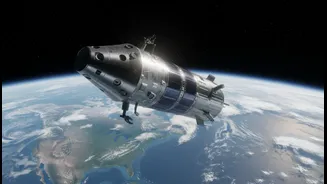
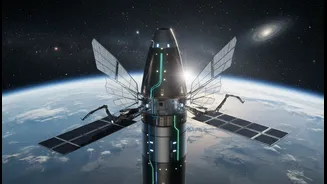
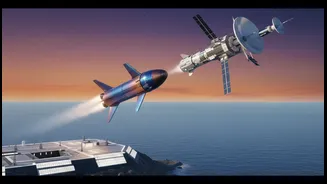
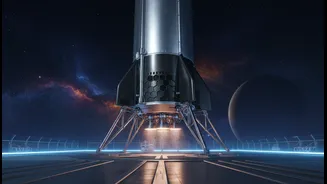
Agnikul's upcoming Mission-02 is a critical step in the company's quest to lower the cost of accessing space. The mission has two primary, audacious goals. First, it will attempt India's first-ever controlled recovery of an orbital-class rocket booster after it lands in the ocean on a barge. This is a foundational technology for rocket reusability, a domain pioneered by global players like SpaceX that has fundamentally changed launch economics worldwide. Second, Mission-02 will demonstrate an innovative upper stage that, instead of becoming space debris after deploying its satellite payload, can remain functional as an on-orbit platform for further experiments. This patented technology could unlock new possibilities for in-space services. Success in these areas would represent a major technical achievement for India's private space efforts.
Building on a Trailblazing Foundation
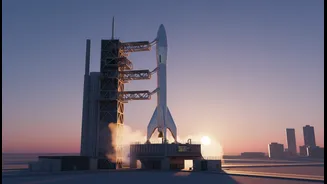
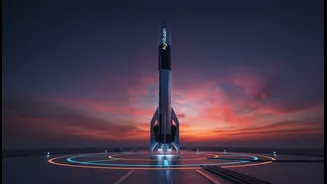
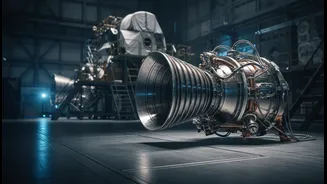
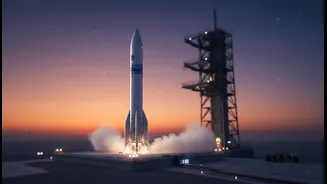
This ambitious next step is built on Agnikul's prior success. In May 2024, the IIT-Madras incubated startup successfully launched its Agnibaan SOrTeD (SubOrbital Technological Demonstrator). This test flight was historic, marking the first launch from a private launchpad in India, and it was powered by Agnilet, the world's first single-piece, 3D-printed semi-cryogenic rocket engine. The Agnilet engine, which uses liquid oxygen and aviation-grade kerosene, can be manufactured in a matter of days, showcasing the power of additive manufacturing to revolutionize rocket production. The data gathered from the SOrTeD mission was crucial for validating the technologies now being scaled up for the more complex, two-stage Agnibaan rocket to be used in Mission-02.
A New Era of Public-Private Synergy
Somanath's involvement with Agnikul is a powerful symbol of the evolving relationship between ISRO and India's private space ecosystem. Since the government opened up the space sector in 2020, agencies like the Indian National Space Promotion and Authorisation Centre (IN-SPACe) have been created to act as a single-window interface, promoting and authorising private space activities. This policy shift was designed to move ISRO from being the sole actor to a key facilitator, sharing its technology and expertise to boost private industry. Somanath himself was instrumental in piloting this national space policy during his tenure as ISRO chief. His new role at Agnikul is a direct, personal extension of this vision, demonstrating a commitment to nurturing the next generation of space innovators and strengthening India's overall space economy.
What This Means for India's Space Economy
The collaboration between a veteran like Somanath and a nimble startup like Agnikul is more than just good news for one company; it's a blueprint for the future. By successfully developing reusable launch technologies, Indian companies can compete more effectively in the global launch market, which is projected to grow significantly. This synergy accelerates innovation, attracts investment, and helps build a robust domestic supply chain. With an eye on launching nearly once a week by 2030, Agnikul is part of a larger movement that is shifting India's space program from being purely mission-driven to becoming a powerful commercial engine. This high-level mentorship de-risks ambitious private projects and sends a strong signal to the world that India is serious about becoming a dominant player in the commercial space race.