





The Old Way of Searching
For years, planning a trip in India started with a place name. You had to know you wanted to go to Goa for beaches, Rishikesh for yoga, or Munnar for tea gardens. Search engines were rigid; they were brilliant at finding 'hotels in Jaipur' but stumbled
if you asked for 'a heritage trip in Rajasthan with stays in old havelis'. This keyword-based approach forced us to fit our travel dreams into neat, searchable boxes. It favoured popular, well-documented destinations, often leaving India’s countless hidden gems undiscovered. The process required multiple searches, dozens of open tabs, and a lot of guesswork to stitch together an itinerary that matched the 'vibe' you were hoping for. You were the planner, the aggregator, and the curator, and it was often exhausting.
Enter Experience-Based AI
Generative AI is changing the very nature of travel discovery. Instead of you feeding it place names, it now understands your intent. The question is shifting from 'Where should I go?' to 'What do I want to experience?'. According to travel experts, this is the most significant change in travel planning in a decade. Platforms are now integrating conversational AI that allows you to describe your ideal holiday in natural language. You can ask for 'a week-long trip in the Himalayas with moderate treks and opportunities for bird-watching' or 'a coastal road trip in Karnataka focusing on seafood'. The AI acts as an intelligent assistant, processing your request to suggest destinations, build potential itineraries, and filter options that fit your specific desires. It's like talking to a well-travelled friend who instantly gets what you're looking for.
A Food Lover’s New Best Friend
India's culinary diversity is immense, but it has often been reduced to regional stereotypes. AI is breaking this down by allowing travellers to search for specific food experiences. Imagine asking for 'places in north India famous for their street-side chole bhature' or 'a culinary tour of Chettinad that includes cooking classes'. Researchers and new travel tools are using AI to map India's vast gastronomic landscape, going far beyond the obvious. For example, IIIT Hyderabad's 'Bharat Taste Atlas' uses AI to uncover lesser-known regional dishes from every state, complete with their origins and where to find them. Similarly, AI-powered guides can give you named dishes, market recommendations, and restaurant suggestions tailored to your dietary preferences, telling you not just to 'try local food' but exactly what to eat and where.
Beyond the Usual Safari
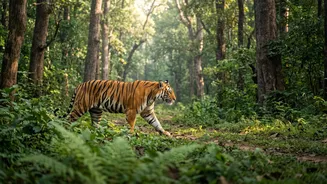
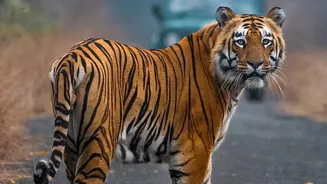
The same principle applies to wildlife travel. While iconic parks like Ranthambore and Kaziranga are incredible, they can also be crowded. An experience-based search opens up a world of alternatives. A traveller could ask an AI assistant for 'quiet wildlife sanctuaries in the Western Ghats to see lion-tailed macaques' or 'the best places for snow leopard spotting in Ladakh on a moderate budget'. The AI can sift through countless blogs, conservation websites, and travel reviews to surface options that a standard search might miss. This allows for a more personalised and responsible approach to wildlife tourism, helping you find lodges that focus on conservation or tours that follow ethical practices, moving beyond the mainstream safari circuit.
Your AI Co-Pilot for India
Major travel companies in India are rapidly adopting these technologies. Platforms from Skyscanner to MakeMyTrip are incorporating AI to help travellers who are undecided on a destination. In fact, one report noted that over half of younger travellers start planning without a specific place in mind. These tools act as a 'co-pilot', helping you sort through ideas and build a framework. You can ask for itineraries, route suggestions for a road trip, and even packing lists. However, while powerful, these tools are not perfect. Experts advise using AI for inspiration and planning but always verifying the details—especially when it comes to the unique complexities of Indian travel, like realistic road travel times and local logistics—before you book.