


What Creates a Meteor's Glow?
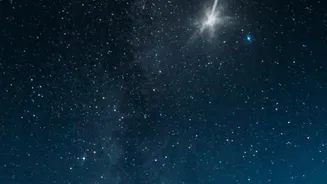
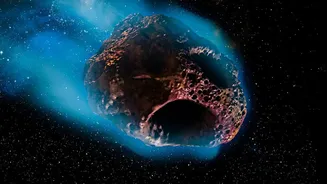
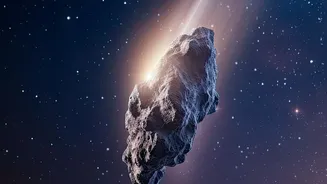
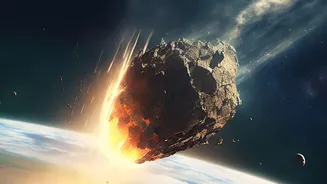
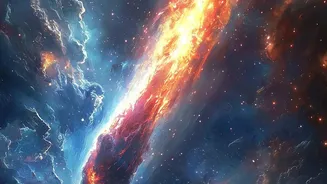
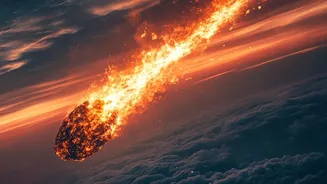
A meteor, or shooting star, is the visible streak of light that occurs when a small piece of space debris, called a meteoroid, enters Earth's atmosphere at incredible speeds. The intense friction generated doesn't cause the object to burn in the way a log
does in a fire. Instead, the extreme velocity rapidly heats and compresses the air in its path, creating a pocket of glowing plasma. This process, known as ablation, vaporises the meteoroid layer by layer. The light we see is a combination of this superheated air and the incandescing material from the meteoroid itself, which can reach temperatures of thousands of degrees Kelvin.
The Chemical Fingerprints of Space
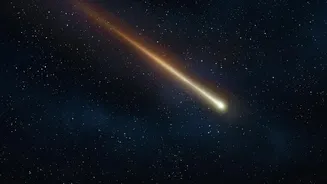
The diverse colours of meteors are essentially a cosmic fireworks display, with each colour acting as a chemical fingerprint for a specific element. Just as a chemistry flame test reveals elements by the colour of light they produce, the intense heat of atmospheric entry causes minerals within the meteoroid to vaporise and glow in signature shades. Most meteoroids are fragments of asteroids or comets and contain a mixture of elements. By observing the colour of a meteor's streak, scientists can infer its composition. Iron, a common component, often produces a yellow glow. Sodium yields a bright orange-yellow, while silicon is associated with a red hue.
A Rainbow of Vaporising Minerals
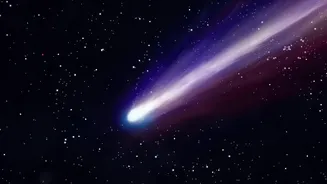
The palette of meteor colours is surprisingly rich. A greenish tint, for instance, is often a tell-tale sign of magnesium vaporising at high temperatures. NASA also notes that calcium can produce a violet or purple light, which differs from the orange-red it produces in a standard lab flame test because the calcium in meteors is ionised. While many meteors appear white or yellow because of a blend of different glowing minerals, particularly bright or fast ones can display more distinct colours. The speed of the meteor plays a crucial role; faster meteors ionise elements like magnesium more effectively, leading to greener streaks, while slower ones might be dominated by the yellow-orange of sodium.
It's Not Just the Rock
The meteoroid's composition is only part of the story. The atmosphere itself contributes to the light show. As the meteoroid plunges through the air, it energises the molecules of nitrogen and oxygen, which are the most abundant gases in our atmosphere. This interaction can cause the surrounding air to glow, typically producing a reddish light. In slower meteors, this atmospheric glow can be the dominant colour we see. For faster meteors, the colours from the vaporising minerals tend to overpower the atmospheric red. Furthermore, some very bright meteors, known as fireballs, can leave behind a persistent train or afterglow, which is often initially green due to excited oxygen atoms in the air.
NASA's View From the Ground
NASA's Astronomy Picture of the Day (APOD) recently highlighted this very phenomenon with an image of a meteor photobombing the Lacerta Nebula. Captured in August 2026, the image shows a bright streak with distinct colours, which the agency explains are clues to its composition. The image serves as a perfect, real-world example of how these vaporising pebbles from space paint the sky. Such observations are invaluable, helping scientists understand the makeup of comets and asteroids without needing to launch expensive sample-return missions. As Earth passes through debris streams from comets like Swift-Tuttle, which causes the annual Perseid meteor shower, we are treated to a spectacular display of these colourful chemical signatures.