






First, What Is This Fee You Keep Hearing About?
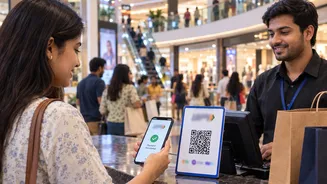
Merchant Discount Rate, or MDR, is a fee that a business (the merchant) pays to its bank for accepting a payment from a customer via any digital method, including credit cards, debit cards, and UPI. It’s essentially a service charge for processing the payment.
When you pay a merchant ₹100, they don't receive the full amount. A small percentage is deducted as MDR before the money is credited to their account. This fee is then shared among the key players who make the transaction possible: the customer's bank (issuing bank), the merchant's bank (acquiring bank), and the payment network (like Visa, Mastercard, or in UPI's case, NPCI). It’s the cost of doing business in a digital economy, covering infrastructure, security, and service upkeep.
The Special Status of UPI in India
For years, UPI transactions in India operated under a zero-MDR policy, meaning merchants were not charged a fee for accepting UPI payments. This was a deliberate government strategy to boost digital payment adoption. However, this created a sustainability issue for the banks and payment companies that run the UPI infrastructure. To address this, a new framework is set to begin on October 15, 2026. A nominal MDR will be introduced on person-to-merchant (P2M) UPI transactions above ₹2,000. The standard rate will be 0.4%, capped at ₹300 for very high-value transactions. Crucially, the government has repeatedly clarified that this is a cost for the merchant, and has advised banks to ensure businesses do not pass this fee directly on to customers.
Enter IRCTC: Convenience Fee vs. MDR
This is where the confusion begins for many. When you book a ticket on IRCTC, you pay a "convenience fee". For non-AC classes, this is ₹10 + GST, and for AC classes, it's ₹20 + GST when paying via UPI. Many people mistake this for MDR. However, IRCTC and the Railway Minister have clarified that this is a charge for using their online booking platform, which saves customers the time and cost of going to a physical counter. It covers the significant expense of maintaining the vast digital infrastructure that handles nearly 89% of all reserved ticket bookings. This fee exists independently of how you pay. The upcoming UPI MDR rules add another layer. For railways, a special flat MDR of ₹5 will apply on UPI transactions over ₹2,000. This ₹5 is a charge that IRCTC (the merchant) will have to pay its bank; railway officials have stated it is not to be passed on to the passenger.
Connecting the Dots: Why This Proves the Point
The IRCTC case neatly separates the two concepts. The convenience fee is a charge levied by the merchant (IRCTC) for providing a specific service (online booking). The MDR is a separate, backend processing cost that the merchant pays to its payment partners. While a customer might end up paying a fee, that fee is a convenience charge, not the MDR itself. The headline's claim holds true: the government has explicitly forbidden merchants from passing on the new UPI MDR to customers. So, while IRCTC charges you a fee for the convenience of booking online, the new ₹5 MDR for high-value UPI payments is a cost IRCTC itself will bear for payment processing. This perfectly illustrates that MDR is a business-to-business cost, not a direct consumer fee.
Why This Distinction Matters
Understanding the difference is crucial for appreciating how India's digital payment ecosystem is structured. The introduction of a calibrated MDR on UPI is seen as a necessary step to ensure the financial sustainability of the payment systems we all rely on. It provides a revenue stream to the banks and tech companies that invest heavily in keeping the infrastructure secure and innovative. By keeping the MDR a merchant-side cost, the system aims to protect consumers from extra charges and maintain UPI's user-friendly appeal. It ensures that while businesses contribute to the system's upkeep, the end-user experience remains largely frictionless. The government's clear stance that merchants must absorb this cost reinforces that the goal is to fund the ecosystem's growth without penalising consumers for going digital.