




Defining the 'Age of Abundance'
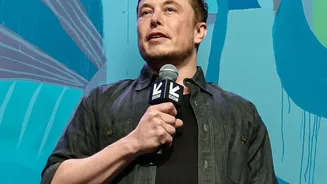
In a world grappling with the rapid advancements of artificial intelligence, Elon Musk projects an optimistic, if disruptive, future. He calls it the 'age of abundance'. Speaking recently after a White House meeting with other tech leaders, Musk described
this as a period where the combination of superintelligent AI and advanced robotics will eliminate scarcity for goods and services. The core idea is that automation will drive production costs so low that society can provide for everyone's needs and wants. This would go beyond just universal basic income (UBI), leading to what he terms "universal high income," where wealth is so plentiful that living standards rise dramatically for all. Musk imagines this abundance extending to critical areas like healthcare, suggesting that AI and robots could provide medical care superior to what even the wealthiest have today.
AI and Robots as the Economic Engine
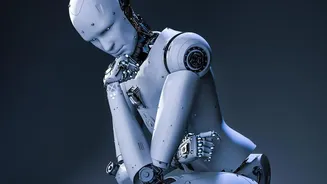
According to Musk, the engine driving this transformation is the exponential growth of AI and robotics. He predicts a future where humanoid robots, like Tesla's own Optimus project, handle the vast majority of physical labor. This shift, he argues, will fundamentally alter the nature of employment, though not necessarily eliminate it. Musk often compares this transition to historical technological shifts, such as when digital computers replaced the human professionals who were once employed to perform calculations by hand. He notes that while jobs change, human demand has so far remained strong. In this vision, the economy's total output becomes a function of digital intelligence multiplied by the number of physical robots, creating a surge in productivity that could make work optional for many.
So, What's Left for Humans to Do?
This automated utopia raises a critical question that Musk himself has acknowledged: if machines can do everything better, what gives human life a sense of purpose? The answer, in his view, lies in shifting the focus of human contribution. Instead of performing repetitive tasks, humans will be responsible for directing the AI. This brings us to his advice for the next generation. In several recent interviews, Musk has advocated against narrow specialization. He argues that the most valuable skill in an AI-driven world will be the ability to know what to ask the machines to do. This requires a deep and broad understanding of the world, allowing people to formulate meaningful questions and communicate complex goals to a hyper-intelligent, literal-minded system.
The Ideal Skillset: Arts, Science, and Engineering
To prepare for this future, Musk recommends a surprisingly holistic educational path: a broad foundation in the arts, sciences, and engineering. He believes this combination creates a well-rounded individual capable of navigating a complex, automated world. Engineering and science provide the technical literacy to understand how AI and robots work. However, it is the inclusion of the arts and humanities that is most telling. These disciplines cultivate critical thinking, creativity, and an understanding of human culture and values—the very things needed to provide direction and purpose to powerful AI tools. This essentially turns the act of directing AI into a sophisticated form of 'prompt engineering', where a person's wide general knowledge allows them to articulate goals that are both technically sound and humanly relevant.
Humanity's Role in a World of Machines
Ultimately, Musk's message is that as machines take over the 'how', humans must become masters of the 'why'. The person who understands only code may build a tool, but the person who also understands history, art, and psychology will know what tool to build and for what purpose. While he acknowledges the transition will be "bumpy," his long-term outlook is incredibly beneficial. The future he envisions is not one where humans are obsolete, but one where our role evolves from laborers to creators, thinkers, and directors. The challenge for young people is to build a knowledge base broad enough to ask the right questions and to steer the immense power of AI toward a future that is not just abundant, but also meaningful.