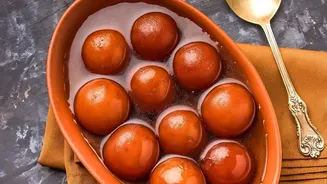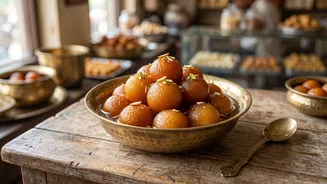



On the busy stretch of National Highway between Delhi and Lucknow lies a town that has become an essential stop for travellers. This isn't for a monument or a museum, but for a taste of something truly special: the legendary Maigalganj gulab jamun.
A Sweet Stop On The Highway
For
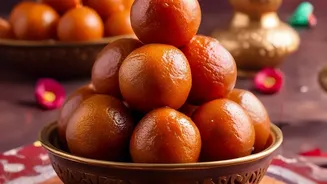
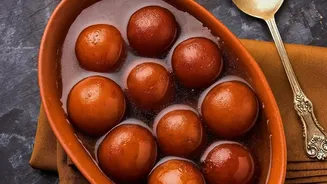
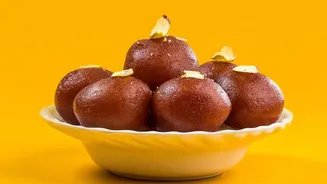
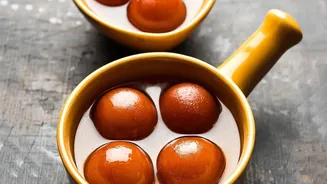
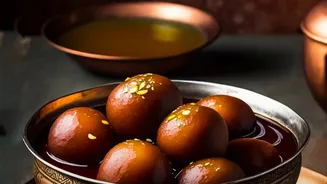
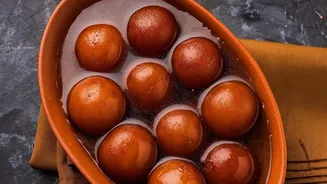
anyone journeying on the bustling National Highway 24, the small town of Maigalganj in Uttar Pradesh offers a unique and compulsory pitstop. Here, along a short stretch of road, sit more than a hundred shops, all dedicated to one iconic Indian sweet: the gulab jamun. For decades, buses, cars, and trucks have made a ritual of pulling over. Passengers stretch their legs and make a beeline for the nearest vendor, drawn by the irresistible aroma of freshly fried dough and warm, sugary syrup. It’s a common sight to see people huddled around, savouring the hot, tender sweets served in traditional earthenware bowls, or 'matkas', before getting some packed for the journey ahead. This half-kilometre stretch has become so famous that Maigalganj is now synonymous with its most famous export, earning it the affectionate nickname 'Gulab Jamun Street'.
The Humble Origin Story
The legend of Maigalganj’s sweet success began long before the highway was a bustling artery. The story goes back to 1941, when a vendor named Dhanpal set up a small, humble shop. At the time, the area was undeveloped, and there wasn't even a proper road. Yet, his gulab jamuns, made with pure khoya and fried to perfection, quickly gained a following among the few travellers who passed through. Rahul Gupta, the great-grandson of the founder who now helps run the original shop, Dhanpal Misthan Bhandar, notes that his great-grandfather exclusively sold gulab jamuns, and the shop’s reputation grew purely by word of mouth. By the 1970s, what started as a single point of sweetness had inspired an entire local industry. The secret was out, and Maigalganj was firmly on the culinary map.
What Makes Them Legendary?
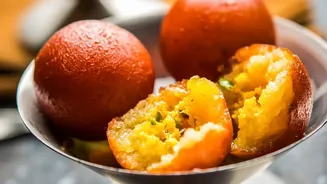
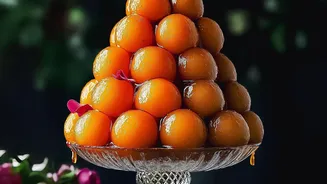
So, what is it about these gulab jamuns that inspires such devotion? The magic lies in the ingredients and the time-honoured process. The core ingredient is high-quality khoya, or milk solids, which gives the jamuns their rich, creamy texture. This is mixed with a small amount of flour and kneaded into a soft dough before being shaped into perfect spheres. These balls are then deep-fried, often in pure ghee, until they achieve a golden-brown hue. The final, crucial step is soaking them in a sugar syrup, or 'chashni', that is delicately flavoured with cardamom. Shopkeepers are masters of achieving the 'ek-taar' or 'single-string' consistency for the syrup, which ensures the gulab jamuns are perfectly saturated without becoming overly sweet or falling apart. Served hot, the result is a dessert that is exquisitely soft and spongy, melting in the mouth.
From One Shop To A Town's Identity
The success of the first shop created a ripple effect that transformed the town's economy and identity. Inspired by Dhanpal's success, other locals began opening their own sweet shops, and soon the highway was lined with them. Today, you’ll find dozens of stores, many humorously sharing similar names like 'Mashhoor Gulab Jamun ki Purani Dukaan' (Famous Old Gulab Jamun Shop) to claim a piece of the original legacy. This sweet proliferation didn't lead to bitter rivalry; instead, it created a unique ecosystem. There is a sense that the reputation of 'Maigalganj gulab jamun' benefits everyone. As one long-time worker noted, if you were to remove the gulab jamuns from the equation, Maigalganj would be just another small Indian village. The sweet has given the town a name, an identity, and a livelihood for hundreds of families.