








The Smallest Hammer
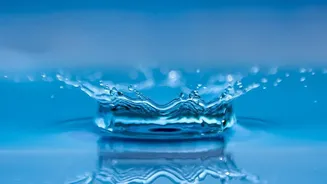
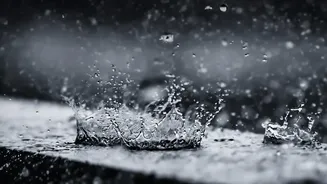
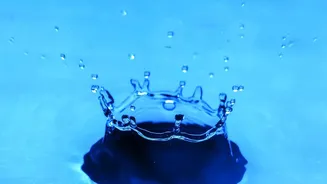
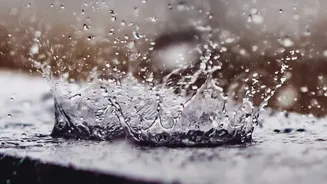
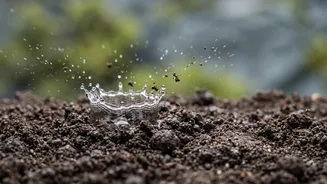
For something that seems so soft, a single raindrop hits exposed earth with significant force. Travelling at speeds up to 32 kilometres per hour, its impact dislodges soil particles, splashing them away. This process is known as splash erosion, and it is the first
and most crucial stage of water-based soil erosion. For years, scientists understood the basic concept, but the precise mechanics remained difficult to measure. It was clear that the collective impact of millions of droplets could displace tonnes of soil, but what exactly happened in that split-second of contact was largely invisible. This initial impact doesn't just move soil; it can clog the pores on the ground, creating a seal that prevents water from soaking in. This, in turn, increases surface runoff, which carries away the loosened soil, escalating the erosion process.
A New Look at Impact
A groundbreaking study has provided a much clearer picture of this miniature violence. Led by researchers at the University of Minnesota, a first-of-its-kind experiment managed to measure the hidden forces at play when a liquid drop strikes a hard surface. Using a newly developed technique, they discovered that the impact force isn't concentrated at the centre of the droplet as previously thought. Instead, the force spreads out with the impacting drop. For a brief moment, the speed at which the droplet spreads exceeds the speed of sound, creating a shock wave across the surface. The researchers found that each droplet essentially behaves like a tiny bomb, explosively releasing its energy upon impact. This explosive force is what gives countless raindrops the power to wear down even hard surfaces over time, from concrete to wind turbine blades.
The Indian Context: A Mounting Crisis
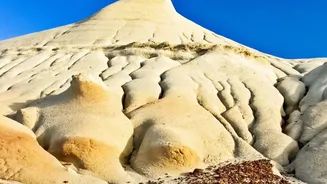
These findings are especially critical for India, where soil erosion is a severe and accelerating problem. The country loses soil at an alarming rate of 16.35 tonnes per hectare per year, far exceeding the global average. In total, nearly a third of India's landmass is suffering from degradation. This isn't just a loss of dirt; it's a loss of life-sustaining topsoil, the fertile layer rich in nutrients and organic matter essential for agriculture. The consequences are stark: reduced agricultural productivity, decreased food security, and polluted waterways, as eroded soil carries fertilisers and pesticides into rivers and streams. Furthermore, rampant soil erosion contributes to an increased risk of landslides and floods, disasters that India knows all too well, particularly in its hilly regions during the monsoon season.
From Knowledge to Action
Understanding the precise mechanics of raindrop erosion is more than an academic exercise; it's a vital tool for developing better mitigation strategies. The new research helps explain why certain surfaces erode faster than others and can guide the design of more resilient materials. For example, coatings for buildings or wind turbine blades could be engineered to better dissipate the shear stress created by a droplet's impact. In an agricultural context, this knowledge reinforces the importance of keeping soil covered. Practices like maintaining crop residue on fields, planting cover crops, and avoiding excessive tillage can dramatically reduce the destructive power of raindrops. A covering layer acts like a shield, absorbing the kinetic energy of the rain before it can dislodge soil particles, thus preserving the soil structure and fertility.