

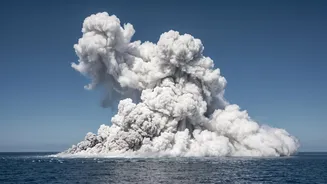
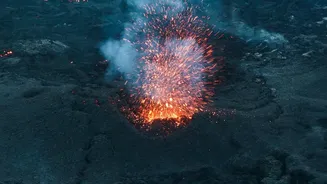
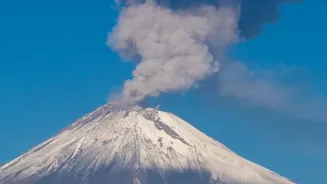
Hunga Tonga-Hunga Haʻapai, Tonga (2022)
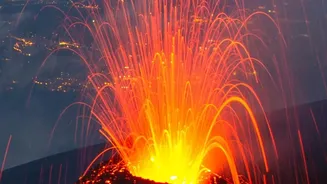
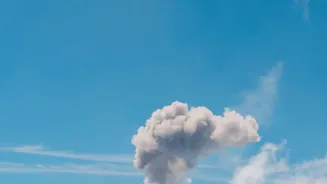
The eruption of the Hunga Tonga-Hunga Haʻapai submarine volcano in January 2022 was, without question, the most powerful volcanic event of the 21st century so far. It was so large that it is considered the biggest atmospheric explosion recorded by modern
instruments. The blast, estimated to be a Volcanic Explosivity Index (VEI) 5 or 6, was heard as far away as Alaska and generated an atmospheric shockwave that circled the planet multiple times. Unlike many eruptions that primarily eject ash, this one blasted an unprecedented amount of water vapour high into the stratosphere, an event scientists are still studying for its potential long-term climate effects. The eruption triggered a devastating tsunami that struck the islands of Tonga, with waves up to 20 meters high, and sent smaller tsunami waves across the entire Pacific Ocean, causing damage and fatalities as far away as Peru. Its ash plume reached a record-breaking height of 57 kilometres, punching into the mesosphere.
Eyjafjallajökull, Iceland (2010)
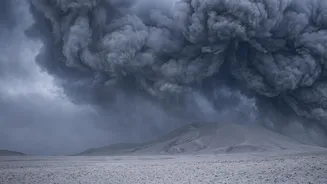
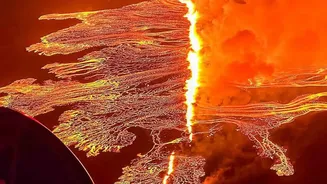
While not the most explosive eruption in terms of sheer force (rated a VEI-4), the 2010 eruption of Iceland's Eyjafjallajökull became powerful in a different way: its ability to cause global disruption. The eruption occurred beneath a glacier, and the interaction of hot magma with ice created a plume of very fine, glassy ash. This ash was carried by the jet stream directly into some of the world's busiest airspace over Europe. Fearing the catastrophic damage volcanic ash can do to jet engines, aviation authorities took the unprecedented step of closing most of northern and central European airspace for six days. The shutdown led to the cancellation of over 100,000 flights, stranding millions of passengers and costing the airline industry an estimated $1.7 billion. The event served as a stark reminder of modern society's vulnerability to natural events, even those happening in remote locations. Remarkably, there were no direct fatalities from the eruption itself.
Mount Merapi, Indonesia (2010)
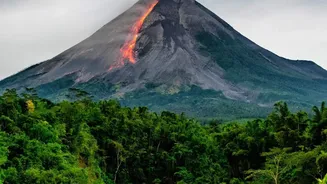
Just a few months after Iceland's travel chaos, Mount Merapi in Indonesia provided a tragic demonstration of a volcano's deadly power. Known as one of Indonesia's most active and dangerous volcanoes, Merapi unleashed its largest eruption since the 1870s. Over several weeks, a series of violent explosions sent superheated pyroclastic flows—fast-moving avalanches of hot gas, ash, and rock—down its densely populated slopes. These flows, along with heavy ashfall and volcanic mudflows known as lahars, caused widespread devastation. Despite warnings and mass evacuations that saved tens of thousands of lives, the eruption tragically killed more than 350 people and displaced hundreds of thousands more. The event, rated a VEI-4, highlighted the immense challenge of managing volcanic risk in areas where millions of people live in the shadow of active peaks.
Puyehue-Cordón Caulle, Chile (2011)
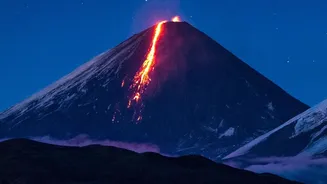
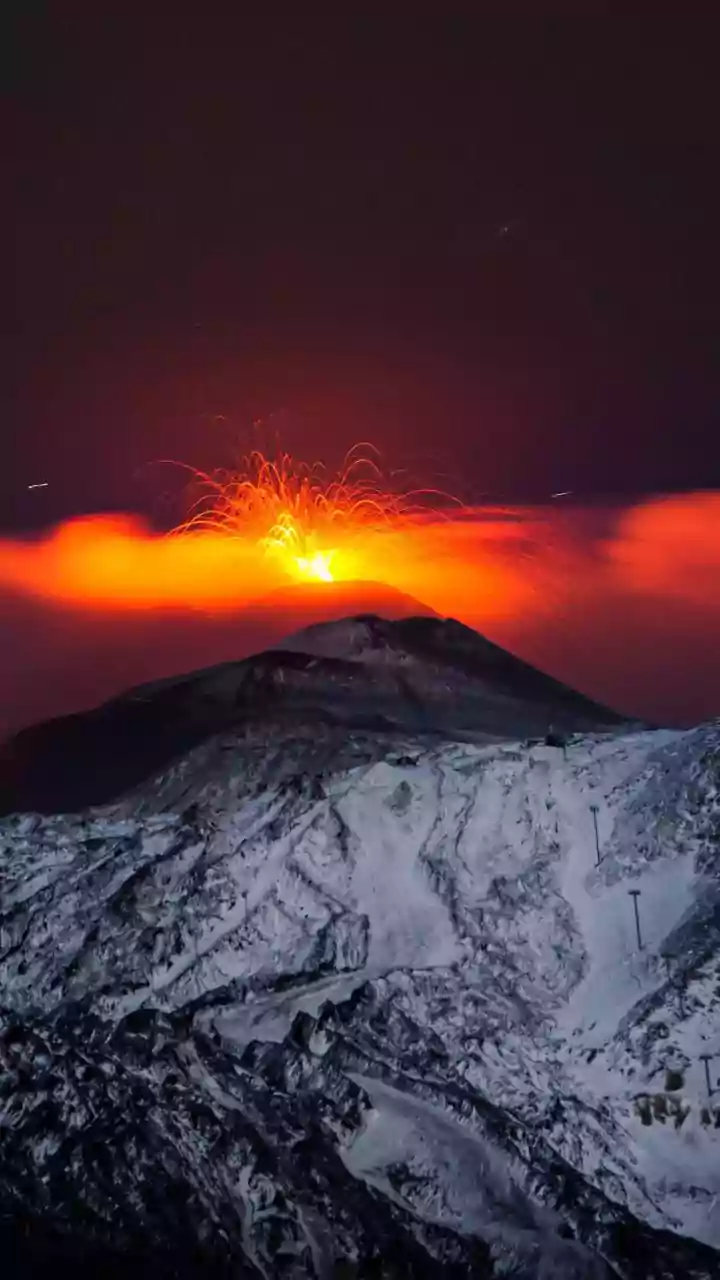
In June 2011, the Puyehue-Cordón Caulle volcanic complex in Chile roared to life after 50 years of inactivity, producing one of the century's largest eruptions with a VEI of 5. The initial blast sent a column of ash soaring more than 10 kilometres into the atmosphere. What made this event so significant was the sheer global journey of its ash cloud. Propelled by strong winds, the plume drifted east across South America, over the Atlantic, past South Africa, and across the Indian Ocean to Australia and New Zealand, circling the entire Southern Hemisphere in about ten days. This caused extensive and prolonged disruption to air travel across multiple continents, grounding flights in Argentina, Uruguay, Australia, and New Zealand. An estimated 100 million tons of ash were ejected, a powerful display of how a single geological event in a remote part of the Andes could have far-reaching consequences for the rest of the world.