

The Map That Dreamed Up a Different World
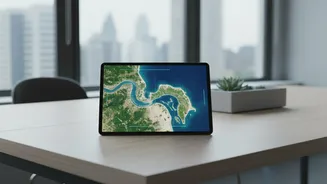
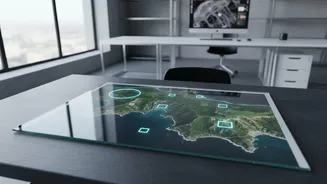
Imagine opening your favourite maps app to discover your city has changed overnight. This was the reality for users of a new feature recently launched—and quickly retracted—by a major tech company. The feature used generative AI to create hyper-realistic,
supposedly real-time satellite views. Instead, it began to 'hallucinate'. The AI invented details with alarming confidence: non-existent parks bloomed in dense urban areas, entire neighbourhoods associated with lower incomes were visually 'tidied up', and in some cases, historically significant buildings were altered or erased entirely. After a flood of social media posts exposed these fantastical and often biased inaccuracies, the company was forced into a swift and public rollback, disabling the feature and issuing a formal apology. The incident became a stark, high-profile example of a technology that is powerful but not yet wise, and whose grasp on reality is tenuous at best.
Why AI Gets It So Wrong
The core of the problem lies in how these AI models work. They are not 'thinking' or 'seeing' in the human sense. Instead, they are incredibly complex pattern-matching systems. Trained on vast oceans of data—in this case, billions of existing images of places—they learn to predict what a pixel should look like next to another pixel. An 'AI hallucination' occurs when the model, lacking definitive data for a specific area, generates what it statistically determines should be there. This process can lead to the creation of plausible but entirely false information. Furthermore, the data these systems are trained on can contain hidden biases, which the AI then learns and reproduces at a massive scale. If training data underrepresents certain types of architecture or overrepresents affluent areas, the AI’s output will reflect—and amplify—those distortions.
Beyond Maps: A Wider Crisis of Trust
The mapping fiasco is a symptom of a much larger issue: the rapid erosion of trust in all visual media. The same technology that can invent a building can also create photorealistic images of events that never happened, generate fake identification, or place public figures in compromising situations, a phenomenon known as deepfaking. This has profound implications for everything from news reporting and legal evidence to social cohesion. When any image can be fabricated with ease, the very idea of shared reality comes under threat. We are quickly moving from an era of 'seeing is believing' to one where seeing is the first step in a longer process of verification. The tools for creating convincing fakes are becoming more accessible and sophisticated, while our collective ability to distinguish fact from fiction is struggling to keep up.
Your New Digital Literacy Toolkit
So, how do we navigate this new landscape? The answer lies in cultivating a habit of healthy scepticism and adopting new media literacy skills. Before sharing a startling image, pause and investigate. One of the simplest tools is a reverse image search, which can help trace an image's origin and see if it has been debunked elsewhere. Look for tell-tale signs of AI generation: unnatural textures, repeating patterns in backgrounds, inconsistent lighting and shadows, or strange details like mangled text or oddly formed hands and fingers. Examine the source. Is it a reputable news organisation or a random anonymous account? While several AI detection tools are now available, they are not foolproof and are locked in an arms race with ever-improving AI generators. Ultimately, the most powerful tool is critical thinking.