


The Old Solar System
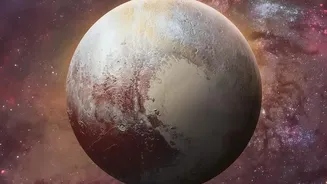
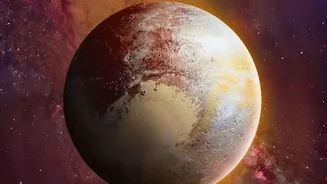
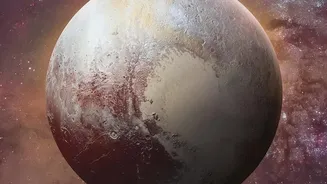
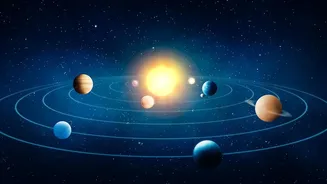
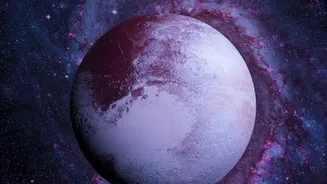
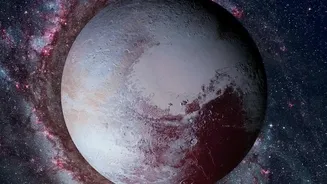
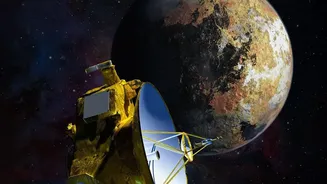
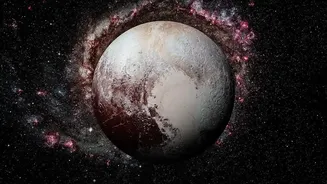
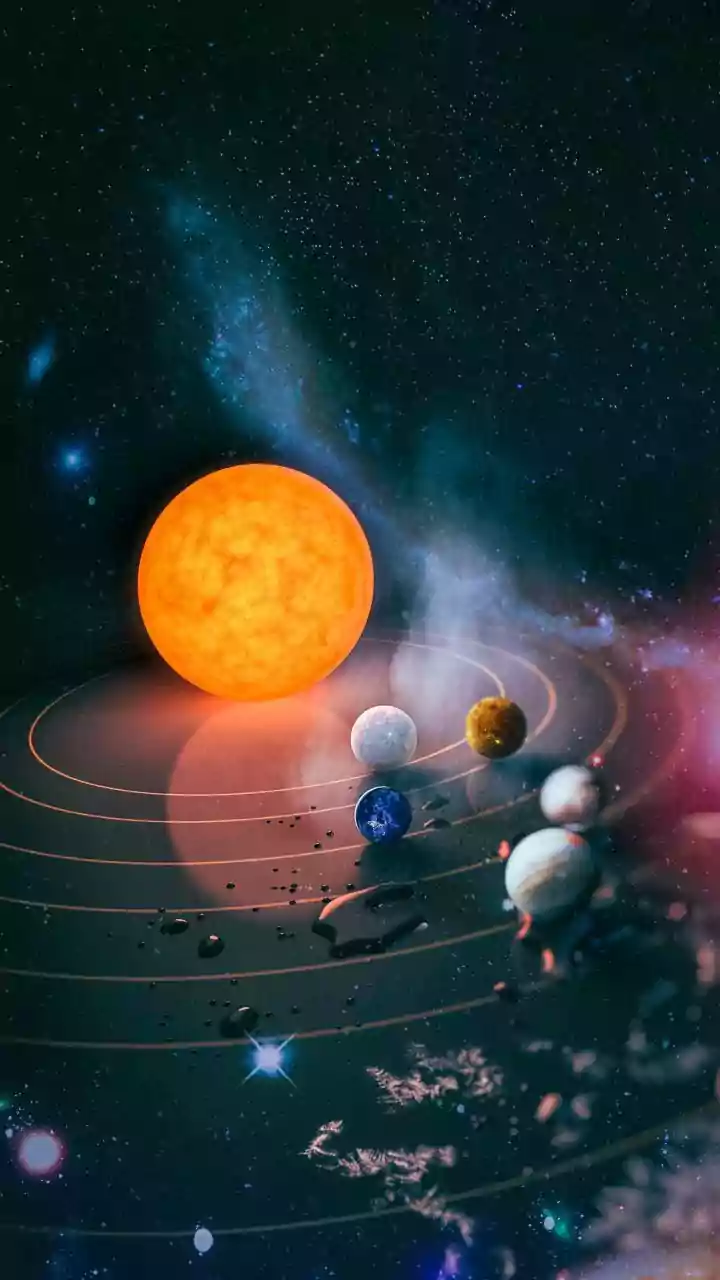
For decades, the solar system was a tidy place with nine planets. Schoolchildren memorised their order, from Mercury to Pluto. But even then, Pluto was the odd one out. Discovered in 1930, it was far smaller than any other planet, with a bizarre, tilted
orbit that sometimes brought it closer to the sun than Neptune. Its composition of ice and rock seemed more like a comet than a planet like Earth or Jupiter. These eccentricities were tolerated for a long time because it was the only thing we knew of in that distant, dark region of space.
A Crisis of Classification
The trouble began in the early 2000s. Astronomers started discovering other large objects in the Kuiper Belt, the ring of icy bodies beyond Neptune where Pluto resides. The tipping point came in 2005 with the discovery of Eris, a distant object that appeared to be even more massive than Pluto. This discovery created a dilemma for the International Astronomical Union (IAU), the body responsible for naming celestial objects. If Pluto was a planet, did that mean Eris was the tenth planet? What about the other large objects being discovered? Astronomers realised they needed a clear, scientific definition of what a planet truly is, something they had never formally established.
The Three Rules of Planethood
In August 2006, after intense debate, the IAU voted on and passed a formal definition of a planet. According to the resolution, a celestial body must meet three criteria to be called a planet in our solar system: 1. It must be in orbit around the Sun. 2. It must have sufficient mass for its self-gravity to overcome rigid body forces so that it assumes a nearly round shape (a state known as hydrostatic equilibrium). 3. It must have 'cleared the neighbourhood' around its orbit. Pluto passes the first two tests with flying colours. It orbits the Sun and is massive enough to be round. But it failed spectacularly on the third and final rule.
Clearing the Neighbourhood
So, what does it mean to 'clear the neighbourhood'? This criterion states that a planet must be the gravitationally dominant object in its orbital path. Over billions of years, a true planet's gravity will either sweep up smaller objects through collisions, capture them as moons, or fling them into different orbits. Earth, for example, has 1.7 million times the mass of all other objects in its orbital path. Jupiter is even more dominant. They have cleared their zones. Pluto, on the other hand, has not. Its mass is only about 7% of the mass of all the other objects in its orbit. It moves through the crowded Kuiper Belt, surrounded by thousands of other icy bodies of comparable size, without the gravitational muscle to clear them away. Because it shares its orbital space with so many other objects, it fails the third test.
A New Category: Dwarf Planet
Rather than a simple demotion, Pluto's case led to the creation of a new, distinct category of celestial object: the 'dwarf planet'. The IAU defines a dwarf planet as an object that meets the first two criteria for a planet—it orbits the Sun and is nearly round—but has not cleared its orbital neighbourhood. Pluto became the prototype for this new class, which also includes Eris (the object that sparked the debate), Ceres (found in the asteroid belt between Mars and Jupiter), and several other large Kuiper Belt objects like Makemake and Haumea. This reclassification wasn't meant to diminish Pluto but to better categorise the growing diversity of worlds being discovered in our solar system.