

The Race to 2027
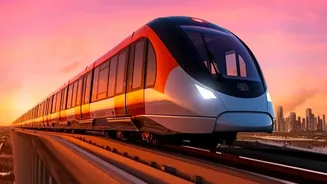
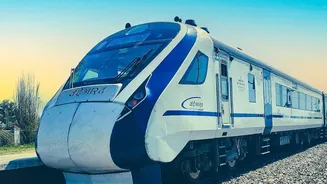
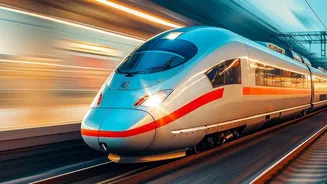
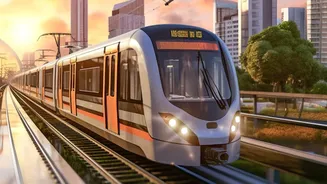
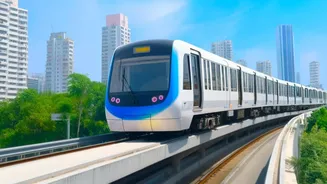
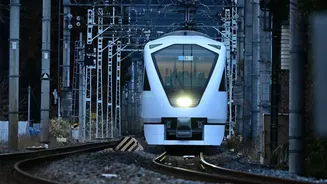
The country's first bullet train is expected to hit the tracks for testing by May or June of 2027. According to Union Railway Minister Ashwini Vaishnaw, these crucial trials will mark a significant step forward for the high-profile project. After an anticipated
testing period of two to four months, the first section of the line could be inaugurated. While the trial date brings a new sense of momentum, the completion of the entire 508-kilometre corridor connecting Mumbai and Ahmedabad is projected for a later date, with some estimates pointing towards 2029. The initial focus remains on making the first segment operational, which is expected to be a stretch within Gujarat, likely between Surat and Bilimora or Vapi.
A Monumental Construction Effort
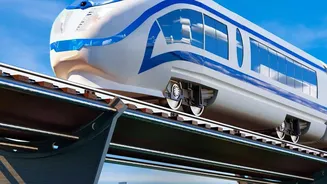
The journey to this point has been a massive undertaking in engineering and logistics. The National High Speed Rail Corporation Limited (NHSRCL), the agency executing the project, has reported substantial progress. Across the corridor, hundreds of kilometres of piers and girders for the elevated viaduct have been erected. Work is advancing simultaneously on various fronts, including the construction of 12 modern stations, massive river bridges, and a complex 21-km underground tunnel that includes a 7-km undersea section in Maharashtra. In cities like Vadodara, the new high-speed station is being intricately integrated with the existing Indian Railways station, creating a seamless multi-modal transport hub. This physical progress is a visible sign that the project is steadily moving from the drawing board to physical reality.
More Than Just Speed
While the headline speed of 320 km/h is impressive, slashing the travel time between Mumbai and Ahmedabad to about two hours, the project's real impact goes far beyond just a faster journey. Economists and urban planners anticipate that the corridor will act as a powerful engine for economic growth. By connecting major economic hubs like Mumbai, Surat, Vadodara, and Ahmedabad, the bullet train is expected to create a unified market, boost business efficiency, and spur industrial development along its route. The project is also a significant driver of job creation and is expected to invigorate the tourism sector by making regional travel faster and more convenient. The development around the 12 proposed stations is likely to trigger real estate and urban infrastructure growth, transforming smaller towns and cities.
Japanese Technology, Indian Manufacturing
The project is being built with technical and financial assistance from Japan, utilising its world-renowned Shinkansen technology, known for its impeccable safety record. A significant portion of the project's estimated $15 billion cost is financed through a concessional loan from the Japan International Cooperation Agency (JICA). However, in a major push for 'Atmanirbhar Bharat' (self-reliant India), the trainsets themselves are being manufactured indigenously. The first body frame of a domestically produced bullet train has already been completed and sent for crucial strength testing. This hybrid approach combines proven Japanese systems with a growing Indian manufacturing capability, setting a template for future high-speed rail projects in the country.
The Path Forward
Despite the clear progress, challenges remain. Issues like land acquisition, particularly in the initial phases, and the sheer complexity of the construction have led to revised timelines over the years. The distinction between the trial run in 2027 and the full commissioning of the 508-km line is crucial. The first operational service is expected in August 2027 on a priority section in Gujarat. The completion of the entire corridor, including the challenging underground and undersea sections in Mumbai, will follow. The successful launch of the first phase will be a major psychological and symbolic victory, proving that India can execute such a technologically advanced and large-scale infrastructure project. It will also serve as a blueprint for the seven other high-speed rail corridors planned across the nation.