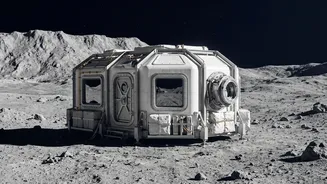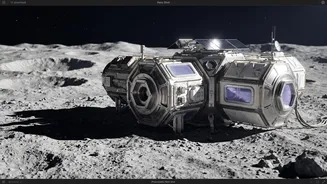


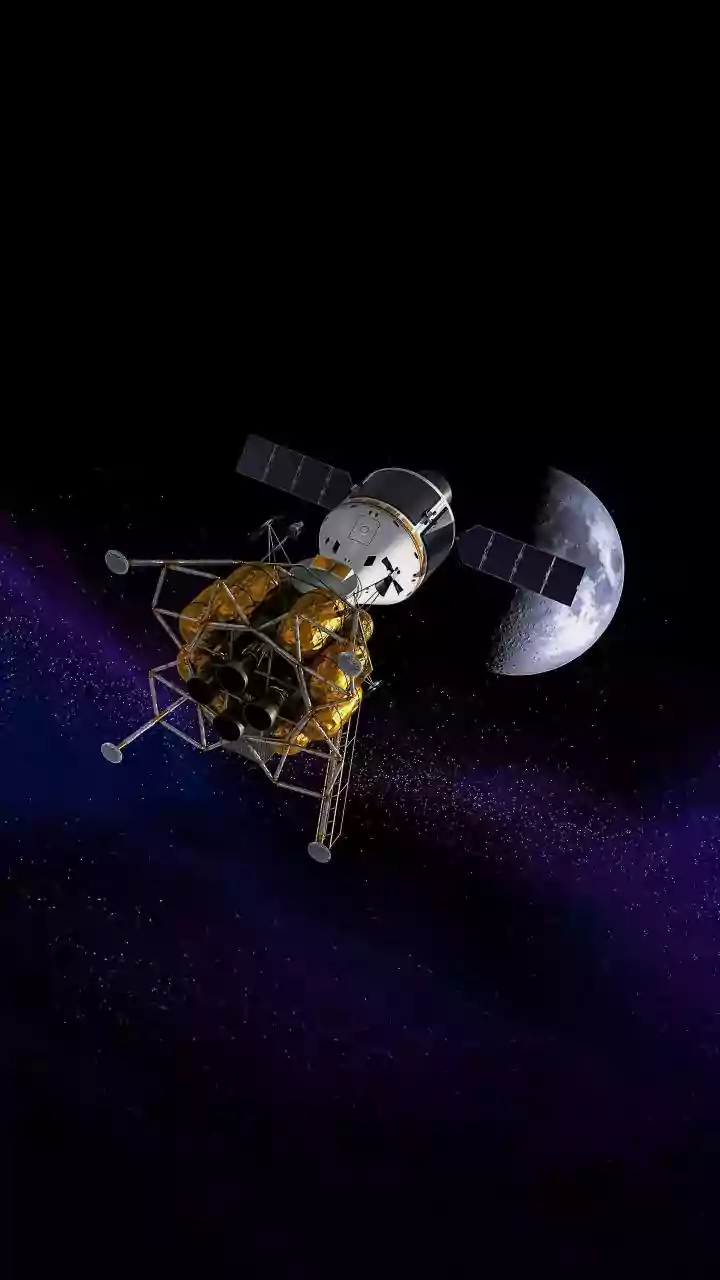


The dream of living on the Moon is closer than ever, and NASA is inviting young engineers to help build our future lunar home. This is a call to the Artemis Generation to solve real-world challenges for humanity's return to the lunar surface.
The Dawn of a New Lunar Era
For the first
time in over half a century, humanity is planning a permanent return to the Moon. NASA's Artemis program isn't just about planting flags and leaving footprints; its goal is to establish a sustainable human presence on the lunar surface, a crucial stepping stone for eventual missions to Mars. This ambitious undertaking requires more than just powerful rockets and skilled astronauts. It demands a new wave of innovation to create the infrastructure for long-term living and working in one of the most hostile environments imaginable. To achieve this, NASA has turned to the brightest young minds, launching initiatives like the 'Moon Base Challenge' to crowdsource solutions for the complex problems of off-world settlement.
More Than Just a Shelter
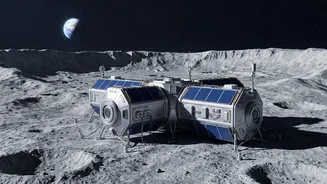
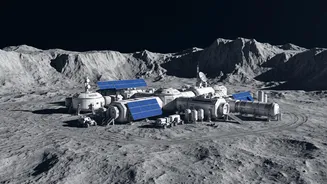
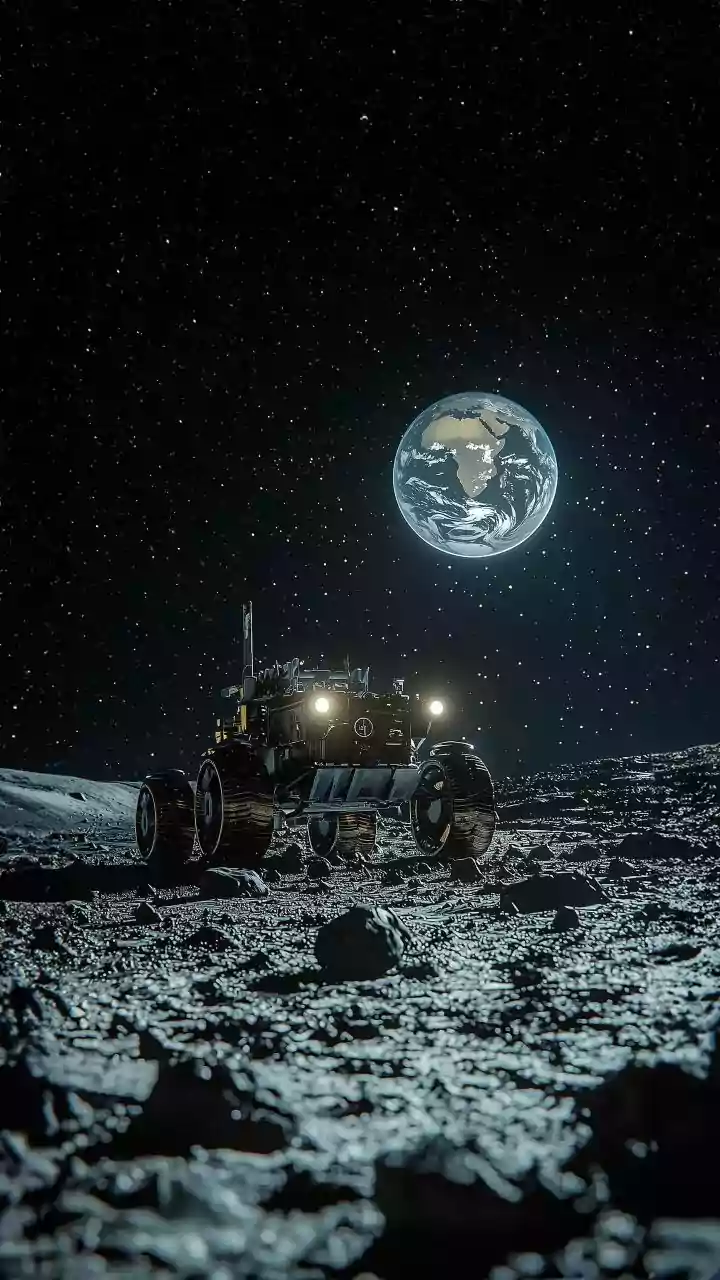
What exactly is a 'lunar habitat'? It's far more than a simple shelter. Engineers must design a self-sustaining ecosystem that can protect inhabitants from extreme temperature swings, cosmic radiation, and micrometeoroid impacts. But the challenge goes deeper. These habitats require integrated support systems for every aspect of life. This includes generating and storing power through 14-day lunar nights, recycling air and water with near-perfect efficiency, managing waste, and enabling transportation across the rugged lunar terrain. NASA's student challenges specifically ask for solutions in these key areas, from constructing facilities with local materials (a concept known as in-situ resource utilization) to developing robust communications networks.
The Challenge: A Call for Bold Ideas
Through a series of competitions under the 'Artemis Student Challenges' banner, NASA is actively recruiting fresh perspectives. For instance, the recent Moon Base Challenge offers a $1 million prize pool for student teams to develop concepts across six critical categories: power generation, construction, life support, mobility, communications, and astronaut safety. These are not abstract thought experiments. Teams are expected to develop detailed proposals, engage in trade studies, and present their ideas just as professional aerospace engineers would. Other challenges like 'Lunabotics' focus on creating robots for lunar construction and mining, while the 'Student Launch' initiative tasks teams with designing and building high-powered rockets and payloads. The common thread is a hands-on approach to solving tangible problems.
An Opportunity for Indian Ingenuity
While many of NASA's current challenges are open to U.S.-based student teams, the initiative signals a global shift in space exploration—one that heavily relies on a diverse, international talent pool. For the vibrant community of young engineers and tech students in India, this represents a monumental opportunity. With India's own space program, ISRO, making significant strides, the skills being cultivated domestically are precisely what the future of space exploration demands. Expertise in software engineering, robotics, materials science, and systems engineering are all critical for developing lunar infrastructure. Participating in or even just studying these NASA challenges can provide invaluable experience, aligning Indian talent with the forefront of the global aerospace industry. It is a chance to prepare for a future where collaboration between agencies like NASA and ISRO becomes even more critical.
How to Prepare for the Final Frontier
For students aspiring to contribute to this new space race, the path begins with a strong foundation in STEM. Engaging with these challenges, even from afar, helps build the necessary skills. Aspiring participants should focus on forming multidisciplinary teams, as these complex problems require a blend of mechanical, electrical, and software engineering. NASA emphasizes that curiosity and creative problem solving are just as important as technical experience. Students can follow announcements on the NASA STEM Gateway, the central portal for these competitions. By studying the requirements for challenges like the Human Lander Challenge or RASCAL, young Indian engineers can benchmark their skills and projects against global standards, preparing themselves to be the architects and builders of our future on the Moon and beyond.