

What is the story about?
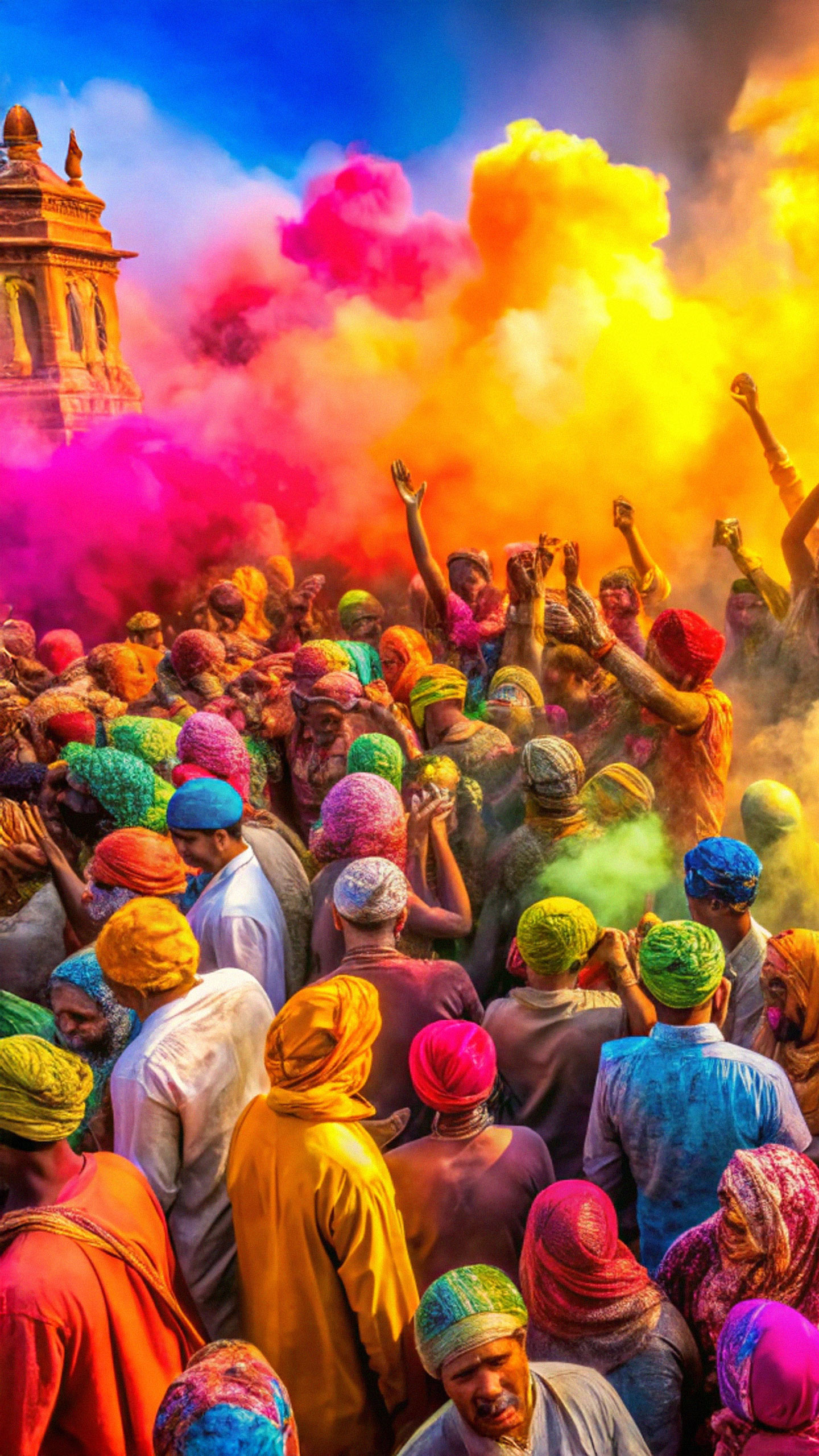
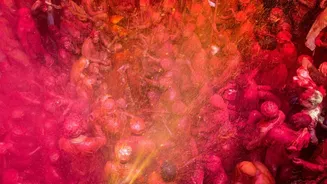
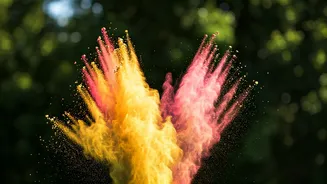
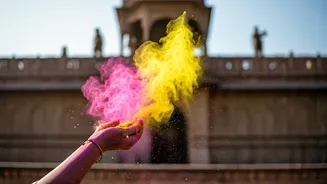
With Holi just around the corner, excitement is reaching its peak across the country. And when we hear of Holi, one festival that comes to mind is the Lathmar Holi of Mathura and Vrindavan.
The streets of Mathura are already buzzing with celebrations, and people all over India and even foreign tourists visit Mathura every year to witness this colourful festival.
Why Mathura's Holi is world famous
Mathura is known as the birthplace of Lord Krishna, and its Holi celebrations are unlike anywhere else in the world. The main reason Mathura's Holi is so famous is its connection to Lord Krishna. According to mythology, Krishna loved playing with colours with Radha and the gopis of Vrindavan.
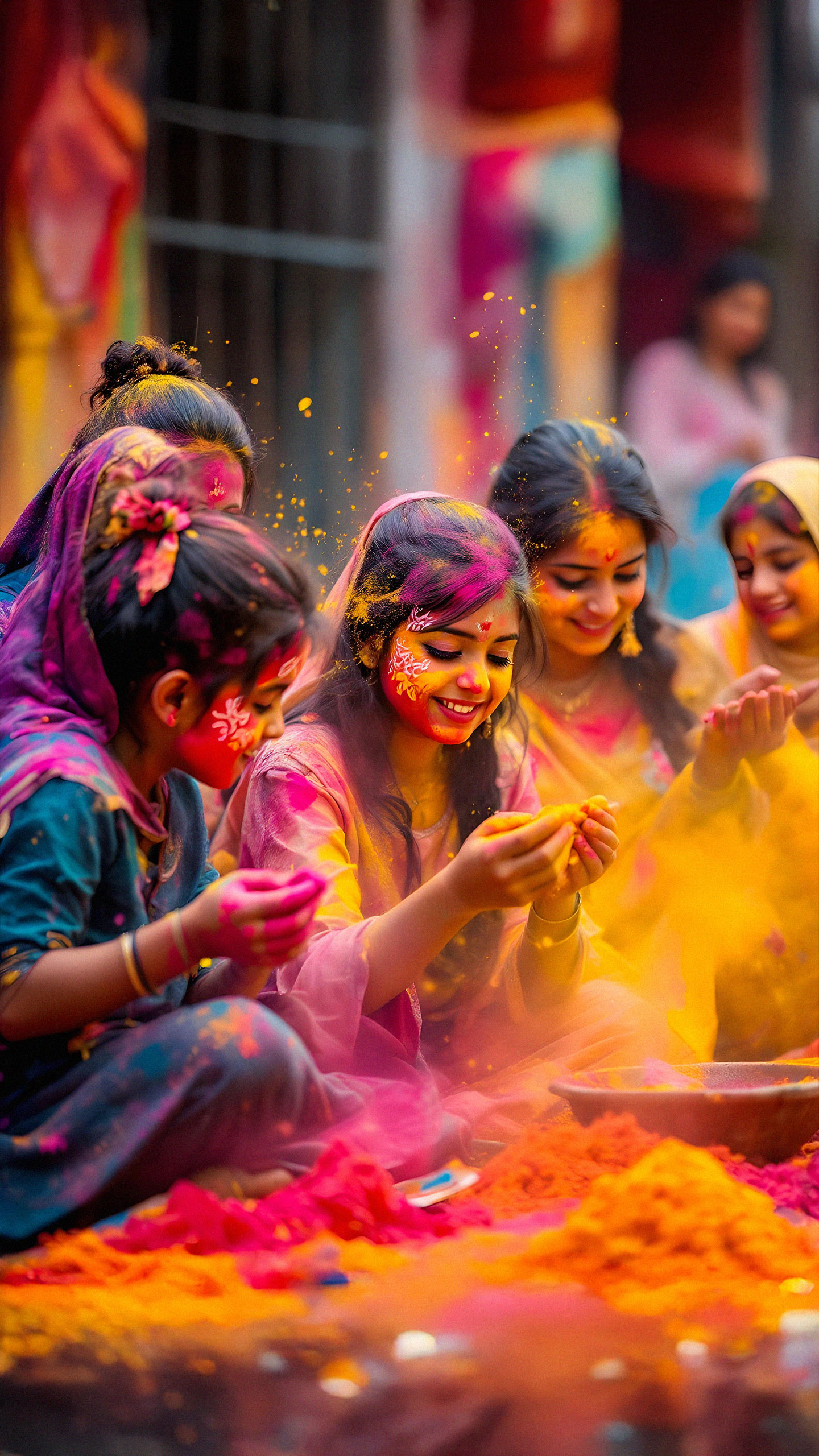
He used to smear colours on them and play pranks. And since then, this playful spirit is celebrated today, where people throw colours, dance and sing traditional folk songs.
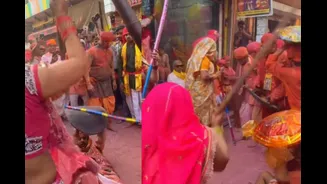
Unlike regular Holi, Mathura's Holi is celebrated for more than a week with unique rituals like Lathmar in Barsana, where women playfully hit men with sticks while men try to defend themselves.
How did Lathmar Holi originate?
According to legend, young Krishna once complained to his mother, Yashoda, about his dark complexion compared to Radha, who was fair-skinned. Yashoda jokingly suggested that Krishna to go and colour Radha, so that no difference in complexion would be visible.
Taking his mother's advice, Krishna, along with his friends, went to Barsana, Radha's village. There, they playfully smeared colours on Radha and the other gopis. The women, in response, chased Krishna and his friends and playfully beat them with sticks.
This tradition is said to have given birth to the centuries-old Lathmar Holi, and since then, it has been celebrated joyfully for centuries.
Other types of Holi include Phoolon Wali Holi at Banke Bihari Temple, in which the priests and devotees shower each other with flowers, instead of coloured powders and Laddu Holi at the Radha Rani Temple in Barsana, where priests and devotees throw laddus at each other.
Braj Holi 2026
This year, Holi will be celebrated on March 4, but in the Braj region, the festivities span over 10 days. The celebrations begin with Laddu Holi on February 24, followed by Lathmar Holi in Barsana on February 25 and in Nandgaon on February 26.
On February 28, devotees celebrate Phoolon Wali Holi at the Banke Bihari Temple in Mathura, while Gokul Chhadi Mar Holi takes place on March 1. Widow Holi is observed on March 2, followed by Holika Dahan on March 3.
The main day of celebration, Dhulandi or Rangwali Holi, falls on March 4, and the festivities conclude with Dauji Ka Huranga on March 5.
The streets of Mathura are already buzzing with celebrations, and people all over India and even foreign tourists visit Mathura every year to witness this colourful festival.
Why Mathura's Holi is world famous
Mathura is known as the birthplace of Lord Krishna, and its Holi celebrations are unlike anywhere else in the world. The main reason Mathura's Holi is so famous is its connection to Lord Krishna. According to mythology, Krishna loved playing with colours with Radha and the gopis of Vrindavan.
He used to smear colours on them and play pranks. And since then, this playful spirit is celebrated today, where people throw colours, dance and sing traditional folk songs.
Unlike regular Holi, Mathura's Holi is celebrated for more than a week with unique rituals like Lathmar in Barsana, where women playfully hit men with sticks while men try to defend themselves.
How did Lathmar Holi originate?
According to legend, young Krishna once complained to his mother, Yashoda, about his dark complexion compared to Radha, who was fair-skinned. Yashoda jokingly suggested that Krishna to go and colour Radha, so that no difference in complexion would be visible.
Taking his mother's advice, Krishna, along with his friends, went to Barsana, Radha's village. There, they playfully smeared colours on Radha and the other gopis. The women, in response, chased Krishna and his friends and playfully beat them with sticks.
This tradition is said to have given birth to the centuries-old Lathmar Holi, and since then, it has been celebrated joyfully for centuries.
Other types of Holi include Phoolon Wali Holi at Banke Bihari Temple, in which the priests and devotees shower each other with flowers, instead of coloured powders and Laddu Holi at the Radha Rani Temple in Barsana, where priests and devotees throw laddus at each other.
Braj Holi 2026
This year, Holi will be celebrated on March 4, but in the Braj region, the festivities span over 10 days. The celebrations begin with Laddu Holi on February 24, followed by Lathmar Holi in Barsana on February 25 and in Nandgaon on February 26.
On February 28, devotees celebrate Phoolon Wali Holi at the Banke Bihari Temple in Mathura, while Gokul Chhadi Mar Holi takes place on March 1. Widow Holi is observed on March 2, followed by Holika Dahan on March 3.
The main day of celebration, Dhulandi or Rangwali Holi, falls on March 4, and the festivities conclude with Dauji Ka Huranga on March 5.