








What is the story about?
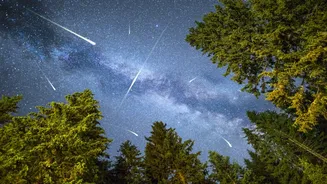
Stargazers are in for a spectacular treat as the Geminid meteor shower is set to light up the sky this week, promising one of the most impressive celestial events of 2025.
The Geminids, known for bright and colourful stars, can deliver up to 120 meteors per hour at their peak, making them a must-watch for astronomy enthusiasts. Unlike most meteor showers that originate from comets (made mostly of ice), the Geminids come from an asteroid called 3200 Phaethon.
It is one of the brightest and most beautifulmeteor showers, which usually happens in mid-December, making it easier to see the meteors streak across the sky. It is expected to be visible across the globe.
Rubert Lunsford, the journal editor of the American Meteor Society, said, "This material is larger on average and survives further into our atmosphere and tends to produce brighter meteors."
A colourful sky show
When meteors enter the Earth's atmosphere, they burn up because of the heat caused by friction. The different metals inside the meteors create different colours when they burn. Most meteors look white, while some can appear yellow, red, green, or blue, as different metals burn in the sky.
When can you see the Geminid Meteor Shower?
The first Geminid shower began on December 4 and will continue until December 20, but the shower's peak will occur in the early hours of Sunday, December 14. The meteors will seem to appear near the bright planet Jupiter, making it easier to spot them.
So, peak nights are December 13 and 14, and the best viewing is late at night to early morning, around midnight to dawn.
Best time to watch
For the best viewing, head outside on the nights of December 13 and 14. Start looking around 10 pm, when the radiant, the point in the constellation Gemini from which meteors seem to appear, is high in the sky and the moonlight is minimal. Meteors will appear near the bright planet Jupiter, helping guide your eyes to the action.
Moonlight can affect visibility, so it's important to adjust your viewing direction. Before the moon rises, face east to catch the meteors. After about 2 am, turn west with the moon at your back to avoid its glare.
The American Meteor Society advises stargazers to allow at least 20 to 30 minutes for their eyes to adjust to the darkness.
The Geminids, known for bright and colourful stars, can deliver up to 120 meteors per hour at their peak, making them a must-watch for astronomy enthusiasts. Unlike most meteor showers that originate from comets (made mostly of ice), the Geminids come from an asteroid called 3200 Phaethon.
It is one of the brightest and most beautifulmeteor showers, which usually happens in mid-December, making it easier to see the meteors streak across the sky. It is expected to be visible across the globe.
Rubert Lunsford, the journal editor of the American Meteor Society, said, "This material is larger on average and survives further into our atmosphere and tends to produce brighter meteors."
A colourful sky show
When meteors enter the Earth's atmosphere, they burn up because of the heat caused by friction. The different metals inside the meteors create different colours when they burn. Most meteors look white, while some can appear yellow, red, green, or blue, as different metals burn in the sky.
When can you see the Geminid Meteor Shower?
The first Geminid shower began on December 4 and will continue until December 20, but the shower's peak will occur in the early hours of Sunday, December 14. The meteors will seem to appear near the bright planet Jupiter, making it easier to spot them.
So, peak nights are December 13 and 14, and the best viewing is late at night to early morning, around midnight to dawn.
Best time to watch
For the best viewing, head outside on the nights of December 13 and 14. Start looking around 10 pm, when the radiant, the point in the constellation Gemini from which meteors seem to appear, is high in the sky and the moonlight is minimal. Meteors will appear near the bright planet Jupiter, helping guide your eyes to the action.
Moonlight can affect visibility, so it's important to adjust your viewing direction. Before the moon rises, face east to catch the meteors. After about 2 am, turn west with the moon at your back to avoid its glare.
The American Meteor Society advises stargazers to allow at least 20 to 30 minutes for their eyes to adjust to the darkness.