







What is the story about?
The ePlane Company, an IIT Madras-incubated aerospace venture, has launched India’s largest integrated eVTOL prototyping and testing facility at the IIT Madras Discovery Campus in Thaiyur, Chennai.
The 60,000-square-foot site is the country's first integrated plant dedicated to the serial production of electric aircraft, marking a transition to manufacturing flight-ready hardware and certification-grade full-scale prototyping for urban air mobility.
Professor V Kamakoti, a Padma Shri laureate and IIT Madras Director, officially inaugurated the facility.
This specialised centre is designed to drive critical technical achievements, such as tethered hover trials, as the firm advances toward Type Certification. By consolidating design, assembly, and testing units under one roof, the facility acts as a central engineering powerhouse for the development of passenger, emergency relief, and cargo eVTOLs.
To facilitate subsystem validation and full-scale development, the site features avionics testing, composite fabrication, electric powertrain assembly, and a dedicated Ground Test Vehicle (GTV) facility.
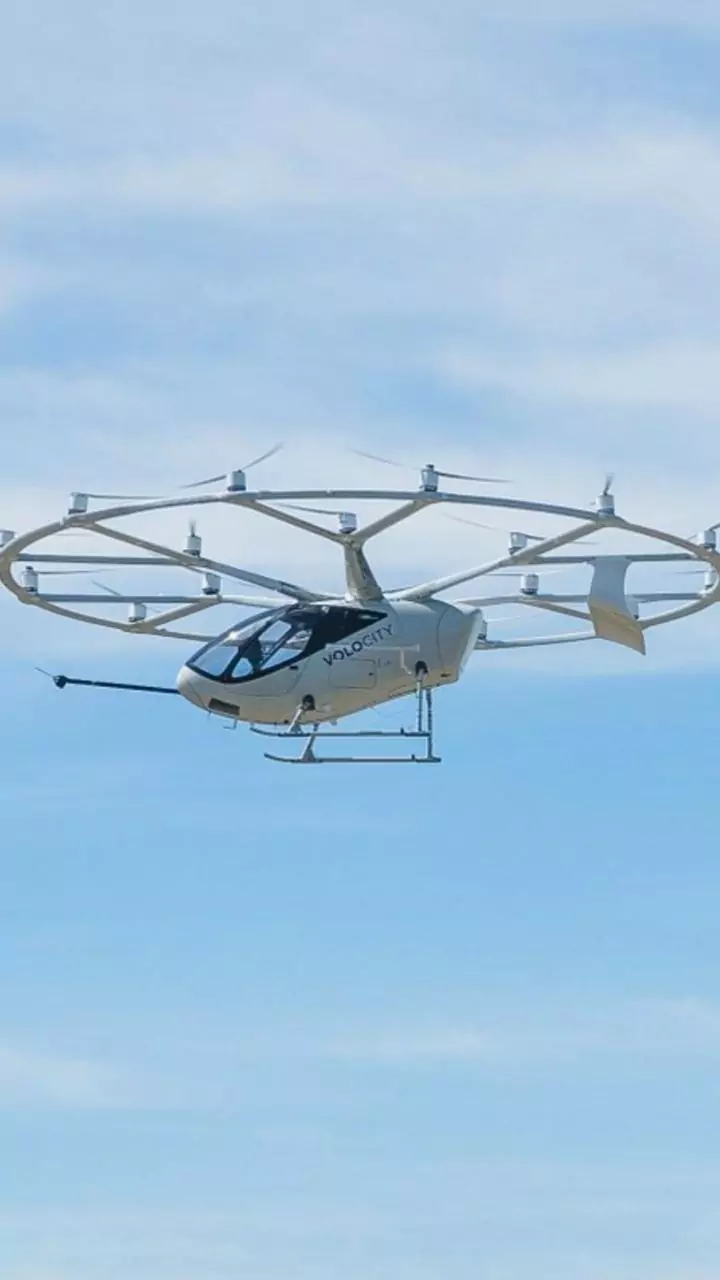
The e200X has been specifically built to navigate the complexities of the world's most densely populated cities. Unlike many international rivals that demand expansive landing infrastructure, this aircraft features a remarkably small 8m x 10m footprint. As the world's most compact eVTOL, this design allows for efficient rooftop-to-rooftop transit without the need for massive landing pads.
The establishment of this prototyping centre represents a monumental leap for India's deep-tech hardware landscape. Beyond design approvals, it enables the physical integration and validation of complicated aircraft systems.
Furthermore, by collaborating with the Directorate General of Civil Aviation (DGCA) to establish testing standards, The ePlane Company is playing a foundational role in drafting the regulatory framework for the future of electric aviation in the country.
ALSO READ |IIT Madras develops ramjet-assisted artillery shells, extends gun range by nearly 50%
This prototyping centre serves as the physical foundation for India's homegrown aerospace advancements. It offers a specialised environment focused on constructing energy-efficient, zero-emission mobility solutions that are engineered to address the unique transit challenges of the world’s densest cities.
According to Prof Satya Chakravarthy, Founder and Technical Lead of The ePlane Company, this new facility serves as the primary driver for the firm's commercial growth. "With the support of IIT Madras, we have built a space where we can fulfil our vision of making flying as common and affordable as taking a taxi. This isn't just about moving people; it’s about adding another layer of transport to the future of human mobility," he said.
The 60,000-square-foot site is the country's first integrated plant dedicated to the serial production of electric aircraft, marking a transition to manufacturing flight-ready hardware and certification-grade full-scale prototyping for urban air mobility.
Professor V Kamakoti, a Padma Shri laureate and IIT Madras Director, officially inaugurated the facility.
This specialised centre is designed to drive critical technical achievements, such as tethered hover trials, as the firm advances toward Type Certification. By consolidating design, assembly, and testing units under one roof, the facility acts as a central engineering powerhouse for the development of passenger, emergency relief, and cargo eVTOLs.
To facilitate subsystem validation and full-scale development, the site features avionics testing, composite fabrication, electric powertrain assembly, and a dedicated Ground Test Vehicle (GTV) facility.
The e200X has been specifically built to navigate the complexities of the world's most densely populated cities. Unlike many international rivals that demand expansive landing infrastructure, this aircraft features a remarkably small 8m x 10m footprint. As the world's most compact eVTOL, this design allows for efficient rooftop-to-rooftop transit without the need for massive landing pads.
The establishment of this prototyping centre represents a monumental leap for India's deep-tech hardware landscape. Beyond design approvals, it enables the physical integration and validation of complicated aircraft systems.
Furthermore, by collaborating with the Directorate General of Civil Aviation (DGCA) to establish testing standards, The ePlane Company is playing a foundational role in drafting the regulatory framework for the future of electric aviation in the country.
ALSO READ |IIT Madras develops ramjet-assisted artillery shells, extends gun range by nearly 50%
This prototyping centre serves as the physical foundation for India's homegrown aerospace advancements. It offers a specialised environment focused on constructing energy-efficient, zero-emission mobility solutions that are engineered to address the unique transit challenges of the world’s densest cities.
According to Prof Satya Chakravarthy, Founder and Technical Lead of The ePlane Company, this new facility serves as the primary driver for the firm's commercial growth. "With the support of IIT Madras, we have built a space where we can fulfil our vision of making flying as common and affordable as taking a taxi. This isn't just about moving people; it’s about adding another layer of transport to the future of human mobility," he said.