








What is the story about?
Global product engineering and digital services firm Tata Electronics has emerged as the fourth-largest Tata Group company by revenue, reporting revenue of ₹1,31,082 crore in FY26, according to Tata Sons Executive Chairman N Chandrasekaran.
In his address to shareholders in the Tata Sons Annual Report 2025-26, Chandrasekaran said Tata Electronics has achieved this position within four years of its formation. The company’s workforce stood at 86,466, with nearly two-thirds comprising women, while operating profits have reached breakeven.
“The company manufactured 12% of the total volume of phones made by the global leader in 2025,” Chandrasekaran said.
Set up in 2020, Tata Electronics has built capabilities across electronics manufacturing, semiconductor assembly and testing, semiconductor foundry and design services.
ALSO READ | 'Chips are the new steel,' says Tata Sons Chair as FY26 profit climbs, maps future growth
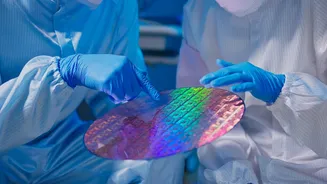
The company is currently constructing India’s first high-volume semiconductor fabrication facility in Gujarat and has packaged India’s first indigenous microprocessor.
Tata Electronics said it will develop advanced packaging, indigenous electronics and semiconductor solutions, capabilities in semiconductor materials, and work with advanced lithography tools in Dholera.
Also, Chandrasekaran said, "2026 has been a year defined by geopolitical conflicts and the unprecedented global AI investment cycle".
"Tata Sons' revenue grew by 9.1% to ₹42,367 crore in FY26, while profits (after tax) grew 21.8% to Rs 31,961 crore," Chandrasekaran said, adding the board of Tata Sons has recommended a final dividend of ₹1,10,717 per share, subject to shareholders' approval.
He further said, "At the aggregate level, the revenue of the Tata Group grew by 7.8% to ₹16,24,030 crore in FY26, while profits (after tax) grew 51.9% to ₹1,70,525 crore."
Chandrasekaran noted that the FY26 "revenue is 2.1x and profits are 5.4x their FY20 levels, reflecting sustained and significant turnaround efforts across the institution".
ALSO READ | Tata Sons Chairman N Chandrasekaran's FY26 pay rises to ₹158.6 crore, highest in five years
"All of our established businesses delivered strong performances this year, both in terms of revenue and profits," he said, while stating that the group's British luxury carmaker JLR suffered a cyberattack in Q2 FY26 which resulted in a production pause for five weeks, although it has recovered with Q4 closing at near-normal production levels.
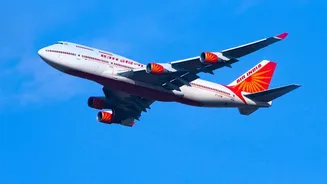
In his letter, Chandrasekaran updated shareholders on the group's new ventures such as Tata Electronics, Tata Digital, Air India and Agratas, among others, which, as per reports, have come under the scanner of Tata Trusts Chairman Noel Tata.
Reflecting how the founders of the Tata Group took bets that "looked audacious, even imprudent, at the time they were made" but "turned out to be exactly what the nation needed", he asserted that the "institutions we are seeding now (are) with long gestation periods".
He cited examples of the Indian Institute of Science, the group's forays into steel and aviation, the Tata Institute of Fundamental Research, software services and international expansion to underscore the long-term bets that the conglomerate took since the time of its founders.
In his address to shareholders in the Tata Sons Annual Report 2025-26, Chandrasekaran said Tata Electronics has achieved this position within four years of its formation. The company’s workforce stood at 86,466, with nearly two-thirds comprising women, while operating profits have reached breakeven.
“The company manufactured 12% of the total volume of phones made by the global leader in 2025,” Chandrasekaran said.
Set up in 2020, Tata Electronics has built capabilities across electronics manufacturing, semiconductor assembly and testing, semiconductor foundry and design services.
ALSO READ | 'Chips are the new steel,' says Tata Sons Chair as FY26 profit climbs, maps future growth
The company is currently constructing India’s first high-volume semiconductor fabrication facility in Gujarat and has packaged India’s first indigenous microprocessor.
Tata Electronics said it will develop advanced packaging, indigenous electronics and semiconductor solutions, capabilities in semiconductor materials, and work with advanced lithography tools in Dholera.
Also, Chandrasekaran said, "2026 has been a year defined by geopolitical conflicts and the unprecedented global AI investment cycle".
"Tata Sons' revenue grew by 9.1% to ₹42,367 crore in FY26, while profits (after tax) grew 21.8% to Rs 31,961 crore," Chandrasekaran said, adding the board of Tata Sons has recommended a final dividend of ₹1,10,717 per share, subject to shareholders' approval.
He further said, "At the aggregate level, the revenue of the Tata Group grew by 7.8% to ₹16,24,030 crore in FY26, while profits (after tax) grew 51.9% to ₹1,70,525 crore."
Chandrasekaran noted that the FY26 "revenue is 2.1x and profits are 5.4x their FY20 levels, reflecting sustained and significant turnaround efforts across the institution".
ALSO READ | Tata Sons Chairman N Chandrasekaran's FY26 pay rises to ₹158.6 crore, highest in five years
"All of our established businesses delivered strong performances this year, both in terms of revenue and profits," he said, while stating that the group's British luxury carmaker JLR suffered a cyberattack in Q2 FY26 which resulted in a production pause for five weeks, although it has recovered with Q4 closing at near-normal production levels.
In his letter, Chandrasekaran updated shareholders on the group's new ventures such as Tata Electronics, Tata Digital, Air India and Agratas, among others, which, as per reports, have come under the scanner of Tata Trusts Chairman Noel Tata.
Reflecting how the founders of the Tata Group took bets that "looked audacious, even imprudent, at the time they were made" but "turned out to be exactly what the nation needed", he asserted that the "institutions we are seeding now (are) with long gestation periods".
He cited examples of the Indian Institute of Science, the group's forays into steel and aviation, the Tata Institute of Fundamental Research, software services and international expansion to underscore the long-term bets that the conglomerate took since the time of its founders.