


What is the story about?
Elon Musk has signalled what could become one of Tesla’s most ambitious industrial projects yet — a massive semiconductor fabrication facility aimed at powering the company’s artificial-intelligence ambitions.
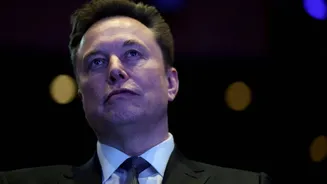
On March 14, the Tesla CEO Musk posted a brief message on X: “Terafab Project launches in 7 days.”
The post offered few details, but it followed months of remarks by Musk suggesting Tesla may need to build its own large-scale chip manufacturing facility to support the computing demands of autonomous vehicles, robotics and AI systems.
Taken together with Musk’s earlier comments and reporting by global news organisations, the “Terafab” initiative appears to represent Tesla’s next step in vertical integration — extending the philosophy behind its Gigafactories into the semiconductor industry.
What the Terafab project is
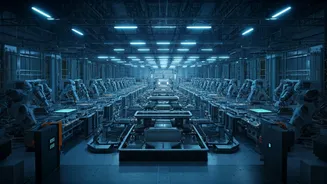
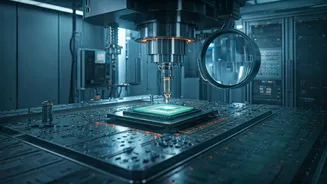
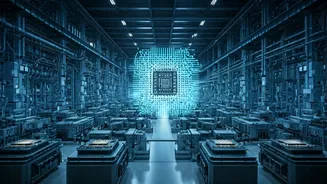
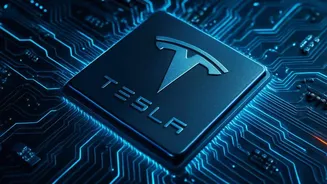
The Terafab project refers to a proposed Tesla semiconductor fabrication plant that would manufacture advanced AI processors designed by the company.
These chips would power several parts of Tesla’s technology ecosystem, including its Full Self-Driving (FSD) system, AI training infrastructure and robotics initiatives such as the Optimus humanoid robot.
Tesla currently designs its own chips but relies on external manufacturers — primarily Taiwan Semiconductor Manufacturing Company and Samsung Electronics — to produce them.
Musk has suggested that reliance may not be sustainable as Tesla’s computing needs grow. The company is already developing its next-generation AI5 processor, expected to power future autonomous driving systems and large-scale AI workloads.
Why Musk says Tesla may need its own chip factory
The idea of a Tesla-owned semiconductor fabrication facility stems from Musk’s concern that existing chip suppliers may not be able to meet the company’s future demand.
Speaking at Tesla’s annual shareholder meeting last year, Musk said even optimistic projections of chip supply from partners may fall short. “Even when we extrapolate the best-case scenario for chip production from our suppliers, it’s still not enough,” he said, adding that Tesla may need to build a “terafab… like giga but way bigger.”
The remarks highlight a key shift in Tesla’s strategy: computing power is becoming as critical to the company as batteries once were.
Terafab vs Gigafactories
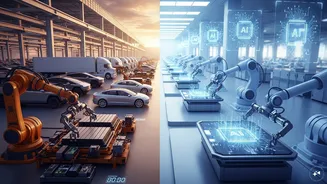
Tesla’s existing manufacturing plants are known as Gigafactories, a reference to the “giga” metric prefix used to denote billions and the massive scale of battery and vehicle production.
The proposed Terafab follows the same naming logic but moves one order of magnitude higher. The “tera” prefix represents trillions, signalling Musk’s vision of a semiconductor manufacturing facility far larger in scale than typical chip plants.
Tesla’s Gigafactories transformed the economics of electric vehicles by producing batteries and cars at unprecedented scale. A Terafab facility would aim to replicate that model in a different industry.
Gigafactories focus on
• electric vehicle manufacturing
• battery production
• energy storage systems
Terafab, by contrast, would focus on
• semiconductor fabrication
• AI processors
• chips powering autonomous driving and robotics.
While Gigafactories helped Tesla secure its battery supply chain, Terafab could give the company similar control over AI computing hardware, which is rapidly becoming central to its business.
Tesla has not yet announced where the facility might be located.
Reuters previously reported that the company has explored potential collaboration with established semiconductor manufacturers, including possible discussions with Intel, as part of plans for a large chip fabrication project.
Tesla continues to work with chipmakers such as TSMC and Samsung to manufacture its processors, and those relationships could continue even if it builds its own fabrication facility.
What the project could mean for Tesla
If realised, the Terafab project would mark a major expansion of Tesla’s industrial footprint and could
reshape its technology strategy.
A dedicated chip fabrication facility would allow Tesla to produce its own AI processors at scale, reducing dependence on external manufacturers and insulating its supply chain from semiconductor shortages.
It would also accelerate Tesla’s work on autonomous driving, robotics and AI infrastructure by ensuring a steady supply of high-performance chips tailored to its software and hardware systems.
More broadly, the project reflects a shift in Tesla’s identity. Once seen primarily as an electric-vehicle maker, the company increasingly positions itself as an AI and robotics firm — one whose future products may depend as much on computing power as on automotive engineering.
On March 14, the Tesla CEO Musk posted a brief message on X: “Terafab Project launches in 7 days.”
The post offered few details, but it followed months of remarks by Musk suggesting Tesla may need to build its own large-scale chip manufacturing facility to support the computing demands of autonomous vehicles, robotics and AI systems.
Taken together with Musk’s earlier comments and reporting by global news organisations, the “Terafab” initiative appears to represent Tesla’s next step in vertical integration — extending the philosophy behind its Gigafactories into the semiconductor industry.
What the Terafab project is
The Terafab project refers to a proposed Tesla semiconductor fabrication plant that would manufacture advanced AI processors designed by the company.
These chips would power several parts of Tesla’s technology ecosystem, including its Full Self-Driving (FSD) system, AI training infrastructure and robotics initiatives such as the Optimus humanoid robot.
Tesla currently designs its own chips but relies on external manufacturers — primarily Taiwan Semiconductor Manufacturing Company and Samsung Electronics — to produce them.
Musk has suggested that reliance may not be sustainable as Tesla’s computing needs grow. The company is already developing its next-generation AI5 processor, expected to power future autonomous driving systems and large-scale AI workloads.
Why Musk says Tesla may need its own chip factory
The idea of a Tesla-owned semiconductor fabrication facility stems from Musk’s concern that existing chip suppliers may not be able to meet the company’s future demand.
Speaking at Tesla’s annual shareholder meeting last year, Musk said even optimistic projections of chip supply from partners may fall short. “Even when we extrapolate the best-case scenario for chip production from our suppliers, it’s still not enough,” he said, adding that Tesla may need to build a “terafab… like giga but way bigger.”
The remarks highlight a key shift in Tesla’s strategy: computing power is becoming as critical to the company as batteries once were.
Terafab vs Gigafactories
Tesla’s existing manufacturing plants are known as Gigafactories, a reference to the “giga” metric prefix used to denote billions and the massive scale of battery and vehicle production.
The proposed Terafab follows the same naming logic but moves one order of magnitude higher. The “tera” prefix represents trillions, signalling Musk’s vision of a semiconductor manufacturing facility far larger in scale than typical chip plants.
Tesla’s Gigafactories transformed the economics of electric vehicles by producing batteries and cars at unprecedented scale. A Terafab facility would aim to replicate that model in a different industry.
Gigafactories focus on
• electric vehicle manufacturing
• battery production
• energy storage systems
Terafab, by contrast, would focus on
• semiconductor fabrication
• AI processors
• chips powering autonomous driving and robotics.
While Gigafactories helped Tesla secure its battery supply chain, Terafab could give the company similar control over AI computing hardware, which is rapidly becoming central to its business.
Tesla has not yet announced where the facility might be located.
Reuters previously reported that the company has explored potential collaboration with established semiconductor manufacturers, including possible discussions with Intel, as part of plans for a large chip fabrication project.
Tesla continues to work with chipmakers such as TSMC and Samsung to manufacture its processors, and those relationships could continue even if it builds its own fabrication facility.
What the project could mean for Tesla
If realised, the Terafab project would mark a major expansion of Tesla’s industrial footprint and could
A dedicated chip fabrication facility would allow Tesla to produce its own AI processors at scale, reducing dependence on external manufacturers and insulating its supply chain from semiconductor shortages.
It would also accelerate Tesla’s work on autonomous driving, robotics and AI infrastructure by ensuring a steady supply of high-performance chips tailored to its software and hardware systems.
More broadly, the project reflects a shift in Tesla’s identity. Once seen primarily as an electric-vehicle maker, the company increasingly positions itself as an AI and robotics firm — one whose future products may depend as much on computing power as on automotive engineering.
Elon Musk says X Money will launch in April: How the in-app payments system may work