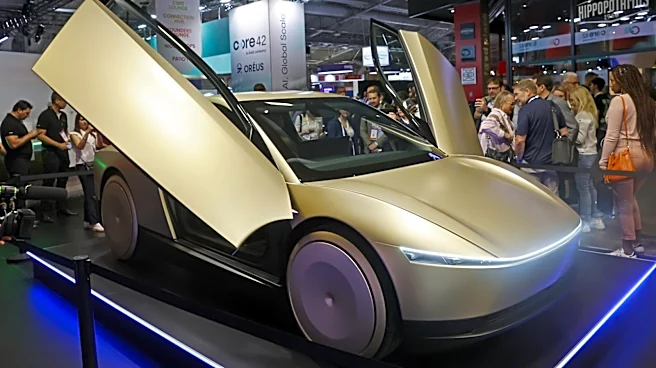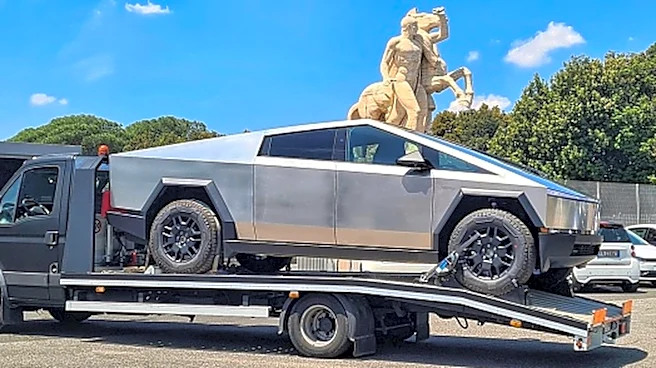



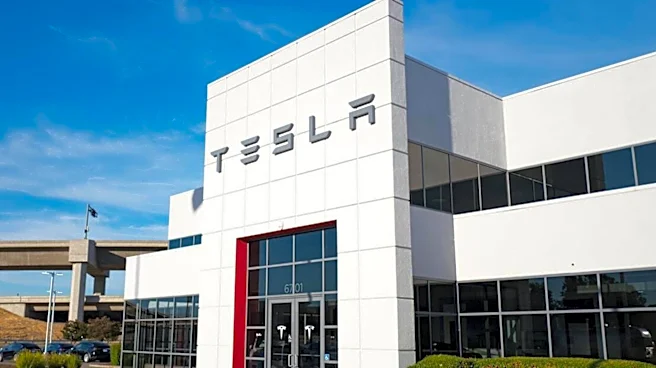
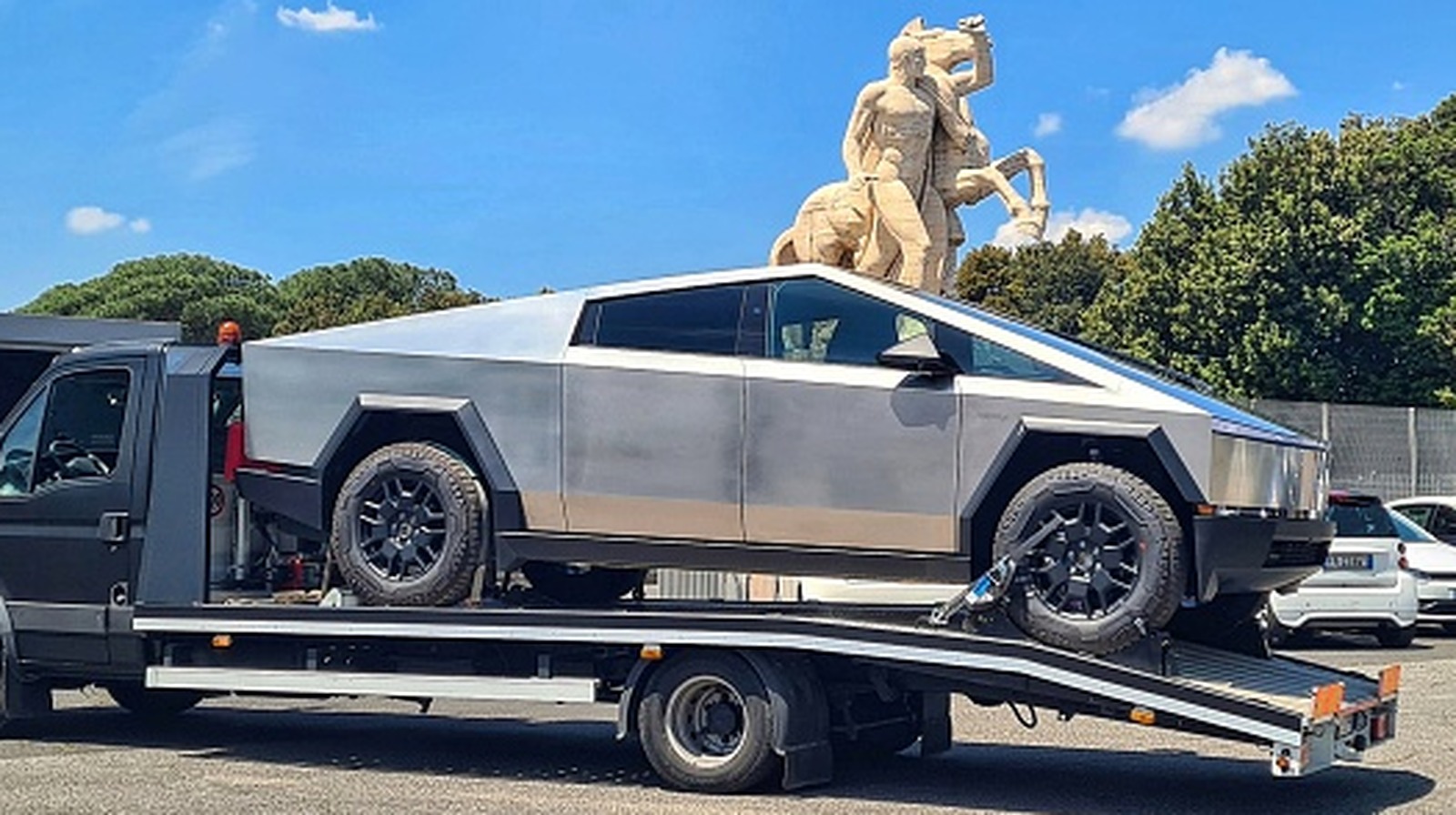
In case you haven't heard the news yet, Tesla Cybertruck haters just got an early Christmas present — the automaker is cancelling the controversial electric pickup. According to a post on X by the company's outspoken CEO, Elon Musk, the company plans to cease production of the Cybertruck at the Gigafactory Texas in mid-2027 to make room for Tesla to spin out more Cybercabs. Musk might not have said it out loud, but beneath the refocus excuse, the data shows the Cybertruck flopped, and it failed to hit
the company's original annual sales target of 250,000 units.
The axing of the Cybertruck comes barely four years after the company started producing the pickup truck in November 2023. For specificity, with the mid-2027 production deadline factored in, that means the Cybertruck has had a production run of about 3.5 years in total. That's pretty darn short in an industry where some nameplates have been cranked out on the factory line for decades and are still going strong. Take the Toyota Corolla, for example, which marked its 60th anniversary in 2026, and the Honda CR-V, which first hit the showrooms in 1997.
Despite its short, roughly three-and-a-half-year production run, that, surprisingly, still doesn't earn Tesla's polarizing Cybertruck the shortest production run title. These five cars had even shorter production runs that would make even Tesla proud of making the Cybertruck for three-and-a-half years.
Read more: 24 Of The Best Budget Kit Cars
Kia Borrego
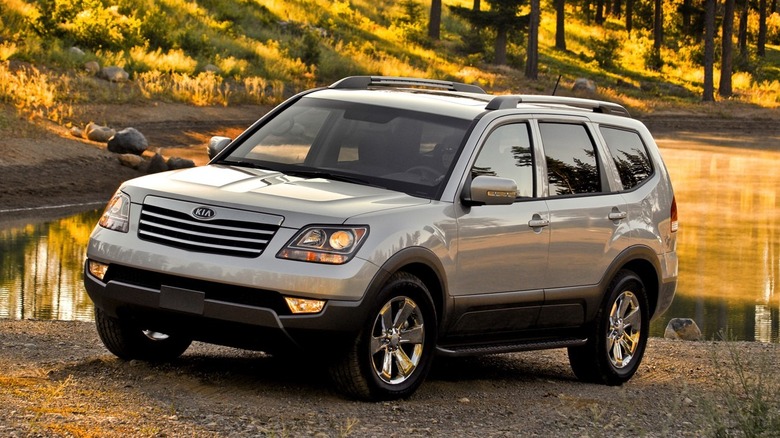
The Kia Borrego was a body-on-frame midsize SUV that was introduced by the company for the 2009 model year. It carried two novel features not seen on any of Kia's cars up to that point: a V8 engine and a six-speed automatic transmission. Despite those novelties in the brand's lineup, the timing of the Borrego's launch couldn't have been worse. The Borrego landed in a market plagued by high fuel prices and on the backdrop of the global financial crisis, a combination that quickly made a fuel-hungry model less attractive.
The model was received poorly, moving significantly fewer units than the company expected. As a result, the Borrego was discontinued in the U.S. after just one production year. Yes, Kia called it quits after a single model year of the Borrego. The Borrego offered two powertrain options: a 3.8-liter V6 producing 276 hp and 267 lb-ft of torque and a 4.6-liter V8 making 337 hp and 323 lb-ft of torque. One of the key selling points of the Borrego was its towing capacity — 7,500 pounds for the V8 and 5,000 pounds for the V6.
Fuel efficiency wasn't great for the V8-equipped Borrego, with an EPA rating of 15 mpg city and 22 mpg highway for the two-wheel-drive configuration, while the 4WD was rated 15 mpg city and 20 mpg highway. The V6 version was rated 17 mpg city and 21 mpg highway for the 2WD configuration and 16 mpg city and 21 mpg highway for the 4WD.
Lincoln Blackwood
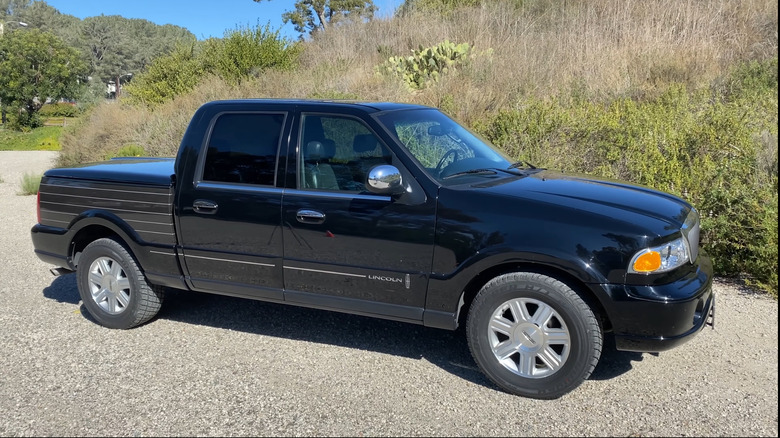
The Lincoln Blackwood was a pickup truck with a twist: it targeted shoppers who needed a truck with a luxury touch. This model also had a shorter production run than the Cybertruck, as it was discontinued after just one model year. The Lincoln Blackwood was produced for the 2002 model year, and that was it. It was based on Ford's popular F-150, but it added some extra luxury finishes to attract those seeking a more luxurious ute. And that mission guided most of the vehicle's functionality as well as design.
Some of its luxury features were the use of two swing-out doors and a hydraulic tonneau (instead of a traditional tailgate), leather seats that are also power-adjustable, and a seven-speaker Alpine sound system. It was equipped to the brim with niceties, and the only optional thing you could configure was a hilarious by modern standards navigation system that cost $1,995. The Blackwood came stock with 18-inch alloy wheels and 275/55R18 Michelin rubber and was powered by a 5.4-liter V8 making 300 hp and 355 lb-ft of torque, paired with a four-speed automatic transmission sending power to the rear wheels.
With its upscale fittings, the Lincoln Blackwood wasn't cheap. Brand-new, it had a starting MSRP of $52,500, which might not seem like much now, as it's much closer to the price of the average new car, but it was an eye-watering sum back in 2002. Despite its upscale touch, the Lincoln Blackwood was a failure, and that's why it didn't survive another year after its first and only 2002 model year.
Pontiac G3
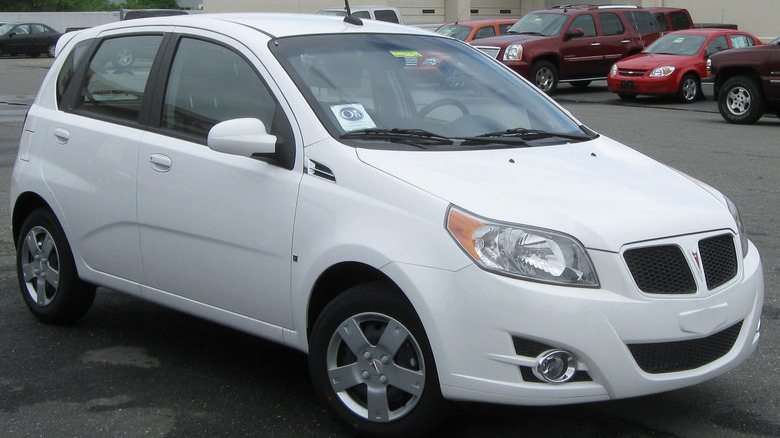
The Pontiac G3 was a small hatchback introduced for the 2009 model year by the GM-owned brand. Unlike the Cybertruck, which has survived a production run of slightly over three years, the G3 didn't last as long. The Pontiac G3's launch in 2009 couldn't have come at a worse time, as GM announced that same year that it would kill the sub-brand the following year, in 2010, as part of the brand's consolidation efforts. As a result of GM's portfolio consolidation, the Pontiac G3 didn't survive another production year.
It was axed alongside several other models under the Pontiac umbrella, with GM retaining just two models for the 2010 model year: the G6 and Vibe. Pontiac's penchant for rebadged models didn't stop with the 2009 G3, as it was essentially a rebadged Chevy Aveo, in itself a Daewoo, at heart. Under the hood, it was powered by a small 1.6-liter four-cylinder engine making 106 hp and 105 lb-ft of torque, sending power to the front wheels via a five-speed manual transmission in stock form. Additionally, the G3 offered an optional four-speed automatic.
The engine was efficient, with EPA ratings of 27 mpg city, 34 mpg highway, and 30 mpg combined for the manual guise and 25/34/28 mpg in city/highway/combined for the automatic. The five-door subcompact Pontiac G3 hatchback had a starting price of $14,335 and was available in only one grade. However, Pontiac offered three upgrade packages — Preferred, Cruisin', and Sport — as well as stand-alone options like a sunroof for those who wanted more creature comforts.
Cadillac ELR
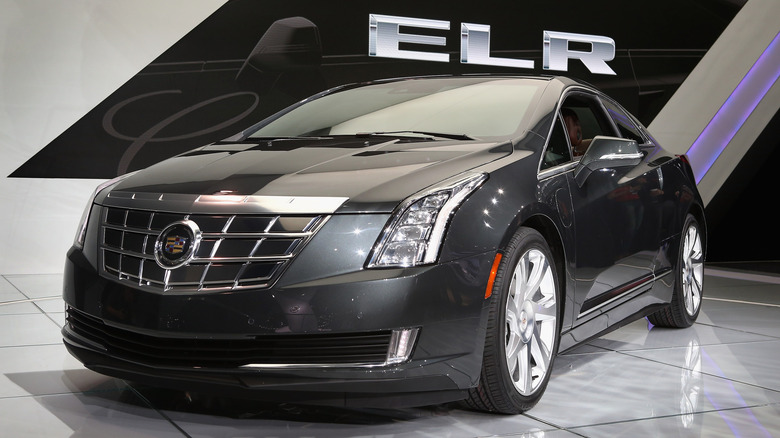
The Cadillac ELR had two one-year production stints. It was first launched for the 2014 model year, skipped for 2015, and made a return for 2016 after a one-year hiatus. Unfortunately, after its second coming in 2016, the ELR was discontinued for good, and we haven't seen another model with this nameplate to date. It was a two-door coupe that arrived with a hybrid powertrain under the hood for fuel efficiency, although there are far more fuel-efficient cars in today's market with better figures than the ELR. The ELR used a plug-in hybrid powertrain, made up of a 1.4-liter four-cylinder engine and two electric motors. Combined, the system produces 217 hp and 295 lb-ft of torque.
However, it was a luxury car, and as such, it wasn't pocket-friendly despite being based on the same platform as the Chevrolet Volt. The 2014 model had a starting asking price of $75,995 before any government incentives. However, it was skipped for 2015 due to poor sales and made a return in 2016. GM made the 2016 ELR a bit cheaper, perhaps to incentivize users to buy the luxury coupe. At the same time, it made several improvements for an overall attractive package.
It added more horsepower and torque, more speed, and improved the vehicle's general road manners. Apparently, those efforts weren't enough to get more shoppers to buy the ELR. After it made a return for the 2016 model year, Cadillac finally gave up, and as a result of sluggish sales, it eventually pulled the plug.
Saab 9-2X
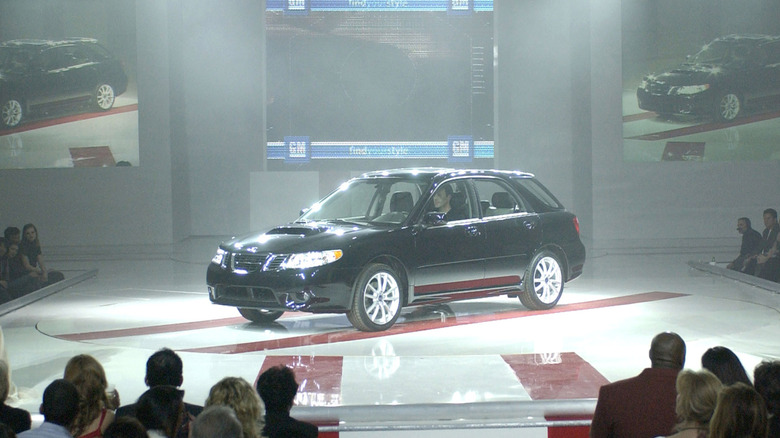
The Saab 9-2X also had a shorter production run than the Cybertruck. It was first produced for the 2005 model year, and 2006 was the last. After that, Saab called it quits for the 9-2X. The Saab 9-2X was based on Subaru's Impreza WRX wagon, and it was an attempt by the GM-owned brand to take a swipe at the then-growing premium-compact segment as fast as possible without building an all-new car from the ground up. That's why some nicknamed the 9-2X the "Saabaru." However, it wasn't a simple rebadge — the company put extra effort into making the Saab 9-2X stand out from its sibling even though they shared the same platform.
In fact, according to Car and Driver's review, the Saab 9-2X was more refined, although those fine tunings came at a higher cost. The Saab 9-2X was powered by two powertrains. There was a 277-hp 2.0-liter turbocharged flat four engine paired with a five-speed manual transmission and all-wheel-drive, more similar to what the WRX offered. The Aero trim had a starting price of $27,645, about $2,975 more than its WRX cousin.
For those who wanted to save, the base 9-2X Linear trim offered a less potent powertrain with a 165-hp 2.5-liter naturally-aspirated four-cylinder with a starting price of $23,685. Interestingly, because it was based on the WRX, the 9-2X became the first car in Saab's portfolio to offer all-wheel-drive. Unfortunately, Saab killed it after the 2006 model year, after failing to gain traction.
Want the latest in tech and auto trends? Subscribe to our free newsletter for the latest headlines, expert guides, and how-to tips, one email at a time. You can also add us as a preferred search source on Google.
Read the original article on SlashGear.