




A sedan is all the car most people need, and that's the problem. Even when new car shoppers can do without the added space and utility of SUV, they still gravitate toward these vehicles because they feel like they're getting something more. They may outnumber sedans and almost everything else in showrooms, but SUVs are more than just cars.
The redesigned 2027 Hyundai Elantra will have an especially tough time beating this stigma. Hyundai hasn't been a discount brand in a long time, but first impressions
matter. And the Elantra, now entering its eighth generation, is one of the nameplates that's been around since the bad old days of cheapness. It's also a compact sedan, the most attractive qualities of which are usually a low price and low running costs. It's more often a car you buy because it fits your budget, not your aspirations.
But with the latest Elantra, Hyundai is launching a charm offensive with nuclear weapons. Its designers lavished more attention on the exterior styling than some luxury cars get, there's a big-screen infotainment system inside, and none of this affects the frugality that is as important as ever in these times of rampant new-car price creep. It shows the potential for ordinary cars to be something more.
Read more: 4 Family Minivans With Better Ratings Than The Chrysler Pacifica
I can't believe this is a Hyundai Elantra
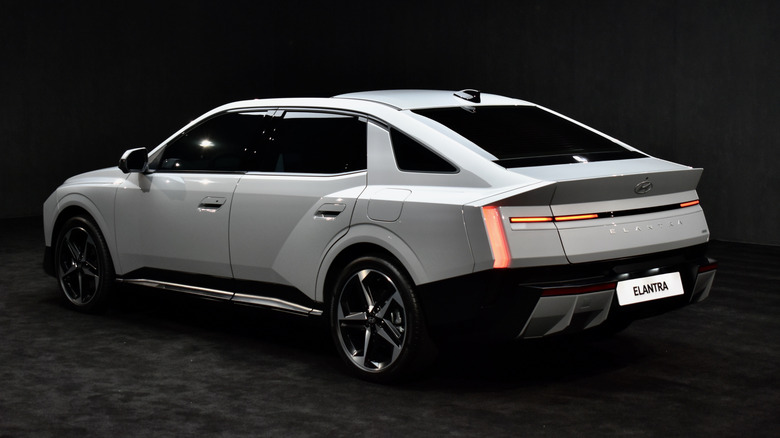
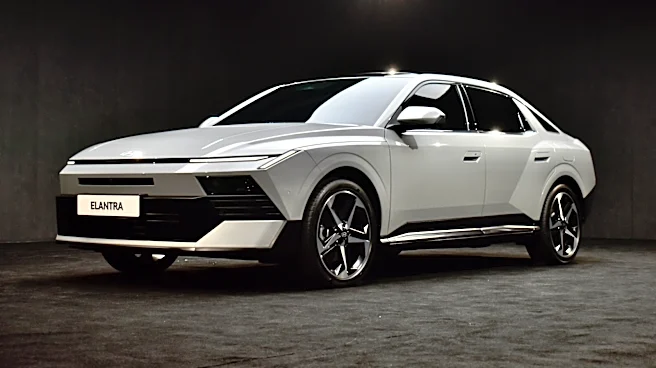
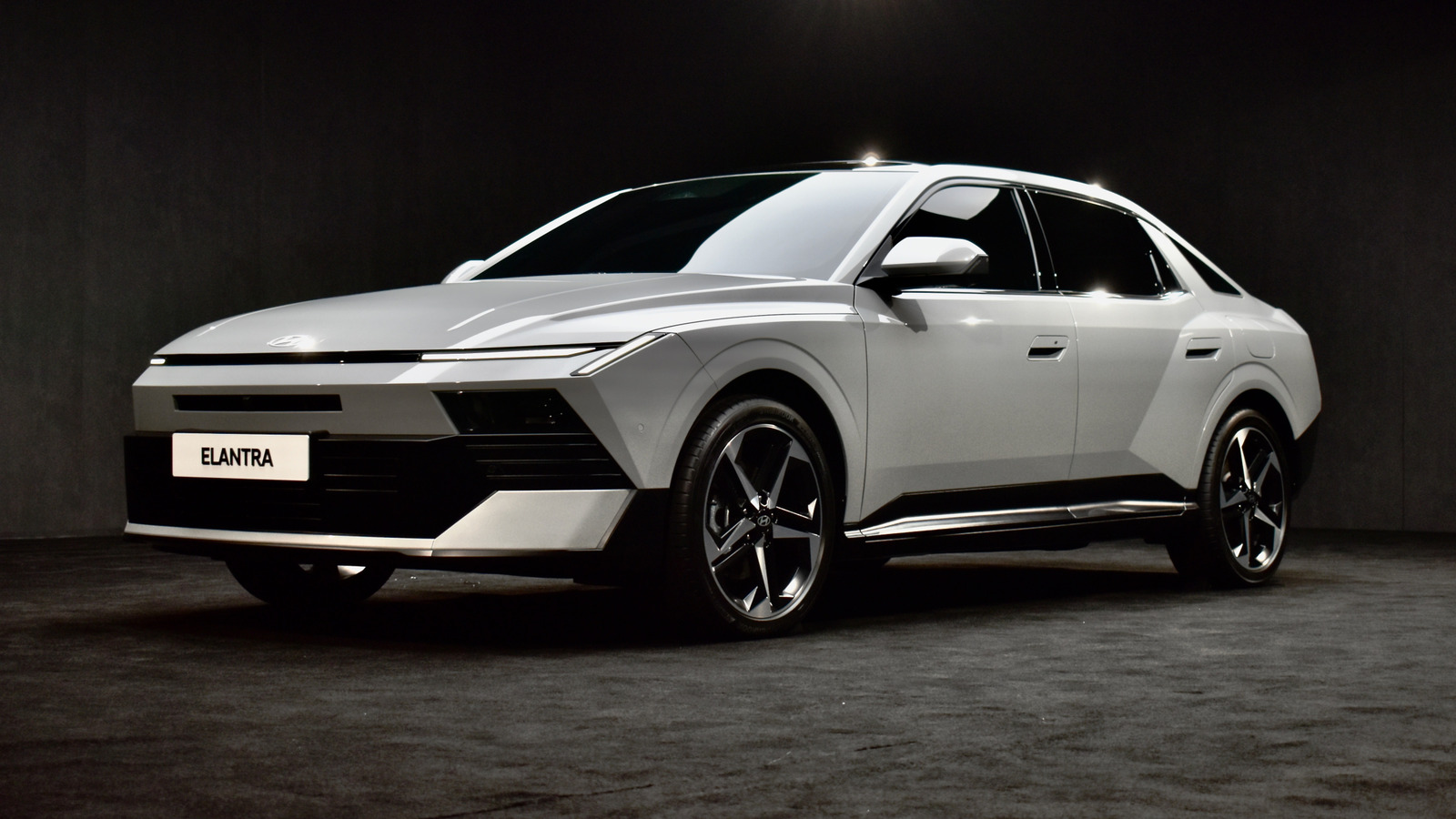
Hyundai has taken styling risks with the Elantra before, from the fifth generation's globular bodywork that recalls a T-1000 mid-transformation right up to the outgoing generation, which sports faceted edges like an F-117 Nighthawk stealth fighter. The difference is that, instead of just trying to avoid looking boring, the eighth-generation 2027 Elantra actually pulls off looking cool.
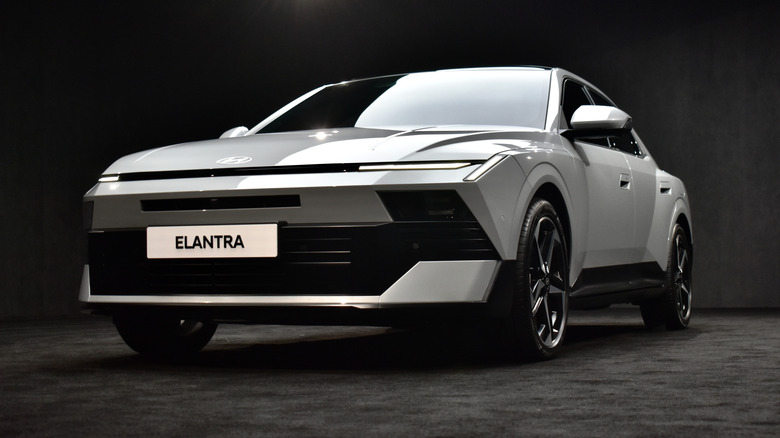
This new Elantra is the future we were promised. It may not be able to fly, but it's as far-removed design-wise from Hyundais of 10 or 20 years ago as those cars were from the tail-finned behemoths of the 1950s. And like those cars, the Elantra provides visually-interesting details. A slim greenhouse sits over boxy fender flares, making the sedan look anything but compact and cheap, with a shark nose that has a touch of supercar to it.
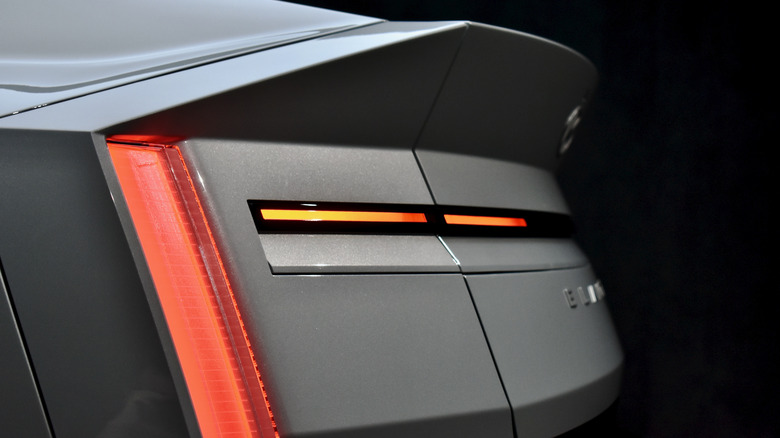
Everything is tied to together by wire-like lighting elements that fit between the slab-like sections of bodywork. Hyundai says they're inspired by the accent lighting on new buildings in your local gentrified neighborhood. They provide just the right amount of modernism to take the Elantra from retro-futuristic to just plain futuristic.
Instead of tacking on a rear spoiler and diffuser elements for the rear bumper, Hyundai made them part of the design, giving the rear end a distinctive yet clean appearance.
It's making a big statement for a small car
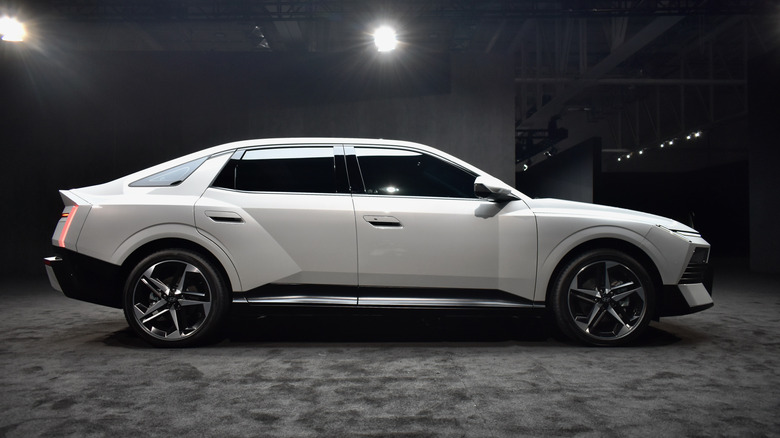
What's even more remarkable about the Elantra's styling is how the design team, led by Hyundai Design Center boss Simon Loasby, combined inspiration from diverse sources into a cohesive whole.
The body's significant tumblehome, which gives the car an almost triangular profile front and back, was inspired by 1960's muscle cars, Loasby said. But there's also a bit of the N74, the hydrogen fuel-cell coupe concept inspired by an unproduced 1970s Hyundai design, in the way the upright back edge of the rear doors abruptly shifts to the plunging rear roof pillar. And all those creased body lines are meant to show off Hyundai's advanced metalworking techniques. The automaker produces its own steel, after all.
Each design is "trying to tell the right story," Loasby said. The Elantra tells a story of possibility, specifically the possibility that everyday cars can be stylish and that people will care. Styling was a bigger deal in the 1950s and 1960s, but was supplanted by more practical concerns like safety, reliability, and economy. And there's always the chance that buyers just won't get it.
"Every time you do a new thing, there's a risk attached to it," Loasby acknowledged. But somebody has to take that risk to keep the auto industry interesting.
Hyundai's next-gen infotainment system provides more than expected too
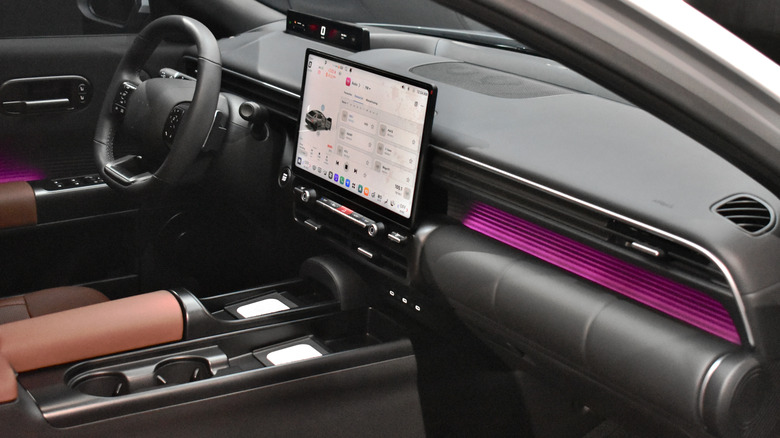
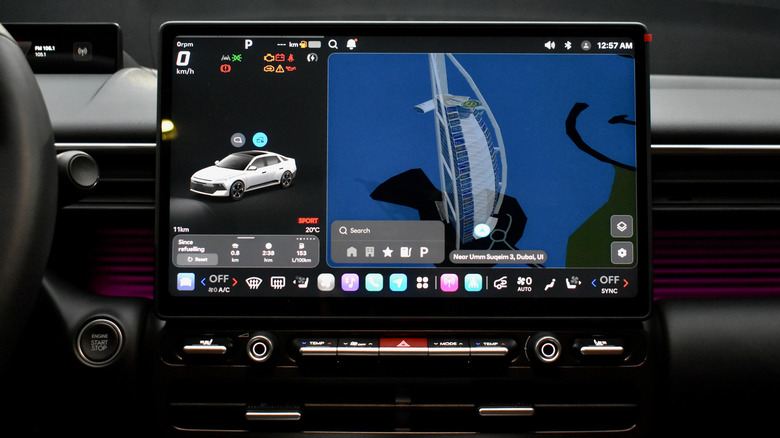
While not unique like its styling, the redesigned Elantra also takes a new approach to infotainment tech. Launching simultaneously on the 2027 Tucson, the new Pleos Connect infotainment system is built around a large-for-the-segment 12.9-inch touchscreen and a slimmed-down 9.9-inch digital instrument cluster, backed by more flexible, AI-compatible software. Not exactly a budget setup.
Even with the massive touchscreen, which is mounted to the dashboard like an afterthought, the interface is supposed to lower potential distractions. The instrument cluster only shows the most important information, and the touchscreen is divided roughly down the middle, with driver-relevant tasks on the left. Wireless Apple CarPlay and Android Auto are also included.
Sitting in a stationary car in a studio cut off from reliable cell service and Wi-Fi, I couldn't get much of a feel for how Pleos Connect will work in the real world. The various menus and graphics look nice, for sure, and I appreciate that Hyundai provided a lot of analog controls. That, along with a new AI-based voice assistant called Gleo, is meant to minimize use of the touchscreen while moving. But I'd prefer to see an even more decisive move toward physical controls rather than continued reliance on potentially glitchy software-based features.
Function and form strike a truce
Thankfully, a big standard touchscreen isn't the only thing that makes the Elantra's interior look and feel nicer than standard economy-car fare. The dashboard, center console, and door panels have the same rounded surfaces you'll find in the Palisade and Ioniq 9 SUVs that sit at the top of Hyundai's lineup. The materials are downgraded a bit, but that's to be expected given the Elantra's lower price point.
Like pretty much any new car, the Elantra has grown by an inch or two here and there. It's 3.3 inches longer, 1.1 inches wider, and 0.3 inch taller than the generation it replaces. That last figure may not seem like a big deal, but it signifies how Hyundai raised the rear of the roof at the back to increase rear-seat headroom, while also giving the Elantra a sporty rake. Hyundai claims 0.7 inch of extra headroom across both rows, plus 1.1 inches of additional rear-seat legroom.
Subjectively, the rakish design doesn't appear to have many drawbacks either. Forward sightlines were pretty good, and the rear window was decently sized (although having passengers in the back seats will be the real test). Hyundai's nifty blind-spot cameras will be available, at any rate.
Boring powertrains (for now)
One area where Hyundai wasn't ambitious was the powertrain. For now, all we're getting are basic gasoline and hybrid powertrains (the latter coming for the 2028 model year). Even that was by design, though, as the automaker wanted to keep prices in check.
"Keeping the gas engine was a deliberate call to protect the entry price," Hyundai Motor America SVP of product planning Olabisi Boyle explained. There's not much else remarkable about the standard 2.0-liter four-cylinder engine, which should make the same 147 horsepower as it did in the 2026 Elantra, and will still be offered only with a continuously variable transmission (CVT) and front-wheel drive.
Hybrids have a 1.6-liter four-cylinder engine and six-speed dual-clutch transmission, also with front-wheel drive. This powertrain is also lifted from the outgoing Elantra, but output should increase from 139 hp to 155 hp. Fuel-economy estimates weren't available at the time of writing, but the new Elantra Hybrid will need to at least match the outgoing model's 54 mpg combined to stay competitive.
The sportier N-Line and N models go on hiatus, but Boyle said "we're not stepping away" from the N performance sub-brand. Hyundai is targeting sales of 100,000 N-badged models a year globally, so leaving an Elantra-shaped hole in the lineup wouldn't make much sense, Boyle added.
A sensible car with style
Hyundai isn't discussing pricing, but a major hike over the current-generation Elantra wouldn't make sense. There's ample room at the lower end of the pricing spectrum, and Hyundai knows that. And as nice as the new Elantra is, pricing and marketing it as anything other than an entry-level model would be presumptuous.
It would also diminish this car. It's fair enough to charge more for more, but it's remarkable to get more without having to pay more. And while the "more" for automakers in the compact car segment usually takes the form of extra legroom, cupholders, or screen size, Hyundai also wrapped all of that in an attractive and distinctive package.
Many people will probably continue buying Elantras for more practical reasons, like Hyundai's generous warranty or the automaker's willingness to drop lots of cash on the hood to keep sales up. But that doesn't matter, as long as they make it onto the road for everyone else to look at.
Want the latest in tech and auto trends? Subscribe to our free newsletter for the latest headlines, expert guides, and how-to tips, one email at a time. You can also add us as a preferred search source on Google.
Read the original article on SlashGear.