


Motorcycle engine size and top speed are priority specs for the power-conscious, but it's not just about the initial purchase price of a bike or how fast it can go. It's also about efficiency and ongoing expenses. In a time of volatile gas prices, a model's MPG is more important than ever. An improved MPG means every gallon of fuel takes you further, which could sway your decision when choosing a new model.
Harley-Davidson's '26 Nightster has an MPG of 52. This makes it quite competitive in its price
range and its segment, as well as one of the brand's most fuel-efficient models overall. This is balanced by a fuel capacity of 3.1 gallons, and a 975T Revolution Max engine offering 91 horsepower. All in all, the Nightster is a more accessible Harley-Davidson than a more powerful motorcycle like its Sportster. There are other cruisers that can beat it for fuel efficiency, though, if that's one of your big priorities when choosing a cruiser. The Nightster also starts at $9,999, meaning that more affordable options are also available.
In the cruiser segment, riding is all about smoother, less stressful or hurried journeys, and having those broken up by costly gas stops isn't really contributory to the spirit of the whole thing. This is why MPG can be extremely important. Let's take a look at some cruiser models, from some of the biggest brands in the industry, that excel here.
Read more: 5 Disadvantages Of Classic Inline Twin Motorcycle Engines
Royal Enfield Meteor 350
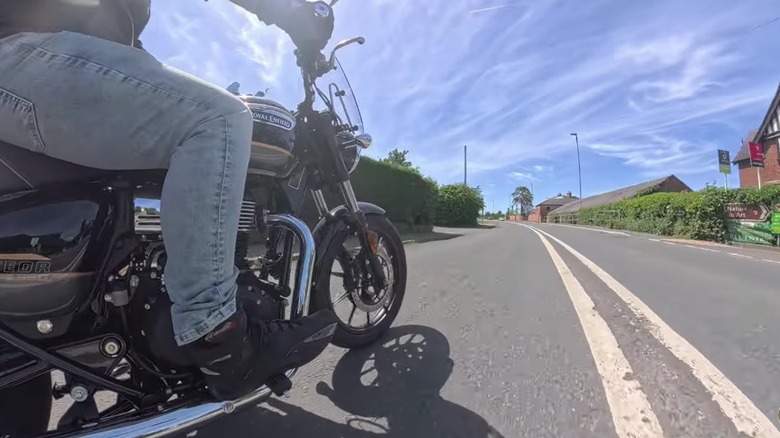
Royal Enfield has created a range of sporty middleweight models, such as the Hunter 350, which weighs in at 399 lbs curb weight (mostly-full tank included) and sports a 349cc SOHC engine. This motorcycle shares its engine with a Royal Enfield cruiser, the Meteor 350, which is similarly lighter and more fuel efficient than Harley-Davidson's Nightster.
The Meteor offers approximately 60 MPG, with a fuel tank size of 3.96 gallons. This adds up to both a significantly improved fuel efficiency and capacity, as well as a notably lower weight: The curb weight of the Meteor is approximately 421 lbs, while Harley-Davidson lists the Nightster's running order weight as 481 lbs.
The Nightster is relatively modest for the brand, and marks a significant venture out of its comfort zone into the realm of a "beginner" cruiser. It's still absolutely a potent one, though, and perhaps not for those brand-new to the segment and motorcycles more broadly. The '26 Nightster sports a powerful V-Twin with liquid cooling, the Revolution Max 975T. This powers it to 72 ft-lb torque and a considerable horsepower of 91. If it's that sort of grunt you're looking for, the Meteor's approximate 19.9 lb-ft torque and comparatively lower horsepower of around 20 falls short. Starting at $4,899, though, it's a much cheaper prospect.
Triumph Bonneville Speedmaster
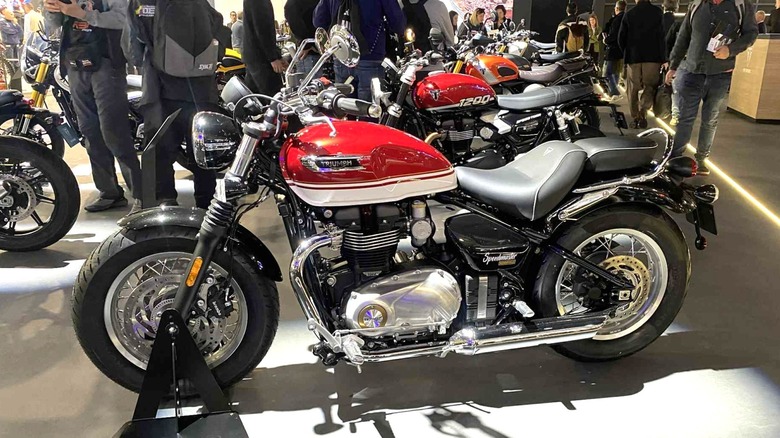
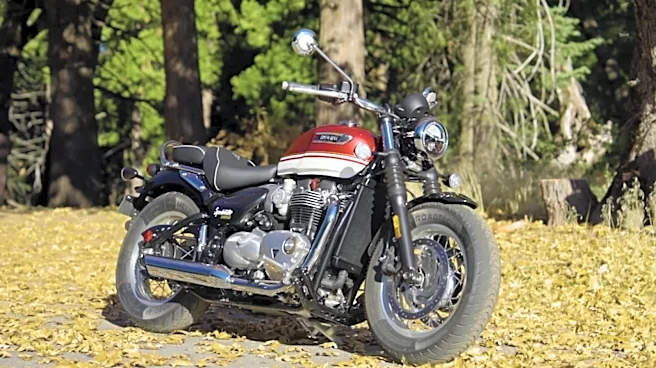
British manufacturer Triumph lists its Bonneville Speedmaster with an MPG of 60.9. This is significantly higher than the spec provided by Harley-Davidson for its Nightster, and there's a good reason for this. Though the two models are both potent cruisers, there's a sportier design to the Nightster that has a big effect on both the way it operates and the size and style of the engine.
Triumph has equipped the Speedmaster with an 8-valve parallel twin with a capacity of 1,200 cc, which, while larger, doesn't have the same performance pattern as the Harley-Davidson model. The latter has a more sport-oriented focus. The Nightster has a top speed of approximately 112 mph, while the Speedmaster can hit around 100 mph.
The Nightster also has a sizable advantage in horsepower, consider the Speedmaster's 78 horsepower. Whichever model the prospective buyer chooses, though, these two models are a little more in the premium range. The Triumph Bonneville Speedmaster starts at $14,795, without destination, taxes or other charges factored in, while the Nightster's original MSRP is $9,999. The Speedmaster is quite an underrated motorcycle in Triumph's history, but a solid and efficient cruiser.
Kawasaki Eliminator
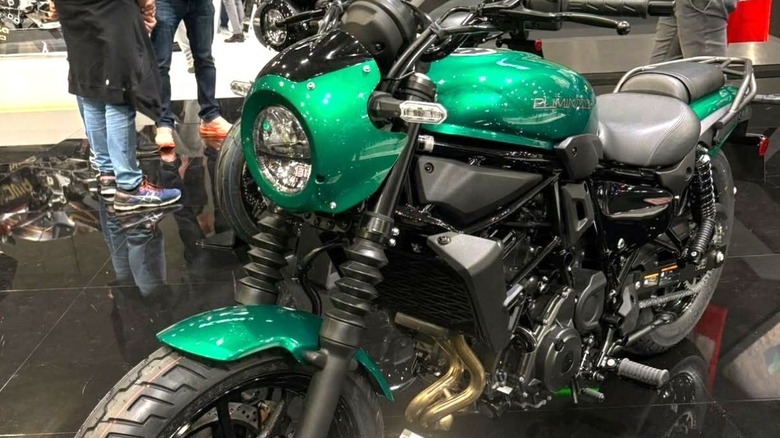
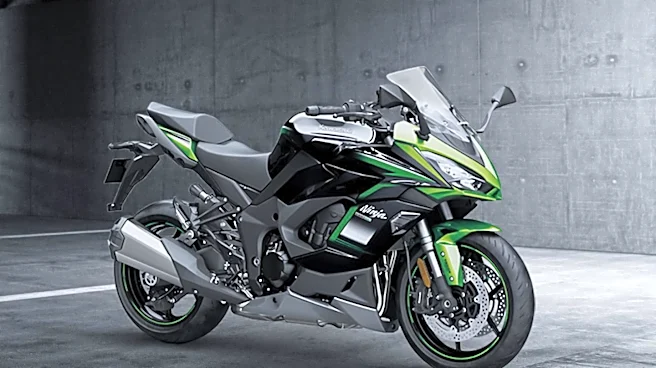
Kawasaki's sleek Eliminator 500 has a listed MPG of approximately 61.9. This comes from a fuel tank with a capacity of 3.4 gallons, and a weight that, while considerable, doesn't match up to the Harley-Davidson. The Eliminator has a dry weight of approximately 359.4 lbs and a curb weight of 385.9 lbs (361.6 lbs and 388.1 lbs respectively with the ABS edition).
The next factor to consider is the price of the Kawasaki model. The manufacturer reports that a destination charge of $650 applies to a purchase of the Eliminator, whether equipped with ABS or the base model without it. The purchase prices for these versions respectively are $7,149 and $7,449. This is also far less than the Harley-Davidson's base price, which means that it may be a much more comfortable option for many bikers for budget reasons alone.
As with the other models we've considered in this rundown, bigger absolutely isn't always better, and there's a lot to enjoy about this Kawasaki Cruiser if its balance of power and smooth performance is more your speed.
Honda Rebel 300
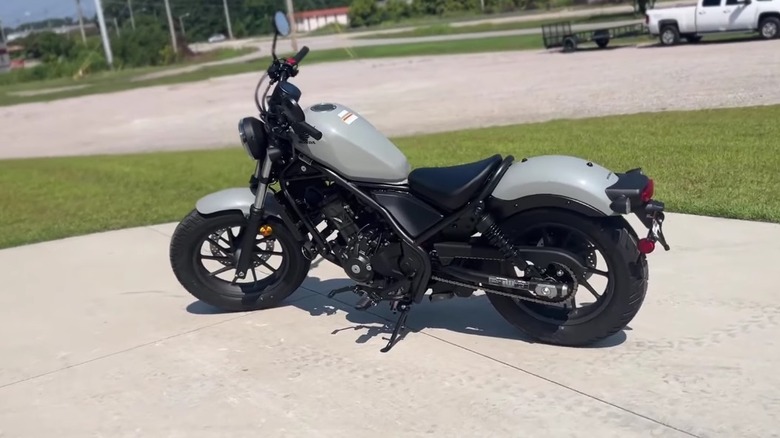
Honda offers several model families that capitalize on more lightweight, high-MPG performance. If that's your top priority with a new motorcycle, Honda's Rebel family has a lot to offer newcomers to cruisers and experienced riders alike.
The Honda Rebel 500 itself is among the most fuel-efficient cruisers, but it's also important to highlight the virtues of its smaller relative, the Rebel 300. The two share a lot in common, including the frame itself. Onto that base, however, was added a slightly different engine. The Rebel 300 features a four-stroke engine with a 286 cc capacity. This is in comparison to the parallel-twin 471cc engine sported by the Rebel 500. As is to be expected, this means that there are considerable performance differences between the two, notably including a gulf of approximately 27 horsepower for the Rebel 300 compared to around 46 hp for its larger counterpart. By the same token, though, the more lightweight model has a significant advantage in terms of MPG, standing at 78 MPG compared to the Rebel 500's 67 MPG.
The Rebel 300 has excellent fuel efficiency, and it's also a popular model that appeals to those of all kinds of cruiser experience levels. It's not a basic model, either, as the addition of ABS and, for the '26 release, Honda E-Clutch will attest.
Want the latest in tech and auto trends? Subscribe to our free newsletter for the latest headlines, expert guides, and how-to tips, one email at a time. You can also add us as a preferred search source on Google.
Read the original article on SlashGear.