
Electric vehicles are quickly gaining ground in market share in the automobile industry. According to the U.S. Energy Information Administration (EIA), electric vehicles made up 24 percent of new light-duty
car sales in the US in the second quarter of 2026. It's easy to see why they're getting so popular these days — one only needs to reference the Middle East energy conflict, which directly contributed to nationwide gas prices staying above $4 a gallon for over 150 days in a year. Hence, it's logical for more car owners to lean electric to cut commuting costs.
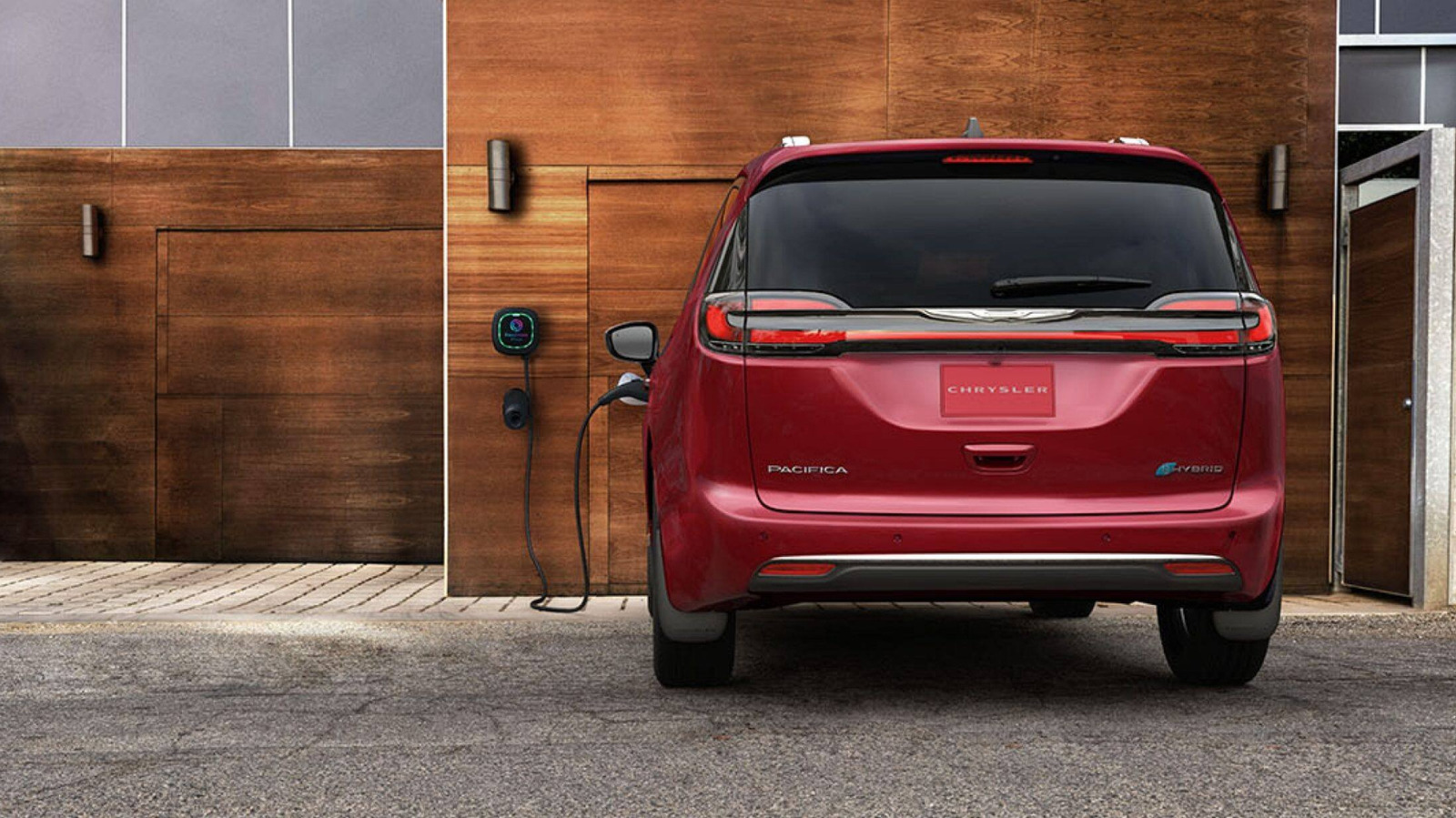
The Chrysler Pacifica used to be one such option, as it was one of only three minivan models with an electric trim. Unfortunately, Stellantis discontinued its traditional plug-in hybrid (PHEV) line after the 2025 model year, although a few 2026 editions reached dealerships before the manufacturer pulled the plug. The phasing out of the Pacifica Hybrid hasn't been a bad thing commercially — at time of writing, it's sold 25 percent more units on a year-to-date basis as the minivan niche in general bounces back from a rough sales period.
The Pacifica's electric motor can cover an EPA-estimated range of 32 miles, while the total range (which adds how far a full tank of gas can take you) reaches up to 520 miles. Quite a handful of hybrids can get more mileage out of their batteries, but only a few outstrip it for total range. So, if you're looking for a car that can give you a better bang for your energy buck, we've compiled a list of eight cars that go farther than the Chrysler Pacifica.
Read more: 4 Family Minivans With Better Ratings Than The Chrysler Pacifica
2025 Toyota Prius PHEV SE
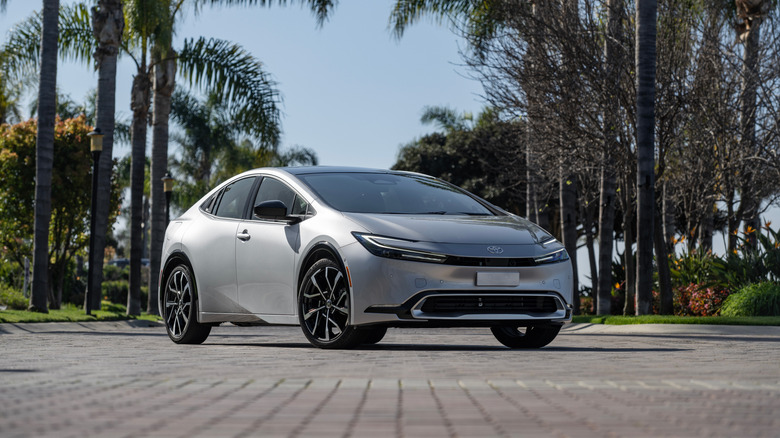
Toyota is usually one of the first manufacturers that comes to mind in any discussion about fuel economy. The Toyota Prius in particular has historically hung its hat on fuel economy, and it's currently the most fuel-efficient car you can buy. Its gas-only version posts 57 mpg combined according to EPA estimates, and the PHEV isn't far behind.
At 127 MPGe (which means you can get 127 miles using 33.7 kWh), you can squeeze 44 miles from the electric motor when fully charged on the base SE trim. After the battery runs out, the hybrid's gasoline component is slightly less efficient than the gas-only model at 52 mpg combined. Altogether, that should translate to 600 miles of total range with a fully juiced battery and fuel tank. The more expensive trims (XSE, Nightshade, and XSE Premium) all achieve 48 mpg combined on gasoline, and their batteries can travel 40 miles. The 2026 models consume gas at the same rate, but their electric motors are just shy of the 2025 model year's marks at 44 and 39 miles for the SE and premium trims.
That discrepancy may not look like much at a glance. However, the PHEV's premium packages only cover 550 miles as opposed to the estimated 600 for the SE. That's still one of the best marks among today's competitors, so if the larger 19-inch painted alloy wheels and features like optional solar charging appeal to you, don't be shy to splash the $41,665 MSRP on the premium trim.
2025 Toyota RAV4 PHEV
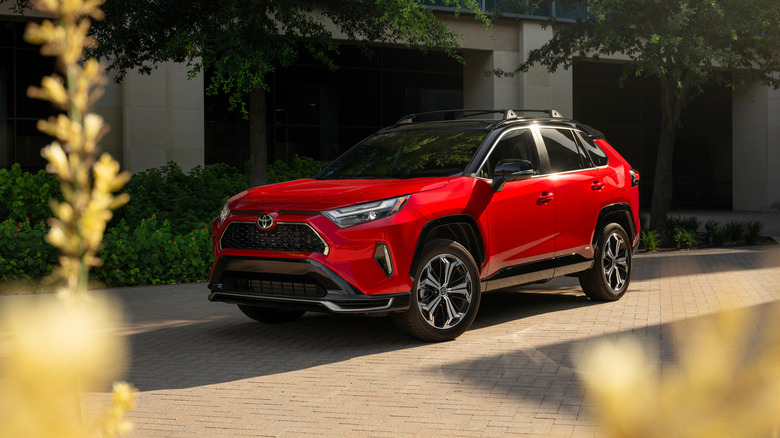
Although SUVs are typically greedier than sedans when it comes to gasoline consumption, compact crossovers tend to perform decently in the fuel economy department. The RAV4 PHEV follows up the Prius act for Toyota, and if we were going by electric miles alone, the 2026 model would top this list. That version has an EPA-estimated 54 miles of purely electric range on its SE trim. Unfortunately, no total range is available at the time of writing.
The next best model is the 2025 RAV4 PHEV. Although its combined metrics may appear smaller than the Prius by some distance at 94 MPGe, the electric motor is capable of grinding out 42 miles on a full charge — which is only three miles behind the 2025 Prius PHEV SE. The gas engine may also look like it consumes way more (EPA estimates 38 mpg combined vs. 57 for the Prius), but the total range still adds up to 600 miles. That's tied with the Prius despite the gulf in gas-only efficiency.
Of course, the miles you'll personally crank out in your travels will differ — Edmunds reports being able to get 48 miles out of the electric motor, for example — but 600 miles is a safe estimate. That's 80 more than the Pacifica can manage on paper, and it beats the Chrysler minivan for pace too; at 302 hp, it hits 60 mph in 5.9 seconds per Edmunds testing, compared to the Pacifica Hybrid's 7.8 seconds per Car and Driver.
2026 Volvo XC60 T8
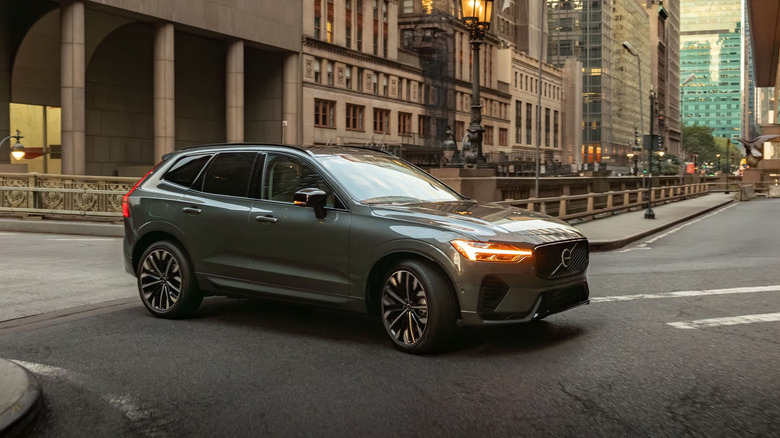
Another crossover SUV on this list, the Volvo XC60 T8 is a bit like the RAV4 PHEV in that its raw fuel economy metrics don't jump off the page. Its 63 MPGe estimate is less than half of what you'd get with a Prius hybrid SE, and its combustion engine runs on premium gas at a rate of 28 mpg combined. Taken at face value, you'd be forgiven for assuming that the XC60 T8 would be draining your wallet at the pump, or that you'd be frequently stopping at a charging station.
However, that's not the case. With a full battery, you'd get an estimated 36 miles from the electric motor. The gasoline powertrain takes over once those 36 miles are exhausted, and despite the gas mileage not looking remarkable, the total range measures 560 miles — at least per EPA estimates. There's some contention around that figure: Edmunds puts the XC60 T8's total range at 526.4 miles, and the chasm between the two numbers is wide enough to raise a few eyebrows. Both figures outstrip the Chrysler Pacifica, though. In fact, the 2028 concept has even more miles under its belt.
The XC60 T8 needs to be plugged in for at least five hours to charge fully. The Prius and RAV4 need four hours each, but they all lag behind the Pacifica Hybrid, which only takes two. If you can stomach the long charging hours, you'd be getting 455 ponies from the hybrid engine for an MSRP of $61,150, which translates to a 0-60 mph sprint of 4.4 seconds, per Car and Driver.
2025 Ford Escape Hybrid
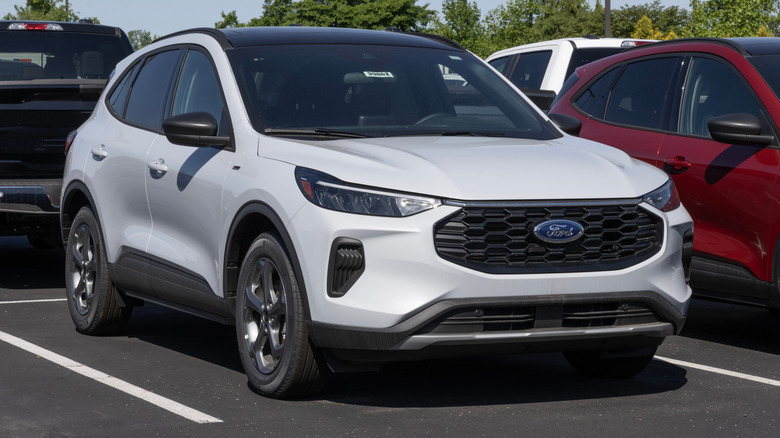
The Ford Escape Hybrid has the distinction of being a pioneer — it was the first SUV to sport a gas-electric powertrain. After a production run spanning over two decades, Ford officially discontinued the nameplate in 2025, with the 2026 model being the final iteration. Its axing is not necessarily due to a lack of quality or value, though; the manufacturer is turning its sights to the next generation of electric pickups.
That said, the Ford Escape is still in elite company in terms of fuel economy among hybrids. The 2025 model year uses an 11.2-kWh battery that can cover 37 miles on a full charge, according to EPA estimates. The gas engine also sips fuel at 40 mpg combined. Both powertrain components in the hybrid add up to deliver a total range of 560 miles.
While it beats the Chrysler Pacifica for miles on a full tank and battery, the Ford Escape Hybrid also delivers a very similar performance. The hybrid engine makes 210 hp and takes 7.7 seconds to accelerate to 60 mph (via Car and Driver). The Chrysler Pacifica's combined powertrain is more powerful on paper at 260 hp, and it's marginally quicker at the 60 mph sprint with a time of 7.3 seconds, also courtesy Car and Driver's testing. So, for raw engine performance, the Ford Escape Hybrid is probably the closest model to the Pacifica, and it does this while delivering 40 more miles of range.
2026 Lexus NX 450h+
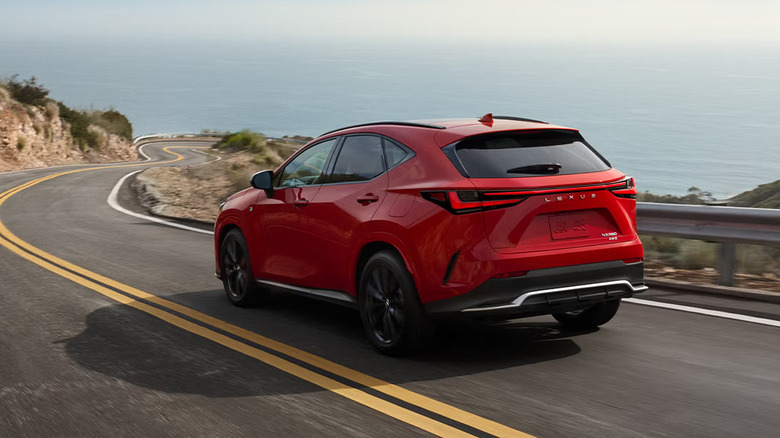
Lexus, Toyota's sister brand, has cultivated a reputation for dependability over the years. For instance, the Lexus IS was the highest-ranked model on JD Power's Dependability Study this year, and it's on our list of cheap cars that you can get north of 200,000 miles out of. Fuel economy tends to play a big role in that department, so while Lexus has more than a few models engineered with a sporty gusto, a few like the NX 450h+ are built to get the most bang for your buck.
The Lexus NX 450h+ has an 18.1-kWh battery pack that its three motors can squeeze 37 miles out of on a full charge. Its gas powertrain only runs on premium gas, which it consumes at a rate of 36 mpg combined. According to EPA estimates, the hybrid design translates to a total range of 550 miles. You'll spend a bit more time at the charging station compared to the Pacifica, though: it takes 4.5 hours to charge fully with a standard 240-volt power source.
At 302 hp, the Lexus NX 450h+ packs a decent punch; it's a slight upgrade on the 239 hp that the gas-only model produces. It's not necessarily a speedster, especially compared to the XC60 T8, but it has more oomph than the Pacifica, with a 0-60 mph time of 5.6 seconds (via Car and Driver). At an MSRP of $46,570, the allure of the NX 450h+ over the Chrysler lies in the reliability associated with the Lexus nameplate, total range, and a slight tilt towards sporting performance.
2026 Lexus RX 450h+
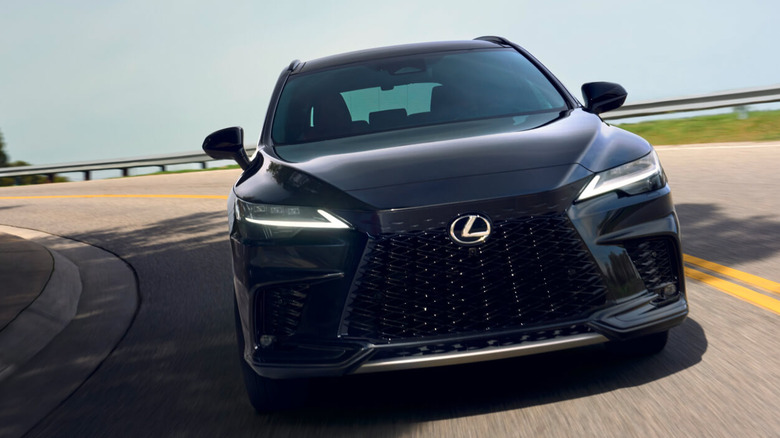
Where the NX 450h+ is Lexus' hybrid entry into the compact crossover niche, the RX model occupies the mid-size SUV market. Its energy economy numbers are nearly identical to its crossover cousin: the 2026 model runs at 85 MPGe, one more than a 2026 NX. That metric translates to about 38 miles running purely on its 18 kWh electric motor, although you could realistically push past 40 depending on weather and driving conditions. Essentially, the RX hybrid gets more out of its battery than the NX despite the slightly lower capacity.
As for the gas engine, though, the RX 450h+ surrenders its narrow mileage lead over the NX at 35 mpg combined (compared to the NX's 36). So, with the advantages both models have over each other largely canceled out, it's no surprise that their total ranges are in the same ballpark. The RX 450h+ loses out slightly here at an EPA estimate of 540 miles.
There's quite a few things to like about the 2026 RX hybrid compared to the Pacifica Hybrid. For starters, at a charging time of 2.5 hours on a standard Level 2 charger, it's the closest to the Pacifica Hybrid on this list by some distance. Second, it takes about 6 seconds to accelerate to 60 mph — so while it's slower than the NX Hybrid, it's still considerably quicker than the Pacifica. Those extra miles of range, coupled with the added burst of speed and charging convenience, make a compelling argument for the RX 450h+.
2025 Volvo S60 T8
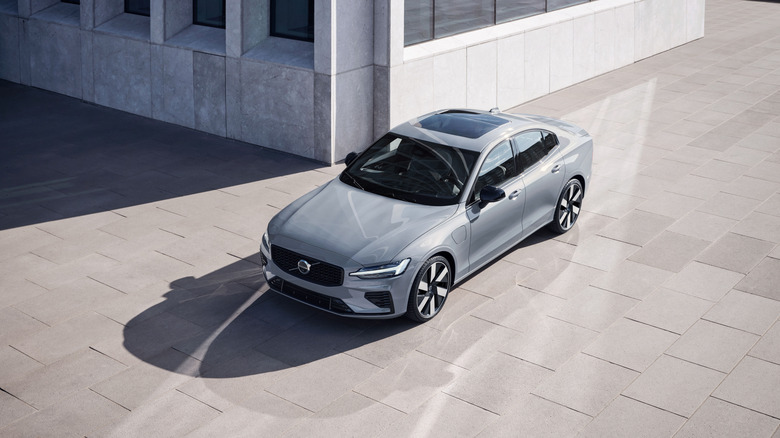
If you're looking for a hybrid sedan with considerable range, the Volvo S60 T8 is worth a look. It's the only sedan on this list that beats the Chrysler Pacifica for the estimated miles its powertrain can cover on a full charge and tank. Making sense of the MPGe metric can be a little confusing, but the S60 T8's mark of 74 doesn't appear spectacular — only the Volvo XC60 T8 and XC90 T8 sit lower here.
Despite the unassuming numbers, you can get an estimated 40 miles out of the 14.9-kWh battery on a full charge. That's only behind the Prius and RAV4 hybrids among the models we've covered. Like the XC60 T8, its gas engine only runs on premium gas to the tune of 31 mpg combined. On paper, that's more than the 28 mpg the compact SUV brings to the table, but the advantage doesn't translate to better gas mileage; the S60 T8's total range tops out at 530 miles.
Compared to the Pacifica Hybrid, the 10-mile difference in range may not be enough of an X-factor. The engine is a different story entirely — it makes 455 hp, same as the XC60 T8. Per Edmunds testing, 0-60 mph takes around 4.5 seconds. Car and Driver pegs the time at 4.1 seconds, so it's significantly quicker than the Pacifica. Hence, if you're enough of a speedster to sacrifice the space advantages of the Pacifica, the S60 T8 might be an attractive option. The 2025 model is the final iteration of the S60 nameplate, though, so you might have to buy it pre-owned.
2026 Volvo XC90 T8
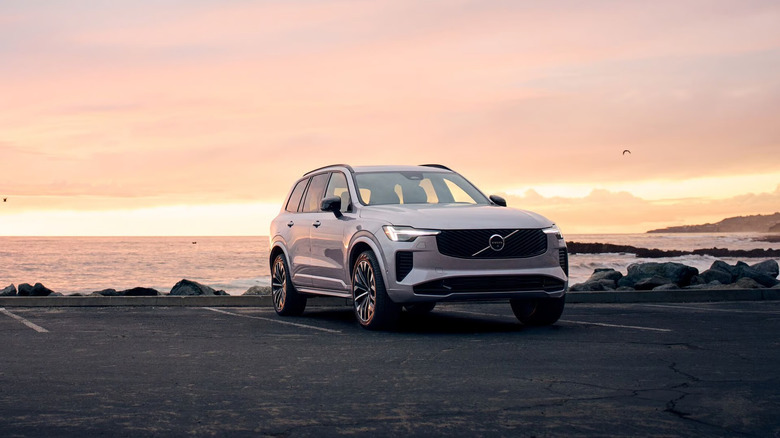
Yet another Volvo, the XC90 T8 rounds up our compilation of hybrids that can cover more ground than a Chrysler Pacifica. The XC90 T8 is probably the cleanest comparison to the Pacifica in terms of seating — the mid-size luxury SUV seats seven passengers on the Core and Plus trims. At 58 MPGe, it has the lowest combined EPA fuel economy estimate on this list. On a more granular level, the 14.7-kWh battery provides enough juice to last 33 miles. However, it takes roughly five hours to charge fully, which is more than double what the Pacifica needs.
The XC90 T8 sips premium gas at 27 mpg combined according to EPA estimates. This figure should be treated with healthy skepticism, though. Car and Driver testing reported a slightly poorer economy at 25 mpg combined. Edmunds' figure of 21.2 mpg is even worse, so it's not out of the realm of possibility to expect greater fuel consumption than advertised. Using EPA estimates, the XC90 T8's range should max out at 530 miles, but if the real-world driving concerns prove true, then that number might be in jeopardy.
Nevertheless, the XC90 T8 isn't without its boons. It makes the same 455 hp as the other Volvo models on this list, and its designation as a luxury SUV means you can expect a fair bit of comfort that the Pacifica might not offer, like massaging seats, for instance. At an MSRP of $77,595, its advantage over the Pacifica is mostly steeped in luxury, not necessarily fuel economy.
Want the latest in tech and auto trends? Subscribe to our free newsletter for the latest headlines, expert guides, and how-to tips, one email at a time. You can also add us as a preferred search source on Google.
Read the original article on SlashGear.