


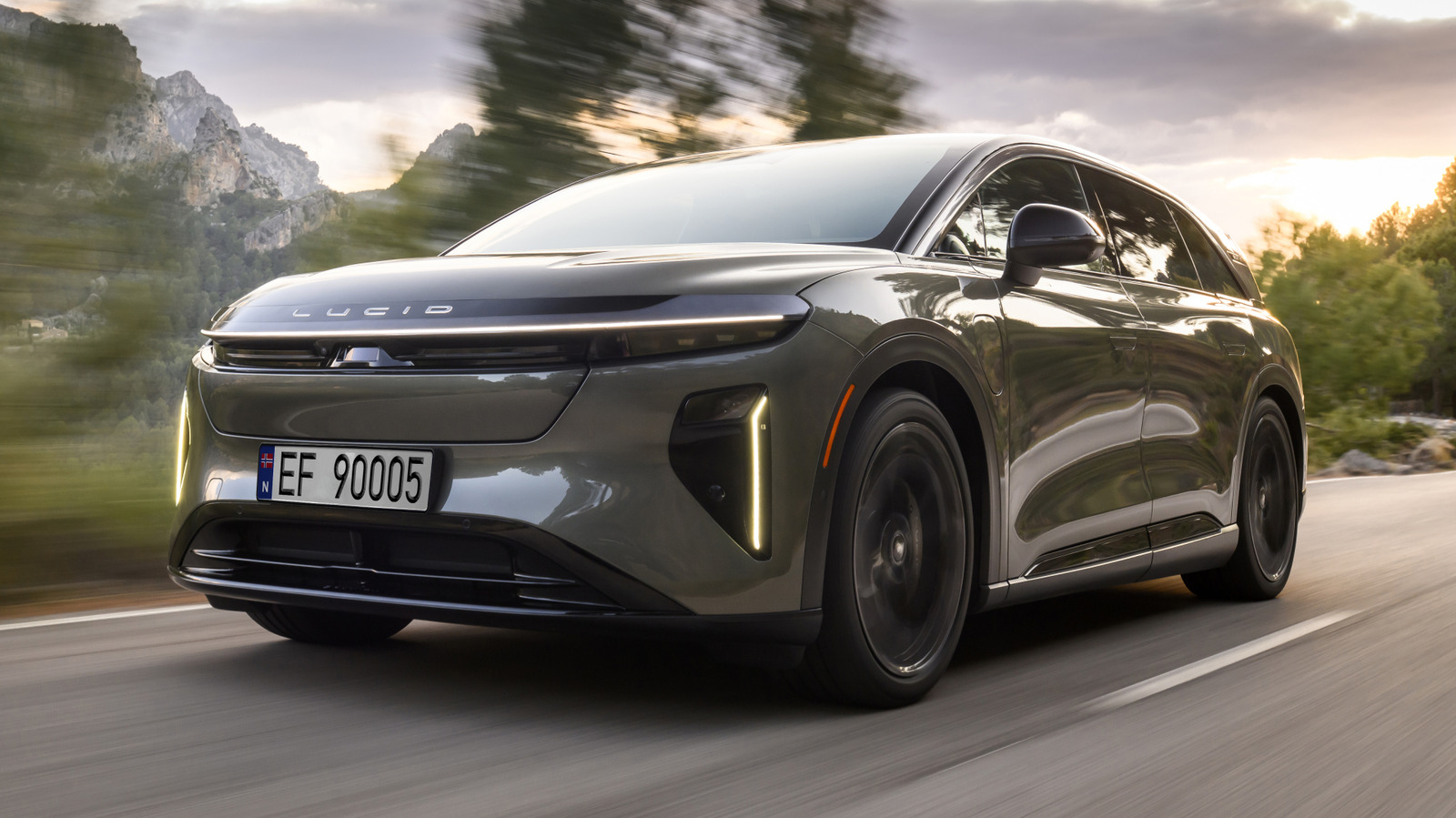
America's carmakers aren't spread evenly around the country. There are major clusters of automotive factories and headquarters in the Midwest and Southeast, with a smaller number of brands being based on the West Coast. While Washington and Oregon are both home to major semi-truck manufacturers, almost all of the West Coast-based car brands can be found in California.
Since 2021, the number of major car brands based in the state has reduced, since Tesla moved its official headquarters from California
to Texas under the direction of CEO Elon Musk. That's despite the company's engineering headquarters remaining in Palo Alto and its Fremont factory remaining a critical part of its operations. Even after that high-profile departure, California remains a hub for EV brands, but it's also where the headquarters of various supercar brands, niche luxury brands, and even a mainstream premium car brand can be found.
That's not accounting for the many plucky startups that are dotted throughout the state, some of which are closer to delivering production-ready cars than others. They range from fresh-faced newcomers that are still in the early stages of development to long-established companies that have taken two decades to deliver a single prototype car. We're ignoring all of those startups here and focusing on five carmakers that actually have a proven track record of delivering vehicles, even if plenty of car buyers might not have heard of all of them.
Read more: 4 Family Minivans With Better Ratings Than The Chrysler Pacifica
Rivian
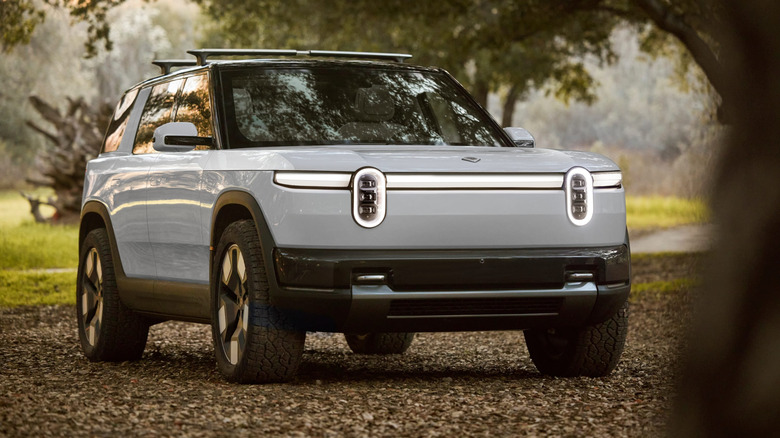
One of the best known American EV brands aside from Tesla is Rivian, which currently produces the R1 and the R2. The R1 is now in its second generation and comes with over 1,000 horsepower on tap in its top-spec form, while the R2 is a more restrained, affordable option for buyers who don't need a tire-shredding family hauler. Here at SlashGear, we're big fans of both models, and we even called the 2027 R2 the best EV for the money to date.
Although Rivian's sales figures are increasing following the launch of the R2, it remains a much smaller player in the EV industry than its formerly California-based rival Tesla. The company still has major expansion plans over the coming years though, with boss RJ Scaringe stating that he aims to expand Rivian's footprint into EV-friendly European markets with the eventual goal of building millions of cars every year. Those ambitious plans will be overseen by Scaringe and his team at the company's headquarters, which are in Irvine, CA.
Acura
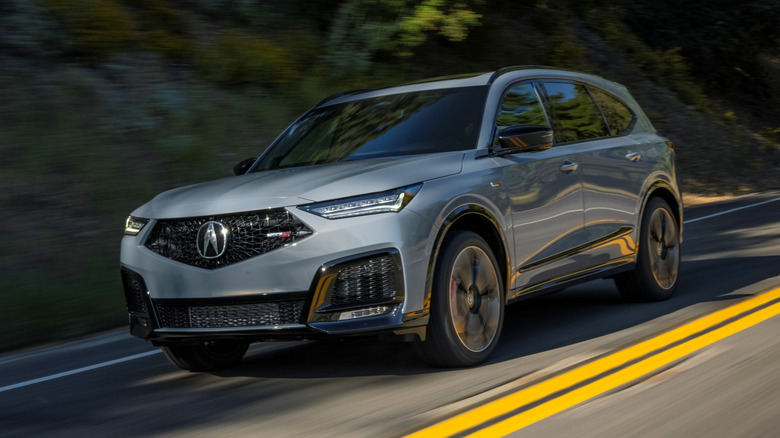
While Honda's global headquarters are located in Tokyo, Japan, the regional headquarters that manage the Acura brand are in Torrance, CA. Acura was the first Japanese luxury brand and was launched at a time when the country's automotive exports were almost exclusively limited to affordable, fuel-efficient small cars.
To differentiate its new luxury arm from that image, Honda executives decided that Acura needed its own range, its own sales network, and its own development team outside of the existing Honda hierarchy. Since Acura was aimed squarely at the U.S. market from the start, it made sense to base the brand's headquarters in an affluent part of the country.
Fast forward to today and Acura remains a major player in the American luxury car market, despite increased competition from rival Japanese brands as well as long-standing European and American ones. Its sales numbers are down compared to the brand's peak popularity, but leaked plans from dealer meetings suggest that Acura has plenty of upcoming launches to try and return to its former levels of popularity.
Even without any new models, there's still plenty to like in Acura's current range. After putting the Acura MDX Type S through its paces, we came away roundly impressed by its talents, concluding that it makes a more fitting flagship model for the brand's range than even the most recent iteration of the NSX did.
Lucid
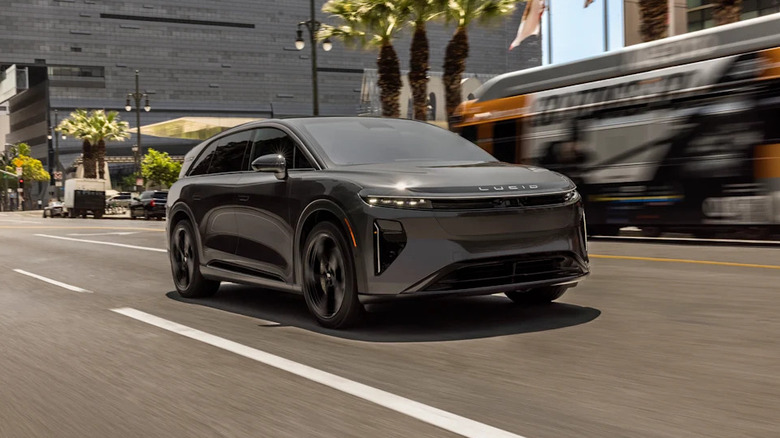
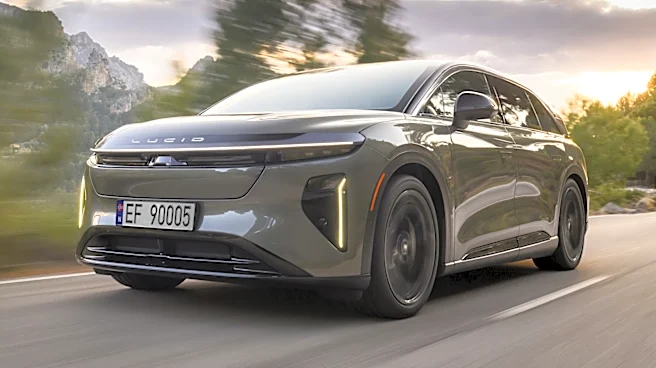
Alongside Rivian, another notable EV brand with its headquarters in California is Lucid. The brand is based in Newark, although its main manufacturing plant is in Arizona. Although it has been producing cars for a few years now — we first reviewed its launch model, the Air, back in 2022 — it has yet to see much mainstream recognition. That's a shame, since much like Rivian, its EVs can more than hold their own when they're compared to similarly priced models from major manufacturers. Although, in the case of the brand's second model, the Gravity, there's arguably nothing else on the market that's quite like it to begin with.
Tesla's Model S Plaid proved to mainstream buyers that EVs can be shockingly fast, but the Gravity goes one step further and combines that supercar-like acceleration with seating for up to seven people and enough cargo space to bring luggage along for the trip too. So, why isn't Lucid better known by now? Its high starting prices certainly limit its mass-market appeal: The cheapest version of the Air starts from just over $70,000, while the Gravity costs roughly $80,000 in its entry-level form. The brand's service center network is also much smaller than rivals like Tesla, and unlike Tesla, Lucid doesn't have a perennially headline-grabbing CEO to remind people of its presence either.
Czinger
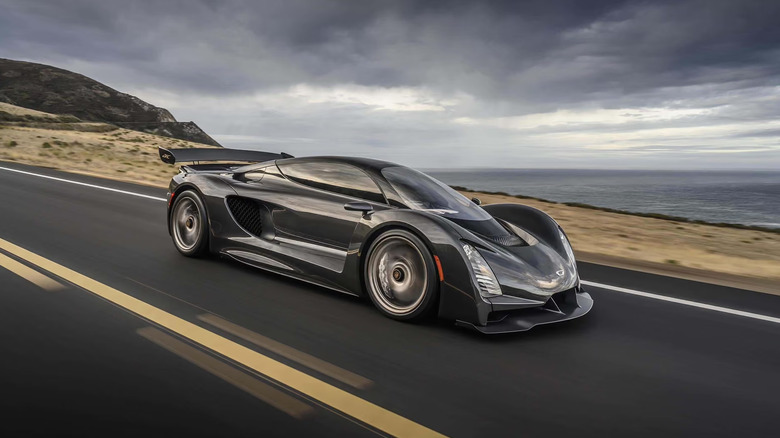
It's natural to treat upstart hypercar brands with a healthy degree of skepticism, especially when they claim to be making cars in a way that's never been done before. Czinger is one such brand, although having driven its $2.7 million 21C hypercar, we can confirm that it's very much the real deal.
The 21C uses 3D-printed parts and has a unique method of assembly which has been developed by the car brand's parent company, Divergent, which is headquartered in Torrance, CA. Divergent works with various car brands to develop new manufacturing processes, including Aston Martin and Mercedes-Benz, and the 21C serves as a showcase of what the company can do.
Although our reviewer tested Czinger's car on Californian canyon roads, its full performance can only be appreciated on a track. To illustrate its formidable capabilities, Czinger took the 21C to various tracks around America and broke a succession of lap records. In 2024, it broke the all-time production car lap record at Circuit of the Americas, and in 2025, it set no less than five lap records at various circuits around California, including at Laguna Seca. It even drove the record-setting hypercar to and from those tracks on public roads.
Providing the power for all of those records was a bespoke twin-turbocharged 2.88-liter V8 engine assisted by a pair of electric motors. Total system output stands at 1,250 horsepower. In total, only 80 examples of the 21C will be built, with buyers able to choose from either a speed-focused or downforce-focused variant.
Karma
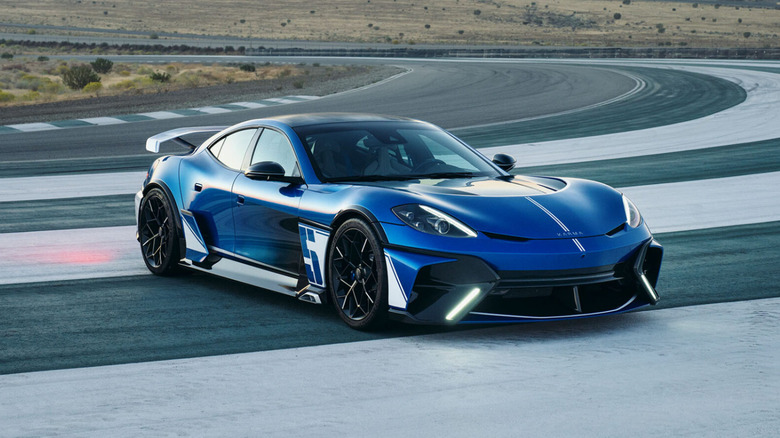
While some California-based car brands focus on boosting their sales in mainstream premium segments and others make hypercars that are capable of obliterating lap records, Karma takes a different approach. The Irvine-based brand has been around since 2014, although unusually, its primary car model has been around for even longer. At least, an earlier version of it has — originally, it started life as the Fisker Karma before that brand unceremoniously collapsed in 2013. The rights to the design were then bought by Chinese automaker Wanxiang, with the company relaunching the car as the Karma Revero in 2017.
Since then, Karma has remained very under-the-radar, although its CEO Marques McCammon told The Autopian that was no accident. He said that Karma sold 146 cars in 2025, and its buyers were willing to pay a premium for them because of those low production figures. He added that "every time that you own a Karma, you can say, 'I have number X of this model year, there was [sic] only this many built in this color.' That's part of the experience."
Karma is reportedly planning to expand its lineup soon, although it will remain a niche brand, according to McCammon. An SUV is reportedly on the way, as is a pure EV, and there's a new version of its signature four-door car, complete with its PHEV powertrain, launching too.
Want the latest in tech and auto trends? Subscribe to our free newsletter for the latest headlines, expert guides, and how-to tips, one email at a time. You can also add us as a preferred search source on Google.
Read the original article on SlashGear.